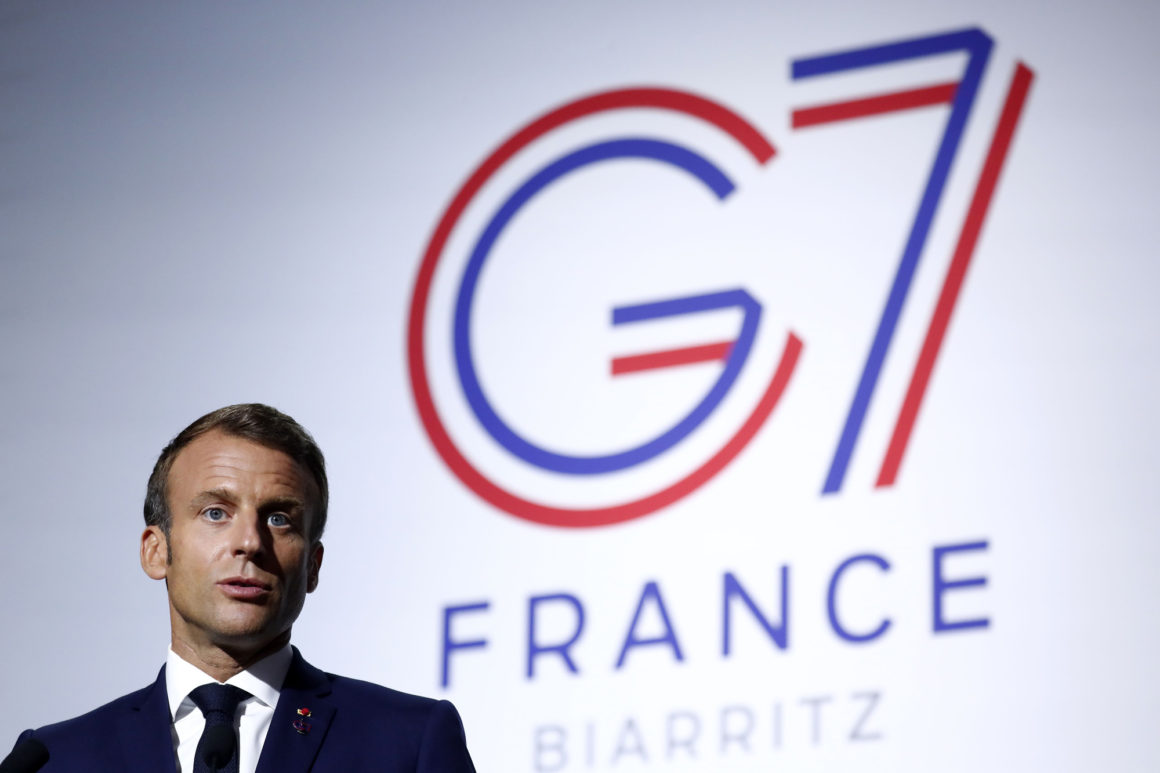
The leaders of the seven most industrialised countries gathered on a virtual summit which was marked by the coronavirus pandemic and the need to speed up the distribution of vaccines.
French President Emmanuel Macron proposed giving 5% of the doses held by the seven countries in the group, but neither his office nor the other leaders specified the quantities of vaccines they are willing to share. The US, France, the UK, Germany, Canada, Italy and Japan spoke in general terms of working together on global issues, including the fight against Covid-19. To this end, they announced a total of $7.5 billion in aid to bolster global vaccination.
The cooperation of the powers in developing countries will be essential to achieve comprehensive immunisation, as discussed at the G7 virtual summit on Friday 19th of February. French President Emmanuel Macron said that Europe and the United States should give the poorest countries 5% of the vaccines that G7 members have.
“This is worth a lot. It is worth our credibility,” Macron said after the meeting. “If we can do this, the West will have a presence” in African countries, according to the French president. Otherwise, those nations will turn to Chinese and Russian vaccines, and then “the power of the West will not be a reality”, Macron said.
Then, in a tweet, he called on the United States and European countries to give Africa the 13 million doses needed to vaccinate all the continent’s health workers.
China and Russia are already ahead in several countries, including some in Latin America. Argentina, Bolivia and Venezuela are inoculating Sputnik V, developed by the Russian laboratory Gamaleya National Centre for Epidemiology and Microbiology. And in the giants of the region, something similar is also happening. Mexico is on the verge of applying Russian doses and Brazil is using two vaccines produced in the Chinese laboratories of Sinovac and Sinopharm. However, most Latin American countries that have started inoculation are using the vaccine developed by the US pharmaceutical company Pfizer in partnership with Germany’s BioNTech.
The African Union expects 300 million Sputnik V vaccines by May, compared to the 270 million it purchased from the English laboratory AstraZeneca and the American companies Pfizer and Johnson & Johnson.
It is precisely because of this race that the G7 is concerned about ‘vaccine diplomacy’. But not all leaders agreed with Macron’s point. German Chancellor Angela Merkel, for example, said that the distribution of doses around the world was “an elementary question of fairness” and that the pandemic would not end until everyone was vaccinated. And while she said rich countries should give from their own stockpiles of vaccines to developing countries, she made clear that this did not mean that her nation would be deprived of inoculations. “No vaccination appointments in Germany will be put at risk,” the chancellor said.
When asked by reporters about Macron’s proposal, Merkel said the leaders had not yet discussed the percentage of doses or the timetable for distributing them. “That still needs to be discussed,” she added from Berlin.
British Prime Minister Boris Johnson also did not specify a specific amount and, only in general terms, pledged to give “the bulk of future surplus vaccines” to the UN-backed COVAX effort to vaccinate the world’s most vulnerable people. Then UK foreign secretary James Cleverly was more specific, saying it was “difficult to say with any certainty” when or how much vaccine his country might donate.
Indeed, Macron’s office refrained from talking about the exact numbers of vaccines France is willing to give, nor did it refer to a date for doing so.
G7 allocates $7.5 billion for Covid-19 immunisation
Despite the lack of precision on vaccine quantities or timelines, the G7 did make a concrete announcement on the issue: $7.5 billion in support for Covid-19 vaccination. In a communiqué, the member states stressed that “today, with increased financial commitments of more than $4 billion”, G7 support “stands at $7.5 billion”.
Merkel pledged 1.5 billion euros for the global fight against the coronavirus. Germany thus becomes the “first global donor” to multilateral efforts to curb the spread of the outbreak.
This action is in line with the multilateralist stance that dominated the summit. “We will work together (…) to shape a recovery that promotes the health and prosperity of our people and our planet,” said the leaders of the United States, France, Germany, the United Kingdom, Italy, Canada, and Japan in the joint communiqué.
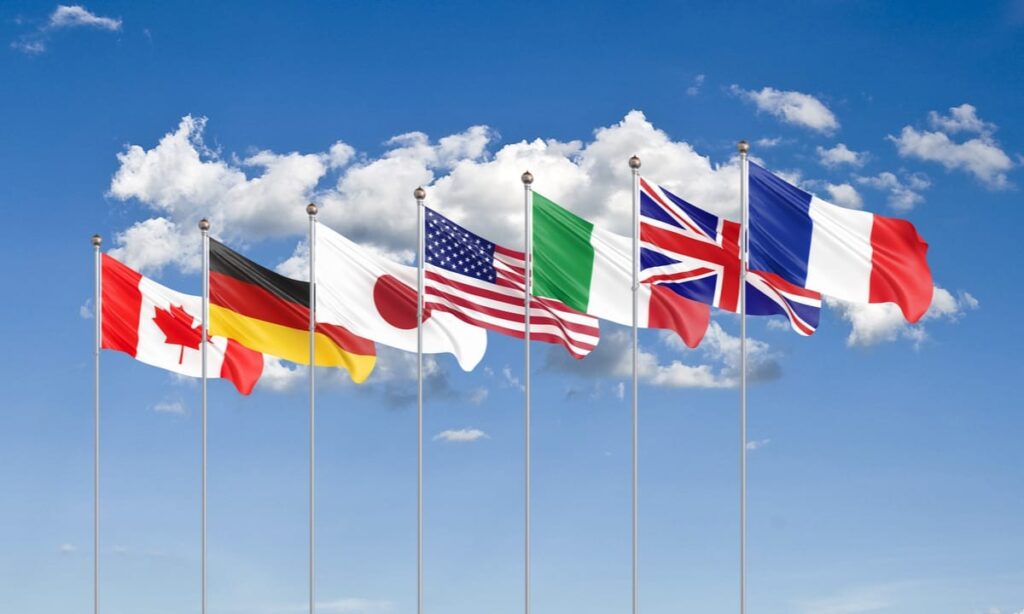
“This is a pandemic, and it makes no sense for one country to get ahead of itself, we must move forward together,” added British Prime Minister Boris Johnson, whose country takes over the rotating presidency of the G7 this year.
However, none of the seven countries made commitments on how many doses of their own they are willing to give to stop Covid-19 worldwide.
Environment, another central theme of the summit
Leaders also shared their intentions to move towards a post-pandemic recovery that considers the environment and the fight against climate change.
Nine months ahead of the next UN Climate Conference (COP26), scheduled for November in Glasgow, the leaders pledged to put their “global ambitions on climate change and reversing biodiversity loss at the heart” of their plans.
They also mentioned “a green transformation and clean energy transitions that reduce emissions and create good jobs on a pathway to net zero by 2050 at the latest”.
To keep up to date with the latest commercial news, click on commercial to get your daily dose.