Lyft, Inc. develops, markets, and operates a mobile app, offering vehicles for hire, motorized scooters, a bicycle-sharing system, and food delivery. The company is based in San Francisco, California, and operates in 644 cities in the United States and 12 cities in Canada. With a 30% market share, Lyft is the second-largest ridesharing company in the United States after Uber.
Service is generally accessed via a mobile app. Users set up a personal profile with a name, phone number, other information, and payment preference, which could be a credit card, e-commerce payment system, or, in some cases, cash. After the service is complete, the customer may be given the option to provide a gratuity to the driver, which is also billed to the customer’s payment method. Riders must download the Lyft mobile app to their smartphone, sign up, enter a valid phone number, and enter a correct payment form (either a credit card, Lyft Gift card, or link to an Apple Pay, Google Wallet, or PayPal account). Once the trip is completed, funds are debited from the funding source.
Although Lyft is similar to Uber in many ways, it has always distinguished itself and followed a strategy where it can disrupt Uber in any way possible. Here are a few salient features of Lyft’s model:
Lyft matches customers who want a ride with the nearest available drivers. They use the tag line – Find a new friend every day. All Lyft cars have a big pink coloured moustache on their front. The customer gets to know the driver’s details and ETA when he requests a ride. Live tracking tells the driver the exact location of the customer from where the ride has been requested. The payment procedure is handled by Lyft itself from within the app. Lyft charges a commission of 20% from each ride, and the rest, 80%, goes to the driver. Lyft’s business model has a rating system in place for drivers and customers where they can rate each other. Unlike Uber, Lyft has two car options – Lyft and Lyft Plus. Lyft also has a surge pricing model called heat maps.
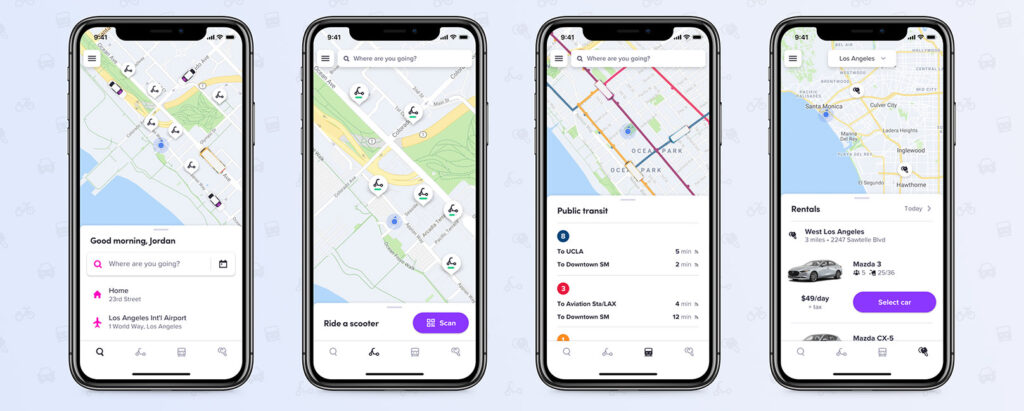
Lyft offers excellent value propositions for both its front-end stakeholders – drivers & customers.
For Customers: No need to wait for a taxi. Lyft app enables matching you with a nearby available car. Lyft offers free rides on certain occasions, and users can also avail discounted rides from time to time. Lyft makes customers feel as if they are riding with a friend instead of a traditional cab. Prices are often lesser than the usual taxi fares. Lyft’s tagline says – Your friend with a car. It lets customers befriend drivers.
For Drivers: It adds up to an additional income source. Flexible working schedules. Drivers can work anytime and for as long as they wish. Easy payments. Lyft pays 20% of the total ride cost to its drivers. Those who love to drive can make new friends and can earn money while pursuing their hobbies.
Lyft is a cab aggregator that matches people who want a ride with drivers who have a car. Each transaction happening on Lyft’s technology-based model is divided between the driver and the company. Lyft takes a 20% cut from the total amount paid by a passenger, and the rest 80% cut goes to the driver. The main revenue models of Lyft include:
Lyft Car Ride: Lyft charges a 20% cut from every transaction that happens on the platform. Standard 5-seater cars come under the normal “Lyft” car category. Drivers get the remaining 80% of the price that the passenger is paying.
Heat maps (Surge Pricing): Like Uber’s surge pricing, Lyft also has heat maps that define an area where the demand is more. In high demand in a particular area, more price is charged by the cab company. This adds up to the revenue model of Lyft. The heat maps are location-specific as well as time-specific.
Lyft Plus (More seater vehicles): To give its customers another option apart from the standard 5-seater cabs, Lyft has “Lyft Plus,” 7-seater vehicles. The charges for Lyft Plus are higher as compared to normal Lyft. Over, here again, Lyft earns a net 20% of each ride.
Lyft Line (Discounted Rides): Lyft was born out of Zimride, which was initially a ridesharing platform. Promoting car share among people and giving an option to those who do not wish to hire an independent cab, Lyft initiated the “Lyft Line.” As the name suggests, it enables a user to ride along with others on a pre-specified route. It can be thought of as an alternative to public transport but with the service of Lyft.

Lyft is affected heavily due to the coronavirus pandemic. Lyft lost $458.2 million over the last quarter of 2020, with its adjusted net revenues plummeting 44 per cent Year-on-Year. It lost $1.8 billion for the whole year, which is also a slight improvement compared to $2.6 billion lost in 2019. It’s important to note that both ride-hailing companies (Uber and Lyft) factor in stock-based compensation and payroll tax expenses into their net losses.
To keep up to date with the latest commercial news, click on commercial to get your daily dose.
Donate & Support