
Cannabis is arguably the world’s most commonly refined, trafficked, and used drug. The drive for the legalisation of recreational usage of marijuana continues to accelerate globally as significant traction has caught the attention of investors, manufacturers, and researchers.
Despite marijuana being illegal under federal law, the US marijuana industry was estimated at $13.6 billion in 2019 and approximately 340,000 jobs were allocated solely on handling the plant distribution. Nevertheless, cannabis investments in America are reaching new heights.
In 1913, California became the first state to inhibit cannabis; Arizona, Oregon, and Colorado followed suit soon after. Things began to escalate after Harry Aslinger became the first director of the Federal Bureau of Narcotics in 1930 which is now formally known as the DEA (Drug Enforcement Administration); he opted to push false narratives fuelling racist stereotypes. Notwithstanding, American states slowly began to legalise marijuana in 1970, states inclusive of Oregon, Maine, and Alaska. Many US states have promoted the use of marijuana solely for medical use which in turn has led to 33 states legalising marijuana for medicinal use only.
As for the legalisation of recreational usage of marijuana, Washington DC and Vermont were the first two states to legalise the recreational use of marijuana in 2012; Colorado’s proposition 64 (state tax can be used to fund the regulation of the marijuana industry), made adults over the age of 21 who own cannabis and or business sales of marijuana, legal.
In 2016, North America had reached $6.7 billion in marijuana revenue which accounted for a growth of 30% year-over-year. The year prior (2015), Arc view group report stated that the cannabis industry is the fastest growing industry in the US with around 9,397 licenses having been issued which encompasses cultivators, manufacturers, dispensaries, and deliverers & labs.
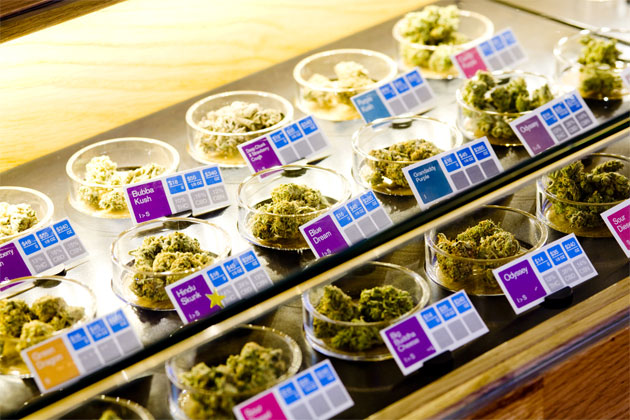
In July of 2018, the first cannabis IPO (Initial Public Offering) was made by Canadian company Tilray who began trading at $23 and since then, North America has arguably dominated the cannabis industry. In 2019, North America had the largest revenue share with a percentage of 88.4%. The legalisation of marijuana across North America has led to a tremendous increase in the supply and demand within the industry. As the supply and demand within the industry have hit new heights, the bid to invest in the industry is also reaching considerable peaks.
Multi-state operators (MSO’s) look to own and control the operations in states with favourable cannabis laws. MSO’s manage assets across North American legal markets among production facilities, networks of brick-and-mortar dispensaries, and portfolios of brands endorsing medicinal and recreational markets; 2019 saw the decline in the valuations of publicly traded-cannabis companies which dropped to a quarter of the figures reached the year prior. The decline in valuations should alert investors of where to reside their capital, however, even despite the drop in valuations, the industry is arguably going to expand.
The numbers are reflective of the expansion. The marijuana industry as of last year was predicted to be worth an estimated $10 billion and that figure is set to have an increased annual growth averaging at 25% and a 15% increase in medicinal annual growth which is to be foreseen up until 2030.
The marijuana industry has grown considerably amounts as a result of the legalisation of recreational usage across America. However, it is worth acknowledging that in terms of investment, the increase in revenue also fuels an increase in competition. Canada has already got a vast growth within the cannabis industry which has enabled firms to establish partnerships with firms outside of the country and aid in further growth in revenue within Canadian borders. This competition may threaten the future of North American cannabis revenue.

As aforementioned, there has been a decline in valuations for some companies, and although it’s not predicted to be overly damaging, it may be argued to be better to invest outside of the US. Furthermore, the predictability of American legislation in the future makes it difficult to predict how transparent the expansion of investing will be.
Conclusively, it is apparent the vast growth of the cannabis industry and the profitable benefits and opportunities it has enabled for cannabis markets. As for future predictions, predictions of expansions are foreseen, however, with an increase in competition, it’s not clear on the future of marijuana investment growth.
To keep up to date with the latest commercial news, click on commercial to get your daily dose.
Donate & Support