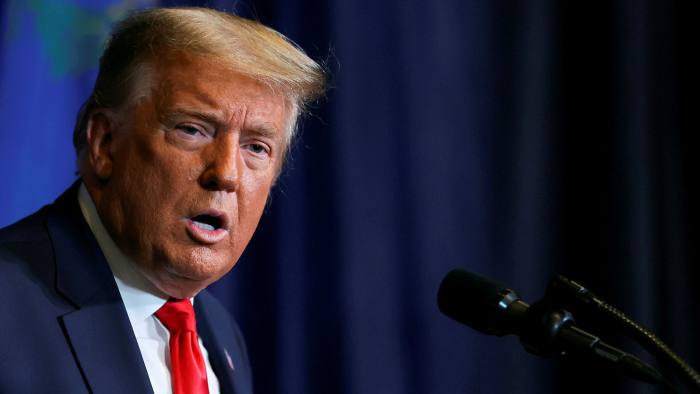
On February the 14th, Donald Trump’s second impeachment trial concluded. Donald Trump, the 45th President of the United States of America was acquitted of inciting insurrection after the deadly attack on the Capitol which took place on January the 6th.
The riot, which left 5 dead and more than 140 injured, was formed of thousands of supporters of Donald Trump who gathered in Washington DC after a Trump rally, in a failed attempt to overturn the 2020 US election results.
What followed was a month-long impeachment process in which the House introduced an article of impeachment against Donald Trump for his role in instigating the riot. After just five days of debate, the Senate fell 10 votes short of the two-thirds majority required to convict the former president. The conviction would have barred Trump from holding public office in the future.
Despite his acquittal, Trump’s next moves remain murky, and the tumultuous chapter in US history has not yet been closed.
The Acquittal
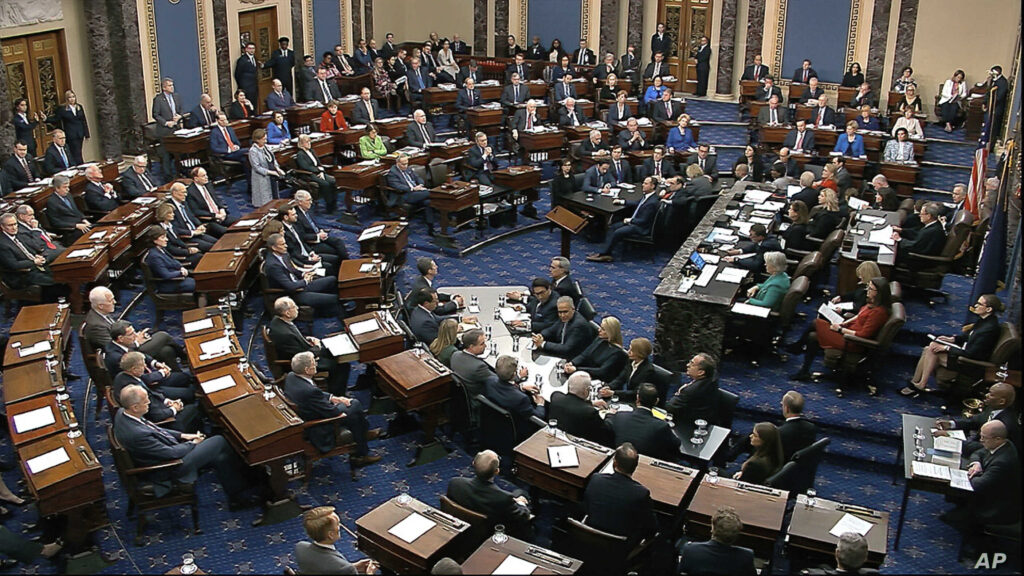
Seven Republicans – Richard Burr, Bill Cassidy, Susan Collins, Lisa Murkowski, Mitt Romney, Ben Sasse and Pat Toomey – joined the Democratic prosecution to convict Donald Trump of incitement of insurrection, and the 57-43 vote was the most bipartisan support for conviction ever in a presidential impeachment trial. Only one Republican, Mitt Romney, voted to convict Trump during his first impeachment.
Trump’s acquittal will have come as no surprise – only six out of 50 Republican senators voted for a motion that Trump could be tried as a former president. Each of those six found Donald Trump guilty and only additional Senator Burr was persuaded to join his colleagues despite the damning evidence, including a statement from GOP Representative Jaime Herrera Beutler. She reported that in a conversation with House Republican Leader Kevin McCarthy, McCarthy disclosed to her that during the riot, Trump had said to him “Well, Kevin, I guess these people are more upset about the election than you are.”
What is most significant, is not the breaking of rank by the seven Republicans who defied the president, but rather the subsequent condemnation by those who voted to uphold his acquittal. Mitch McConnell comes to mind. The Republican Senate minority leader stated that “Former President Trump’s actions that preceded the riot were a disgraceful, disgraceful dereliction of duty” and that “there is no question, none, that President Trump is practically and morally responsible for provoking the events of the day. No question about it”.
Senator McConnell’s words are potent. The suggestion being that those who voted for Mr Trump’s acquittal did not do so on the basis that he was innocent. They voted on the basis that it was unconstitutional to put a former president on trial while he no longer holds office. The legality of a late impeachment needs to therefore be examined.
What does the law say?
Mr Trump is the first president to be impeached twice, and the first president to be impeached after he no longer holds office. It is the latter technicality that has led to much constitutional debate, but many legal experts believe that the impeachment of a president who no longer holds the office is not unconstitutional.
The prosecution argued that he was impeached while holding office, and what is more, the Constitution states that conviction can lead to “removal from Office, and disqualification to hold and enjoy any Office of Honor, Trust or Profit under the United States.” This is one argument that Senator McConnell referred to in his condemnation of Trump. For McConnell, fears of a dangerous precedent could be set. A precedent in which any private citizen could be impeached and ruled ineligible for public office by Congress.
On the 26th of January, the Senate voted narrowly to dismiss the trial on the basis of unconstitutionality because Trump is no longer in office. The Senate voted on this issue on the first day of the trial which means that the precedent has already been set.
What’s more, is that Senator McConnell delayed Trump’s impeachment trial. One week after the 6th of January atrocities took place at the US Capitol, McConnell was called upon by Democratic leader Chuck Schumer to hold an emergency trial, but McConnell refused to bring the Senate back from recess. Had the trial taken place at the time, Donald Trump would have been in office still and the issue of unconstitutionality would not have arisen.
McConnell’s motivation to condemn the former president, while leaving him a constitutional pathway to escape conviction, remains unclear.
To keep up to date with the latest commercial news, click on commercial awareness to get your daily dose.
Donate & Support