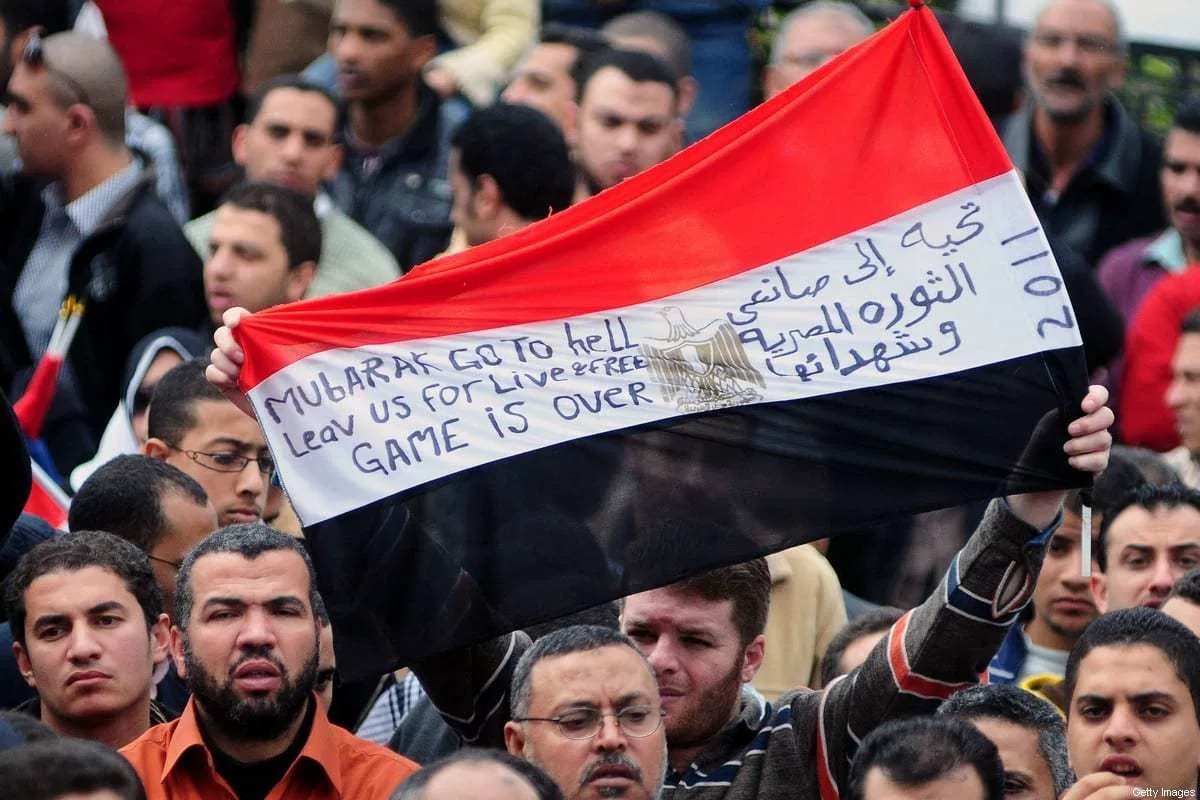
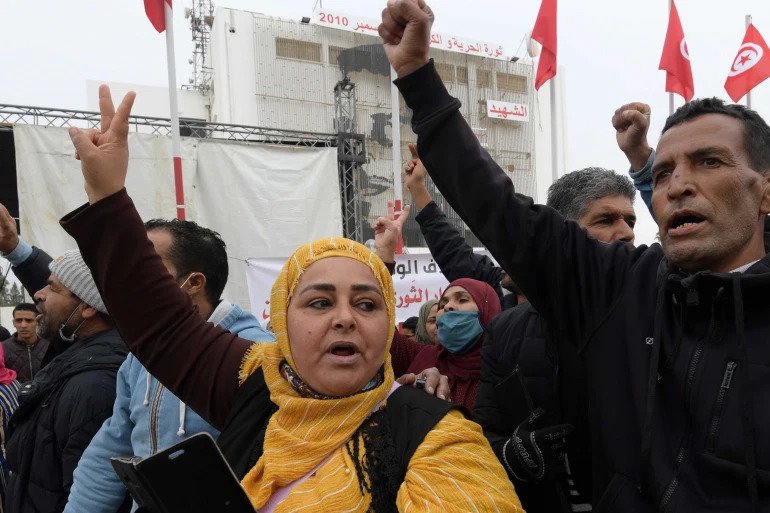
In December 2010 Tunisian street vendor Mohammed Bouazizi set himself on fire in a grizzly protest against the arbitrary seizing of this vegetable stand by police in Tunisia. This marked the start of Tunisia’s Jasmine Revolution which then saw a wave of protests demanding political freedoms across the Arab world.
These revolutions had common themes: Arabs wanted freedom, democracy and Human Rights. The decade long phenomenon came to be known, by the western media, as the ‘Arab spring‘.
What started with protests in Tunis soon spread to neighbouring states. Liberal ideas of personal freedoms, democratically elected government and equal Human Rights fuelled revolutionaries in numerous states across the Arab world.
However, the experiment in several nations like Egypt, Libya or Syria did not work well. It is these three nations who will take centre stage in this analysis of the Arab Spring since they, arguably, experienced the most turmoil.
The protests in Egypt were driven by three core concerns ‘Freedom, justice and human dignity. The people of Egypt took this to the streets during their first protest on the 25th of January 2011. This immense pressure coupled with the weakening grip of Egyptian security forces then saw the resignation of despot President Hosni Mubarak. On the surface this seemed good, dictator gone, time for a democratically elected leader? This instead triggered a power vacuum.
In 2012 Mohamed Morsi was controversially elected and then in 2013, he was displaced via a military coup led by then defence minister Abdel Fattah el-Sisi who remains in power today.
Libya didn’t fare much better. On the 15th of February 2011 Protests in Benghazi over the arrest of Human Rights activists lead to Qaddafi loyalist forces attacking the crowds, indiscriminately killing dozens. The following civil war led to various atrocities, and the advance of Qaddafist forces towards Benghazi (rebel capital and stronghold) led to the U.S -European backed airstrikes against the government troops in March 2011. This helped to change the course of the war and led to NATO eventually taking over the mission with the sole intention of helping the rebels displace Qaddafi.
This military might swiftly be brought an end to Qaddafi and his regime and in October 2011, when Qaddafi was tracked down and killed by rebel forces in his home town of Sirte. The Libyan leader was severely beaten, lynched and shot, and his battered corpse was publicly exposed in Misrata for four days.
On the 27th of the same month, the UNSC (United Nations Security Council) voted to end military operations in Libya. Without any continuous plan, they left the country without any democratic structure to form its government and with rival factions still committing atrocities against each other.
Finally perhaps the most infamous example of how wrong peaceful protests can go: Syria.
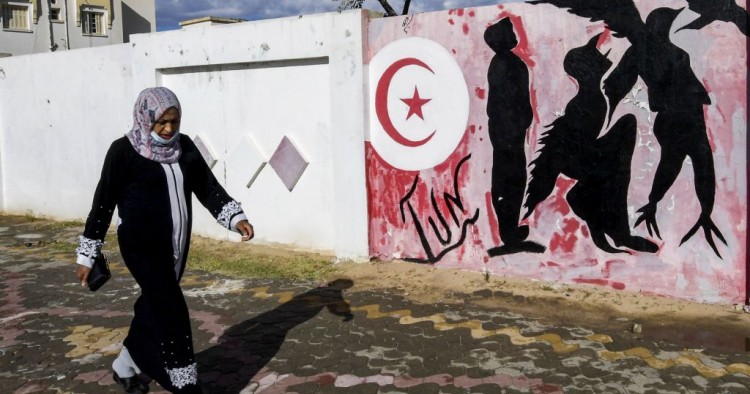
Like the other states mentioned, the Syrian movement against the 40-year Baathist rule and the president Bashar al-Assad, began in 2011. Peaceful protests quickly turned violent as those protesting against the arrest and torture of anti-regime graffiti artists were fired upon by military personal loyal to the Assad regime. What happened next plunged Syria from a liberal uprising into an all-out civil war.
In 2012 the landscape had changed, no longer were Assad’s forces firing upon unarmed protestors, they were engaged in guerrilla warfare against armed factions, splinter cells forged from the civilian protestors they had tried so ardently to suppress.
The development of this civil war displaces and killed hundreds of thousands of Syrian civilian with refugees fleeing to neighbouring Turkey, Lebanon and some taking the perilous journey across the Mediterranean to reach Western Europe.
This war also gave rise to a group now synonymous with barbarous acts of terror across Europe and the middle east, ISIS. In 2014 ISIS proclaimed an Islamist caliphate taking up nearly 1/3 of the territory of Syria. Other Islamist groups, like Al-Nusra Front (Al Qaeda’s subsidiary in the country), took also the main role. On the other hand, the Kurdish forces redoubled their fight against jihadist groups and their atrocities.
Al-Assad could remain in power thanks to the Russian Air Forces, whose jets supported Assad’s ground forces and avoided the fallen of Damascus. The conflict has worsened with the intervention of Turkey, whose troops invaded the northern part of the country to avoid a Kurdish independent state.
So 10 years on, what has been achieved? Frightfully little!
EGYPT – Toppled the Regime of Hosni Mubarak but has since fallen victim to military Coup and now exists under another authoritarian regime.

LIBYA – Is currently under a provisional government ( The Government of National Unity) though not an outright regime their appointment was not democratic. Despite this, however, there is hope with the next election for the national government scheduled for December.
SYRIA – The country sits in rack and ruin as Assad still holds power. His forces, helped by Russia, have been able to almost defeat ISIS (which is nowhere near the power it once was). The only country to benefit in any substantial way from the Arab spring was the country that kicks started it, Tunisia.
Since their first successful democratic election in 2013, Tunisia has seen multiple peaceful transitions of power and now exists under Hichem Mechichi who was elected on the 2nd of September 2020.
The sad reality is then that a revolution that promised so much in the way of freedom and human rights, lead predominately to turmoil and mindless bloodshed. Despite some success in the spread of liberal values, Northern Africa and the Middle East remain a politically volatile space.
To keep up with the latest commercial news, click on commercial to get your daily dose.
Donate & Support