Background of Apple Jazz and Apple Corps
In December 1961, John Lennon, Paul McCartney, George Harrison, and Ringo Starr entered into a management contract with a Liverpool-based record shop manager, Brian Epstein, for securing bookings, advising them, and helping them win record contracts. Mr Epstein subsequently formed a company, called NEMS Enterprises, Ltd.
In 1963, The Beatles were formed, with the four persons being its co-owners. Due to their overwhelming tax burden and increasing popularity, they wanted to launch a company called Beatles & Co., but the process stagnated later on.
They formed Apple Music Publishing in 1967 for signing and promoting rising songwriters, in exchange for half of their royalties. ‘Apple’ was named after René Magritte. In the same year, an umbrella company called Apple Corps Ltd. was formed, with the same group members, adopting the operations of the Beatles Ltd.
Before 2005, Apple Corps sued Apple Computer and EMI, for selling music downloads online and arousing royalty issues respectively. However, Apple, Inc., took full ownership of Apple Corps and later licensed them back, in exchange for $50 million to $100 million, settling all disputes.

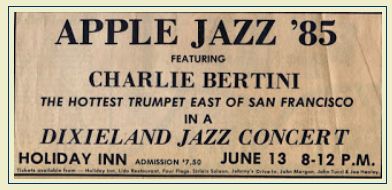
AppleJazz is owned by Charles Bertini, an American Jazz musician, and the mark has a connection with the Cortland Region of New York, which is famous for apple. AppleJazz Records started to advertise “AppleJazz Brand” in the 1980s.
However, the Trademark Trial and Appellate Board (TTAB), while pronouncing judgments, didn’t find anything special in the name AppleJazz. According to them, the word ‘Apple’ is only related to the fruit, which otherwise could have been Apple Country Jazz, had the company wanted to have a geographical connotation ab initio.
The Opposition Facts (Causes of Action)
Apple, Inc., decided to enter into the streaming business in 2015 as ‘Apple Music’, successfully registering and without making variations with the Apple iTunes brand. In 2016, Mr Betini opposed the trademark registration and stated that he had been staging shows and undertaking other projects from the 1980s under the AppleJazz brand.
According to him, the similarity of the Apple Music brand with AppleJazz was creating confusion amongst the consumers. Bertini’s use of AppleJazz pre-dated long to the use of the Apple Music brand by Apple, Inc.
Apple, Inc., on the other hand, poorly argued that Mr Bertini failed to establish priority since AppleJazz is geographically descriptive under Section 2(e)(2) of the Trademark Act, 15 U.S.C. § 1052(e)(2). However, Apple argued that since they had acquired the trademark rights from Apple Corps. concerning the sound recordings and films, Apple, Inc. has the priority for the services which are “closely related to the production and distribution of sound recordings”, as mentioned within the application.
Tacking – A Game Changer
‘Tacking’ played a cameo role in this case. In limited circumstances, a new trademark may be clothed with a priority position, availed by the older mark, and this is a doctrine of ‘tacking‘. However, the new and older marks should be legal equivalents, and create an identical commercial impact on consumers, maintaining similarity between goods or services of two marks.
The Road to Triumph – The Board
Apple Music has priority for the services, in addition to its acquisition of Apple Corps and registration concerning certain services. Based on the pieces of evidence submitted before the board, the Board found that the Apple Corps had been continuously using the mark Apple in connection with music, sound recordings, and films, since 1968.
The TTAB was of the view that the term ‘Music’ is generic, and it does not create a separate commercial impression, when used with sound recordings, production, and distribution of sound recordings, etc. Therefore, Apple Corps applying Apple variations and working as a licensee to Apple Inc. since 2007, ‘Apple’ itself has a strong brand value.

The consumers would know that they are using the Apple Corps since it has been licensed back by Apple, Inc., and the applicant is using Apple Music for advertising, producing, and distributing the sound recordings.
According to the TTAB, Apple Corps’s long association with Apple brand and design let the customer identify Apple Corp’s brand and services, and its modernisation, as a result of adding the word ‘Music’ with Apple, would not significantly impact trade and business.
TTAB found that the concept of tacking in respect of sound recording has been satisfied, whereas tacking for production and distribution of sound recordings for Apple, Inc. has been opposed to. Yet, since Apple, Inc. proved their priority over the use of Apple Jazz for entertainment services, the board quashed opposition.
To keep up with the latest commercial news, click on commercial to get your daily dose.
Donate & Support