
The term Britcoin refers to a cryptocurrency that was launched and based in the United Kingdom. Like other cryptocurrencies, Britcoins allowed traders to execute transactions safely and privately without having to use a bank account. As such, the cryptocurrency, which once traded on the now-defunct Britcoin Exchange, provided individuals with an alternative to the British pound (GBP). Britcoin was delisted from most exchanges by 2019.
The rise and popularity of cryptocurrencies grew exponentially following the financial crisis. Many investors began looking for safer investments, along with alternatives to traditional fiat currencies—money issued by a nation’s government.
Bitcoin was one of the first decentralized cryptocurrencies to come into play. Developed in 2008, Bitcoin began trading in 2009 on a peer-to-peer service or network. They do not require the use of bank accounts or other intermediaries. Transactions are generally verified and recorded through a blockchain—a publicly accessible ledger that records cryptocurrency transactions.
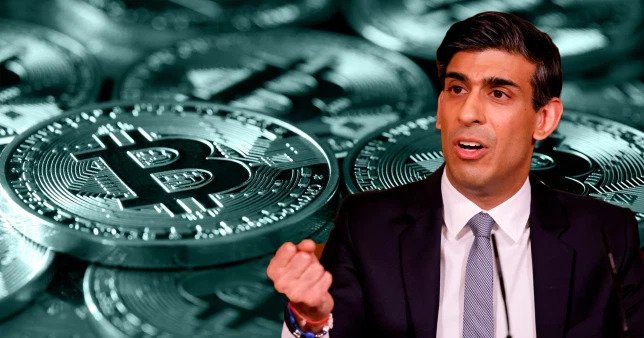
Other types of cryptocurrencies followed—including Britcoin. The service went live in July 2011 by software firm Intersango. In August 2011, Intersango was renamed Britcoin Exchange Intersango, after failing to establish reliable banking relationships in the U.K.
It was the first Bitcoin exchange in the U.K. to offer support for GBP trading. Intersango closed its exchange in December 2012. Trading then moved to other sites such as Bittrex.com, Allcoin.com, as well as the C-cex.com exchanges Bleutrade.com.
Traders were able to trade bitcoins by placing buy or sell orders into an order book that was matched against opposing open orders in full or partially filled, with Britcoin acting as an escrow for the funds. Britcoin also promised to cut verification time from ten minutes to several seconds, rewarding its holders with 5% annual interest.
Britcoin did come with red flags, however, and none of them looked like a Union Jack. First, Britcoin claimed to be proof-of-work, but only 1% of the available coins could be mined. Secondly, the community and its presence on social media sites such as Twitter and Facebook were very thin and appeared to be half-hearted attempts at marketing.

Central banks have been toying with the creation of a central bank digital currency (CBDC) as an alternative to cryptocurrencies like Bitcoin and Britcoin. Trustless currencies like these two examples have been difficult to implement because trust lowers transaction costs.
A fully proof-of-work, trustless systems like Bitcoin and Britcoin offer little privacy, and it is very expensive to maintain in both energy and time. A CBDC, on the other hand, would solve the problem by being the biggest holder in a proof-of-stake system.
The argument for digital fiat currencies over cryptocurrencies like Britcoins is primarily rooted in the issuing authorities of a nation’s currency. For instance, consumers have the full faith and credit of the U.S. government in the U.S. dollar. Furthermore, the most contact people have with a sovereign currency is through cash.
Money used with a credit or debit card is, in fact, bank money and it is one step removed from the issuing authority. Bank money is often the place where fees are levied, which means CBDC would offer the fee-free cost of sovereign money with the convenience of digital money.

Proposals have been in place to study and to establish e-money or e-currency much like the e-krona used in Sweden, where only 60% of the population remembers using cash in the last month. There is no definitive timeline, though, as to when countries like the United Kingdom may establish their own CBDC.
The new British task force is part of a series of measures that Treasury chief Sunak hopes will help the UK’s financial technology sector.
Our vision is for a more open, greener, and more technologically advanced financial services sector,” he told a fintech conference. “And if we can capture the extraordinary potential of technology, we’ll cement the UK’s position as the world’s preeminent financial centre. Promoting Monday’s announcement on Twitter, Sunak was brief.
To keep up with the latest commercial news, click on commercial to get your daily dose.
Donate & Support