After months of attempting to evade arrest, former president of South Africa, Jacob Zuma turned himself into authorities on July 7th. Zuma was sentenced to 15 months in prison for disregarding an order in February to provide evidence for an inquiry examining corruption from his nine years of presidency.
Police had indicated they would arrest Zuma by the end of Wednesday (July 7th) if he failed to appear at the police station. In an attempt to prevent his arrest, hundreds of Zuma’s supporters showed up outside his rural homestead in Nkandla, KwaZulu-Natal (KZN) province, in some instances with guns, spears and shields.
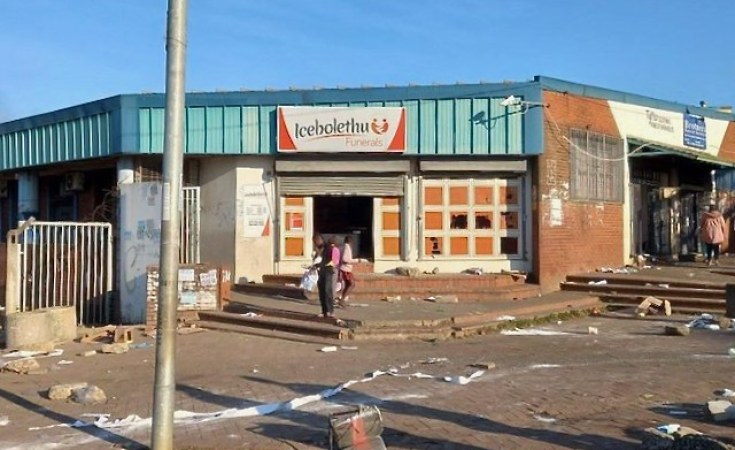
Rioting began at Zuma’s home but later escalated to Mpumalanga, Gauteng, Kwa Zulu-Natal and into the Northern Cape.
The ramifications of Zuma’s imprisonment triggered what has been called the worst social unrest in South Africa since Apartheid.
The police and military used stun grenades and rubber bullets in an attempt to control the mass looting and violence that culminated. At least 330 people were killed and more than 3,000 were arrested in the turmoil.
Warehouses and stores were ransacked in Johannesburg and Durban. Shops, petrol stations and government buildings were forced to close.
In a Bloomberg report, the South African company Clicks reported closing 106 vaccination sites and 279 of their pharmacies until the violence subsides; only slowing current president Cyril Ramaphosa’s vaccination roll-out plan. Although the unrest was triggered by Zuma’s imprisonment, it has been labelled as an outcry against the country’s current economic state.
South Africa experienced the largest decline in annual GDP since 1946, with a decrease of 7%. Unemployment also reached an alarming 32.6% in the first quarter of 2021. Lockdown and COVID-19 restrictions have put significant pressure on local businesses, making economic recovery even more of a challenge.
KwaZulu-Natal Premier Sihle Zikalala estimated that over 1 billion rands worth of damage was incurred from the outbursts. Some economists, however, have estimated double this as businesses continue to be forced to shut down. Despite the significant damage caused by the turbulence over the past weeks, there is hope for the country.
Ramaposa spoke out against the violence, stating that “While some may be hurt and angry, there is no excuse for violence.”
He has further announced a new relief package to aid the recovery of the economy and provide relief to those most vulnerable to COVID-19 lockdown restrictions and the unrest.

Some of the benefits in this package include reinstating a monthly welfare grant of 350 rands ($24) for the poor, support for uninsured businesses, and a 400 million rand state contribution to a humanitarian relief fund.
To keep up with the latest commercial news, click on commercial to get your daily dose.
Donate & Support