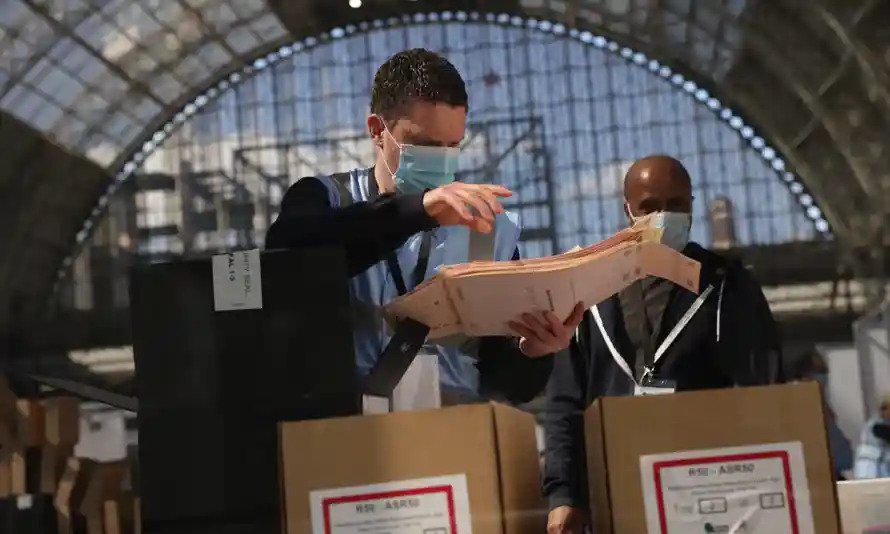
Boris Johnson’s Conservative Government used the Queen’s Speech this week to lay down the foundations for their post-Brexit, post-Covid policy plans, which included restrictions on voting that could have major implications on a wide range of prospective voters.
Interestingly, Boris Johnson once wrote that if he was asked to show an ID card, he would rather eat it instead.
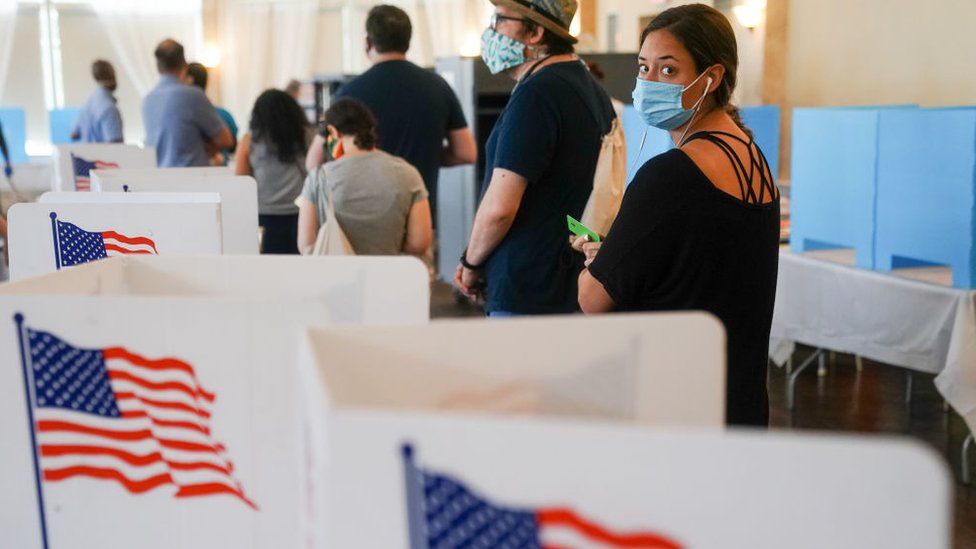
The measure, which has been hinted at for a few months, would require voters to show a photo ID when they vote, such as a passport, driver’s licence or travel passes. However, there are claims that this would harm the democratic process in the UK more than it would strengthen it – with opponents pointing towards similar efforts in the US.
The policy announcement was part of the Queen’s Speech – the ceremony where the queen reopens Parliament and delivers a speech laying out what the current government plans to do in its assembly. While it does not have the power to pass laws, it helps to legitimise future legislation and make it more likely to pass, so a Prime Minister will often add flagship agenda into the speech.
Critics of the proposal suggest that it will disenfranchise several groups, including older people, who may no longer have a photo ID; or homeless or poorer people, who might not be able to afford to update their passports or purchase ID, and which could mean they miss out on their vote.
In fact, according to cabinet research, it is suggested that 91% of people have an in-date and recognisable photo ID – and while this sounds high, that estimated 9% without would represent almost six million prospective voters that would not be able to exercise their right.
On the other hand, the problem that these kinds of laws try to stop is not a prevalent issue. There were only 146 cases of voter impersonation fraud between the years of 2010 and 2016 – and only one case in 2019. Furthermore, the proposed legislation could also disproportionately impact Britons from ethnic minority backgrounds.
Some citizens, for example, have to hand their ID over to the Home Office while visa applications are processed. Since minority ethnic people are more likely to vote Labour rather than Conservative, there is the suggestion that this is about actively suppressing the vote more than fixing any legitimate issues.
These tactics have recently been used across the pond in the US, too. It is perhaps no surprise that Donald Trump has been a big fan of the proposal in the Queen’s Speech, given his Republican party has been fighting to suppress voting laws similarly in the US.
The ACLU says that voter ID laws disenfranchise millions, price the poorest in society out of democracy, and decrease turnout at polling stations. They suggest that 25% of all African Americans do not have photo ID, versus 9% of white Americans.
The discrimination is actively enforced, too. White voters are less likely to be asked about their ID than non-white voters; and in Texas, conceal-carry weapon permits were allowed to be used for ID, but student ID was arbitrarily not.
Voter ID laws can be seen as an attempt to lower voting turn-out, disenfranchise oppositional voters, and damage the democratic system – a solution in search of a problem, rather than the other way around.
To keep up with the latets commercial news, click on commercial to get your daily dose.
Donate & Support