Your commercial awareness dose
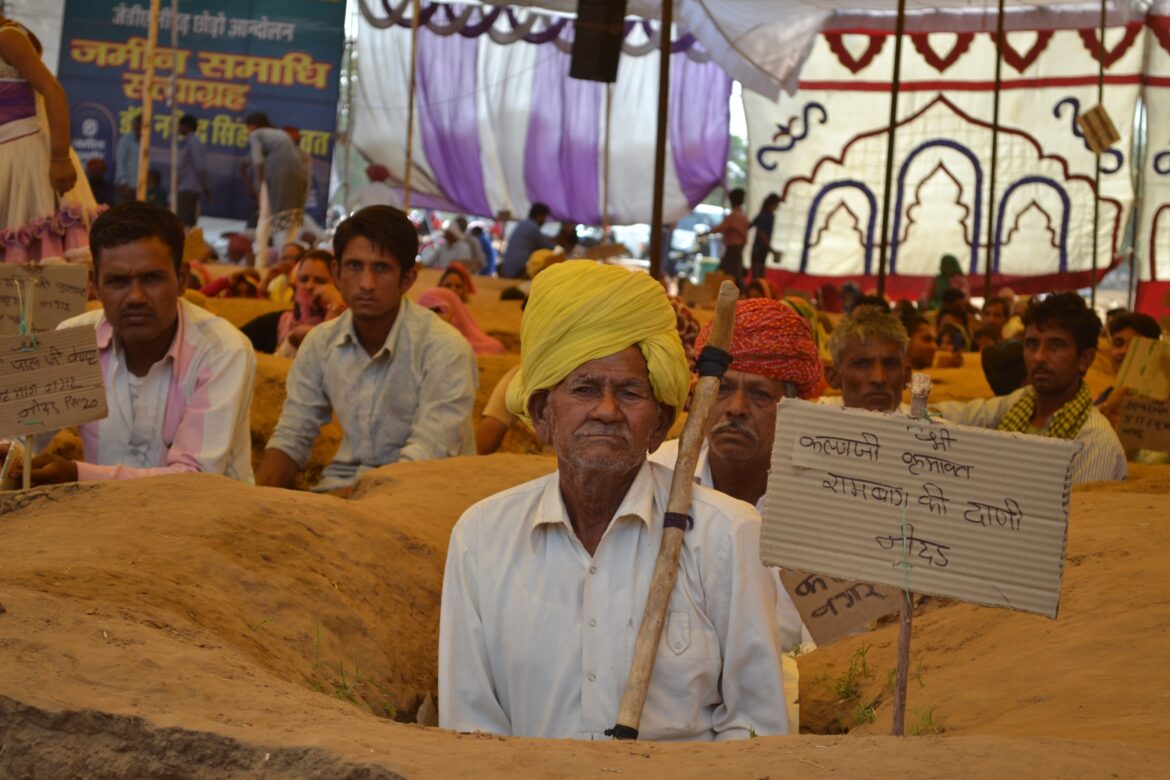
The 2020-21 Indian farmers protest is an ongoing movement against the three farm acts that the Indian Parliament passed in September 2020. The three farm acts have been rejected by farmer unions and have been termed “anti-farmer laws”. According to farmer union leaders, the three farm acts would destabilize the smooth functioning of farming as a whole and would leave farmers at the behest of the businessmen, industrialists, and corporates.
The Government of India responded that they would ensure that the farmers of India sell their produce directly to the corporates and big buyers and ensure that the farmers may not be disadvantaged. The farmer unions were adamant about their point of view and demanded that the three acts be repealed. This led to the start of a strong protest in October 2020 and is still being held intermittently in the form of lockdowns, staged protests, a long march to the Capital, demonstrations, and suicide attempts.

What did lead to the protest?
The Government of India promulgated three ordinances related to the farmers’ produce, their sale, hoarding, agricultural marketing, and contract farming among other things in June 2020. The three ordinances were passed by Lok Sabha and Rajya Sabha as bills and the President of India gave his assent to the three bills in September 2020 and made the three as acts. The legality of the laws was questioned as the legislation related to agriculture was a subject of the state according to the Indian constitution. The three laws were:Farmers’ Produce Trade and Commerce Act; Farmers Agreement on Price Assurance and Farm Service Act; and Essential Commodities Act.
The farmers union rejected the laws and protested respectively in the form of Rail Rokko (a movement to shut down railway services in Punjab), Delhi Chalo (A long march towards the capital), and Bharat Bund (A movement to ensure a complete lockdown). The farmer unions demanded to repeal the three laws as a whole. Countrywide protests are being held by farmer unions intermittently. The situation is worsening in India as the Indian economy is already mired in the pandemic of COVID-19. Many Farmers have burned their crops and fields in the protest which does not augur well for an already downtrodden Indian agricultural sector.

Outcome
The negotiations between the government and the farmers union are still going on with no outcome yet. Eleven rounds of negotiations have taken place between them from 14th October 2020 till date with no conclusive result yet. The Agriculture minister Narendra Singh Tomar, Food minister Piyush Goyal, and Minister of the State for commerce Som Prakash were in talks with the representatives of 41 farmer unions. The Farmers have put forward ten-point demands and want that all the demands be fulfilled to end the countrywide protest. On 30th December 2020, the government of India agreed to two of the demands of the farmers union related to the new pollution law and the new electricity ordinance. All other demands are held in limbo.
In a crux, we can infer from the above discussion that the 2020-21 Indian farmer’s protest has distorted the socio-economic stricture of India. The Government of India wanted to ameliorate the agricultural sector of the economy by reviving the formal and informal norms and institutions. The farmer unions took the laws against their interests and responded in the form of protest. Both parties should understand the severity of the situation and find a solution, amicably, for the betterment of the nation as a whole.
To keep up to date with the latest commercial news, click on commercial to get your daily dose.
Donate & Support