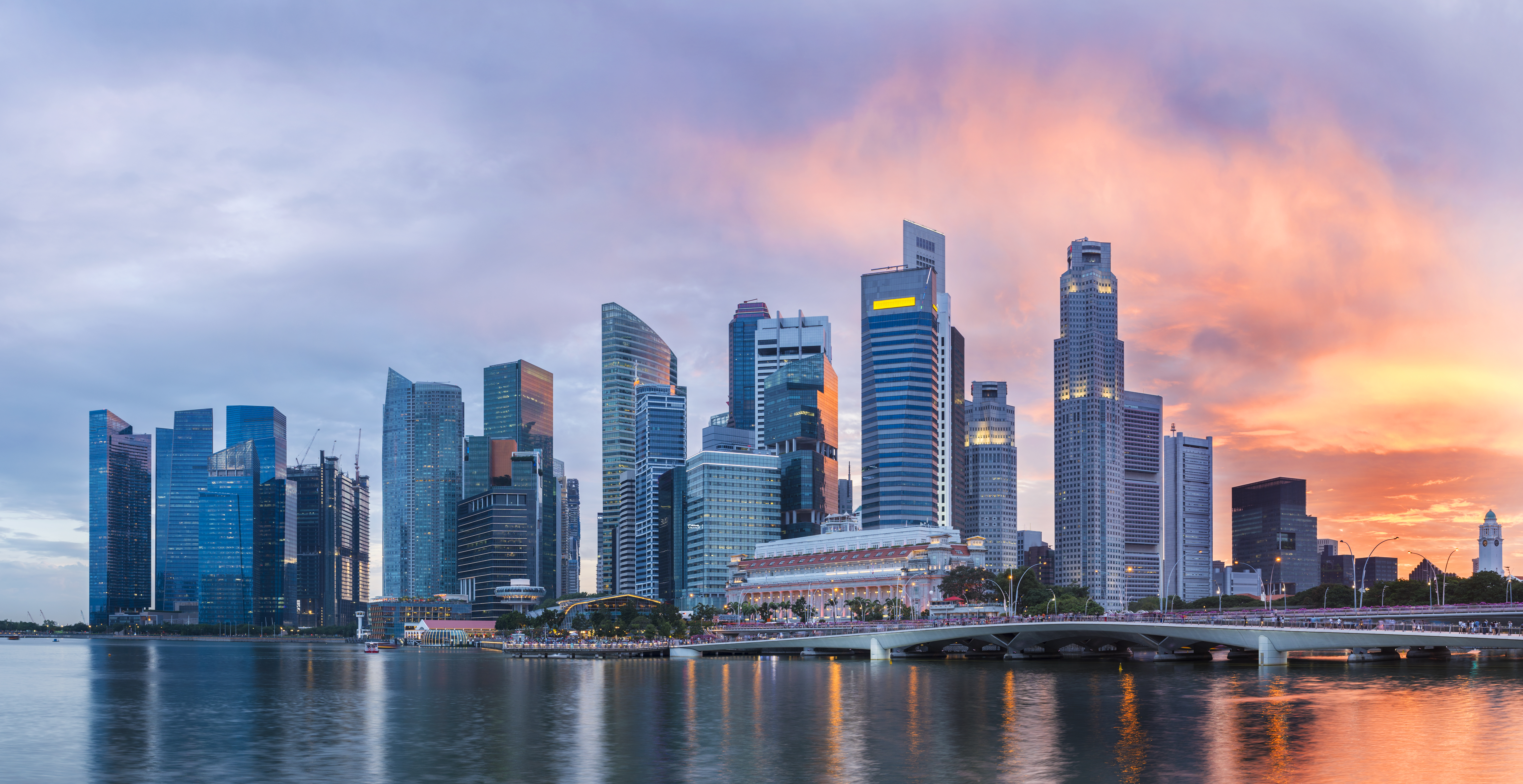
Singapore is an emerging market in South East Asia, and with its prime location with ties to the rest of Asia, it has piqued the interest of investors and entrepreneurs. Even throughout the COVID-19 pandemic in 2020, Singapore remained within the top 5 richest countries based on GDP per capita. Whether investors are looking to expand or build a business in Singapore, or invest within the stock market there, great opportunities can be found.
The city-state boasts of a convenient location for imports and exports, with links between 600 ports throughout 120 countries. Despite still being considered as an emerging market for investors, Singapore is home to headquarters of over 37,000 international companies as well as one of the most sought-after locations for skilled workers from overseas to relocate to due to being viewed as trustworthy in terms of sustainable economic growth.
If interested in investing in Singapore by buying stocks on the stock market there, the first step to make is by setting up a Central Depository Account (CDP) which is where you will keep the stocks bought on the Singapore stock market. This can be done by opening an account directly with a CDP or by approaching a brokerage firm who will set it up for you. You will need to be over the age of 18 and be financially stable to do this.
There are various methods to invest aside from starting a business and looking into Exchange-Traded Funds (ETF) is a great place to begin. ETFs are funds made up of a ‘basket’ of assets. ETFs are widely popular because the assets purchased together is far cheaper than if they were to be purchased individually. Another great method would be to invest in Singapore bonds, some good places to start would be, Singapore Government Securities, Singapore Savings Bonds, Singapore Corporate & Retail Bonds.
Singapore has become popular with businesses and investors due to Singapore’s many business-friendly regulations, low tax rates and the lowest sovereign credit risk in South East Asia. For certain businesses and industries, there are special tax exemptions and tax incentives, as well as a low personal tax rate in general. As Singapore is within the top 20 countries for imports as well as exports, they are open to foreign investment and business.
For those looking to expand throughout Asia once establishing themselves in Singapore, there are plenty of opportunities to do so due to its proximity to other countries popular with investors such as China. Singapore also has an impressive trade network with 20 free trade agreements with 31 different partners.
There is a push from the government in Singapore for investment within rapidly growing sectors such as financial tech, fintech and e-commerce. Fintech start-ups in Singapore are also given permission to experiment with different financial products and services without the fear of harsh financial losses, as the government is anticipating a quick expansion of the industry.
E-commerce is also something that holds great potential for investors and entrepreneurs, as in Singapore there are over 250 million smartphone users, yet e-commerce accounts for just 3% of retail sales. Looking at how e-commerce has dominated other countries like China, e-commerce is an industry that could be wildly successful in Singapore once tapped into by investors as well as those looking to expand their business.
As Brexit has now officially happened and the UK has left the EU, many investors and businesses in the UK are now looking beyond the EU to invest in or to expand to. The UK government is also encouraging this expansion, especially when it comes to exports.
To keep up to date with the latest commercial news, click on commercial awareness to get your daily dose.
Donate & Support