Education is an important topic. It is mandatory until different ages in different countries lead to the acculturation of the person and to “upgrade” one’s social class by occupying a particular job position. Education is important also in terms of one’s active participation in society. This is because our structure is globalized and through this, the more we know, the more we can reach new heights individually and societally.
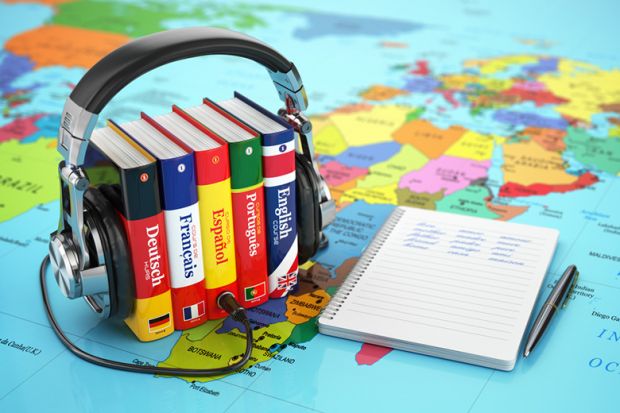
A particular sub-category I believe to be particularly important is the language education sector. Language is the most powerful tool we can use to be free, in every sense. Without it, it is impossible to communicate, to get what we want, to reach an important goal. The political aims of modern languages in the EU are to equip every citizen to face challenges deriving from international mobility and to promote respect, tolerance and reciprocal comprehension amongst different cultures. This allows the collective to see, preserve, and increase the European cultural life as well as avoid the marginalization of people who do not have the tools to communicate with another effectively.
It is a delicate topic and is usually quite underestimated. When approaching and learning a new language, it is important to take into consideration what kind of motivation the person has in doing it. to have a good learning experience, an individual must have the motivation to learn it. These different types of motivation can be divided into four types: intrinsic, extrinsic, integrative, instrumental. The intrinsic reason comes from the individual. For instance, if the motivation is intrinsic it will typically concern a passion or hobby and thus, make it the most powerful form of motivation. The second one, extrinsic, is due to external factors. The third one, integrative, concerns the willingness or necessity of being integrated into the community. The last one, instrumental, refers to educational or professional aims.
Of course, if someone does not have any form of motivation, it is impossible to learn a new language and achieve the goal. Learning a language also means having a tool that is considered useful in reaching purposes, expressing a social role, proving belonging in a community, expressing culture, and elaborating on ways of thinking and feeling.

Based on documents known as the Charter of Fundamental Rights of the European Union, the EU is particularly known for the diversity in languages as there are 62 official languages. Due to this, there are efforts to preserve such languages and make sure that the civil, political, and social rights of the EU citizens are met and upheld. Especially, two articles refer to languages: art. 21 (aiming the non-discrimination) and art. 22 (aiming the cultural, religious and linguistic diversity).
A huge contribution to the language learning path was given by the establishment of a Threshold Level by the Modern Language Project (1967). It offered a clear list of functions and notions a person should have to “survive” in a foreign country. This move stimulated the creation of a more organized and described organization of learning: the Common European Framework of Reference for Languages (CEFR – the 1990s). It displays a bigger range of levels, with the base (A1 and A2), the intermediate (B1 and B2) and the advanced ones (C1 and C2). Therefore, it is a transparent list of functions and notions more or less the same for all the EU. It helps the cooperation of various institutions to identify the level a person from a foreign country has.
Bibliography:
- Consiglio d’Europa, “Quadro Comune Europeo di Riferimento per le lingue: apprendimento, insegnamento, valutazione”. La Nuova Italia, 2002.
To keep up with the latest commercial news, click on commercial to get your daily dose.
Donate & Support