Why is it MSCHF?
MSCHF is a misspelling of ‘mischief’, more prominently ‘miscellaneous mischief’, and the name has appropriately hinted at what its business is all about, through a suggestive trademark. Mischief is primarily interested in touching and pushing the boundaries of ingenuity, poking, teasing and making fun of its gigantic commercial contemporaries, with apparently unprecedented, cynical, absurd and creative products.
However, it would not be befitting, if MSCHF is considered to be a sneaker company since they generally work independently.
MSCHF and Ways to Running the Brand
MSCHF, a startup consciously referring to themselves as a “group”, “art collective” or a “brand”, started their venture in 2016. Mr Gabriel Whaley is the Founder and CEO of the company, and he is primarily the innovator of all pranks and stunts. After resigning from Buzzfeed, with his online story-telling propensity and enviable ingenuity, he switched over to the virtual world, accessing commercial assistance from Casper. Mischievous products, which are launched by MSCHF, are formally called ‘drops’.
The company does not operate the business from their website or any social platforms; their Twitter and Instagram accounts have been kept private. They generally access the orders with a mysterious phone number. The group is not very transparent, nor it franchises or advertises on its behalf for maintaining sustainable growth.
However, they generally link their basic projects to social affairs, which may be an important way to soliciting one’s brand. For instance, they had ‘dropped’ shell restaurant for fundraising purposes, before the Presidential elections in November 2020.
So how do they work? Being located in Brooklyn, New York, MSCHF is divided into separate departments, such as planning, development, production, distribution and outreach, with about 13 specialised employees working for the group. Until late evenings, they work on setting while maintaining lines of codes and stretching their fun-making creations, in a tiny ‘conference room’. They launch their drops in every two weeks, which they capitalise on. However, they prioritise creativity over commercialization.
Drops and Intellectual Property
The first MSCHF drop was a 2008 six malware Windows laptop. This was launched in May 2019 and it immediately sold out for $1.34 million. After that, starting from the ‘Man-Eating Food’ YouTube channel to the latest drop #43, a controversial Lil Nas X Satan Shoes, the company stretched out its boundaries continuously very remarkably.
How do their creative works go? One of their new drops was #drop 39, which was a ‘Birkinstocks’ footwear. They mashed up two well-known brands – Hermes Birkin and Birkenstocks. They made a parody version upon the trademark of Hermes and used an ‘i’ instead of ‘e’ for their ‘Birkinstocks’ shoe. Yes, they perhaps have infringed intellectual property rights, whilst borrowing reputed trademarks and raw materials for their respective products.
For instance, ‘Birkinstocks’ footwear was made of torn Birkin bangs. However, MSCHF may be defended with the following jurisprudential norms:
(i) Since they randomly borrow and utilise raw materials into the projects, it would not be an infringement for artistic work, unless their creations substantially become identical with any product(s) in question for a well-known brand. Instead, every drop is substantially an original work in itself.
(ii) MSCHF may get the protection of the Doctrine of Exhaustion, the doctrine of the first sale. The doctrine depicts that, once a product has been sold, the owner of the particular good exhausts its control over reselling, lending or commercial uses of the product. Therefore, the right of exhaustion, if it is applicable for a nation or a region, or across the globe for a particular nation or region, may benefit MSCHF.
Recent Setback(s)?
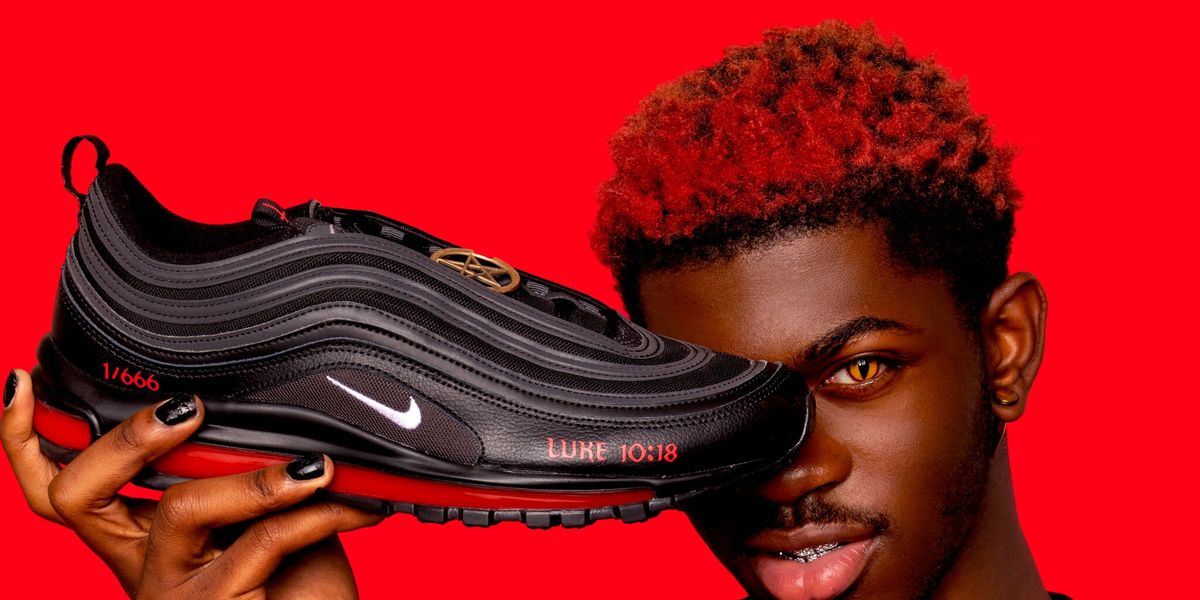
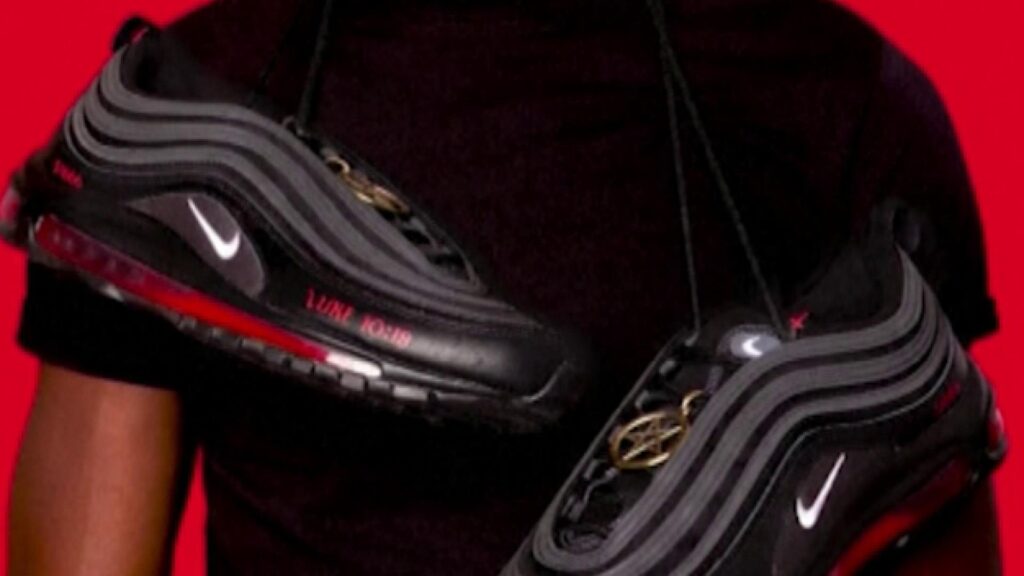
For their drop #43, ‘Satan Shoes’, a £740 trainer ($1018), they collaborated with Lil Nas X, with the release of his song ‘Montero (‘Call me by your name’) on March 26 2021. MSCHF modified Nike Air Max 97s, featuring an inverted cross, a pentagram and a Bible verse “Luke 10:18” mark on the shoe. Most interestingly, the trainers contained 66cc of red ink and one drop of human blood.
Nike claimed that its trademark was infringed, and it lodged a suit against MSCHF before the Federal Court, New York, for preventing the company from selling the trainers. MSCHF lawyers defended that the company had created 666 pairs, which were “not typical sneakers, but rather individually-numbered works of art .”
The court adjudicated that, there had already been evidence of “dilution” and “confusion” between the goods of Nike and MSCHF, causing the sports giant to restrict their trade, and Nike had not authorised them to commercialise the product. Hence, Nike won the suit.
“One can love or hate them for their shamelessness, but no….you can’t ignore them”
Dr Sunanda Bharti, Associate Professor, University of Delhi
To keep up with the latest commercial news, click on commercial to get your daily dose.
Donate & Support