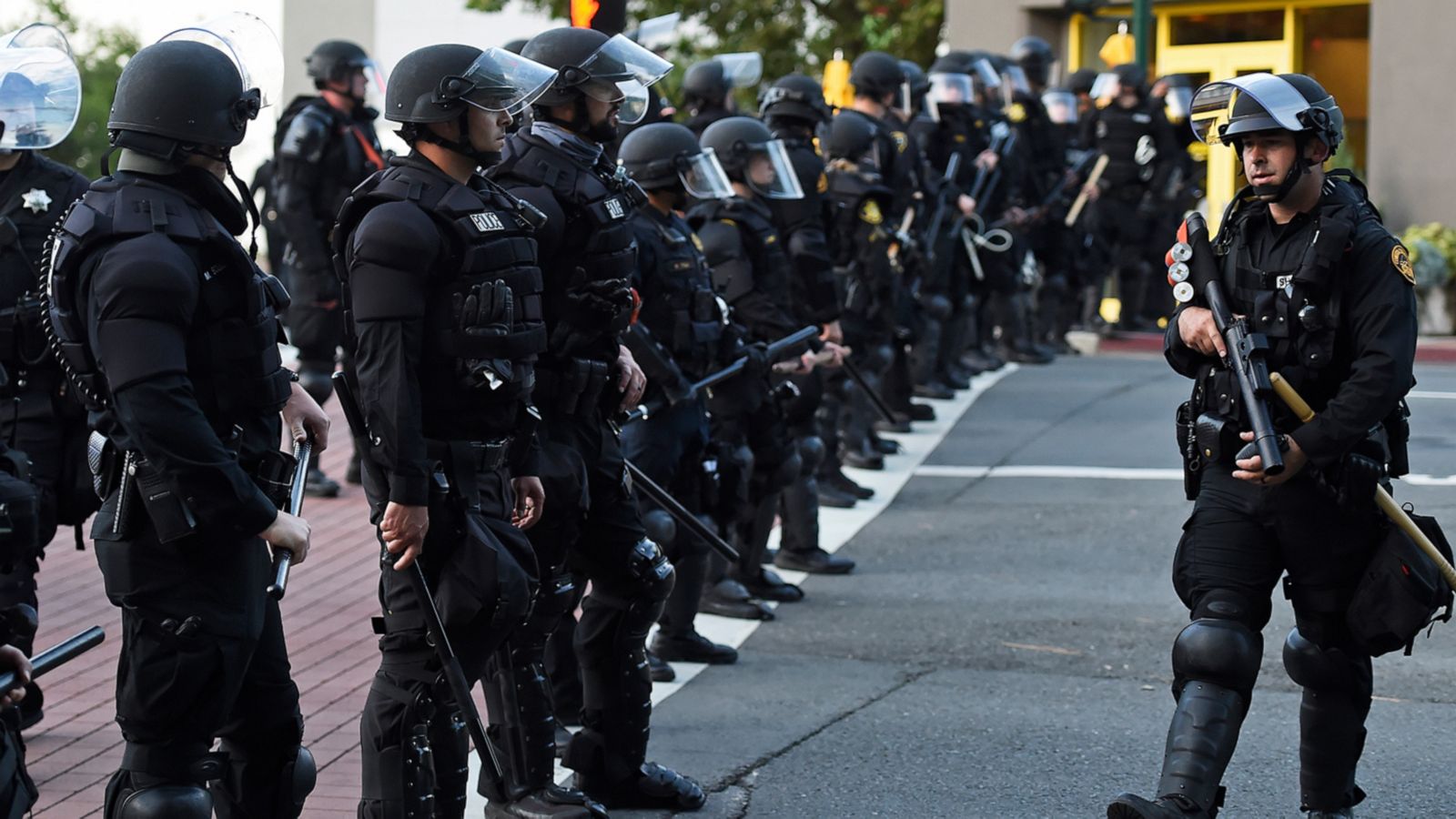
No matter the amount of evidence, the excessive force used, or the lives lost, time and time again we are seeing the US police force get away with, in the most extreme cases, quite literally murder.
One of the most horrific news stories of 2020 was the killing of 26-year-old Breonna Taylor. The victim was sleeping when police officers entered her home in the night and shot her to death. The two officers who shot Ms Taylor six times were not charged.
The lack of indictment was rightly an outrage to many – but did not come as a surprise. About a third of police officers that cause death in the line of duty is convicted, and only a few are charged with murder or manslaughter. Between 2005 and 2019, only three officers were found guilty of murder and saw their convictions stand.
With often video evidence of excessive force like in the cases of George Floyd, Johnny Leija, Jacob Blake, and tragically many more, you would expect accountability of misconduct to be a standard. However, as in the words of Justice Sonia Sotomayor of the Supreme Court, the legal doctrine of “qualified immunity” has become “an absolute shield for law enforcement officers.”
When the criminal justice system fails to hold public officials accountable, victims or families of victims have the option to sue.
The Civil Rights Act 1871: Congress gave Americans the ability to sue public officials that violate their legal rights. Further, it has been explicitly stated in the US Code that if a public official violates your rights, whether it be by police brutality, an illegal search, or an unlawful arrest, you can file a lawsuit to hold that public official was financially accountable for the conduct.
The language used by Congress is unequivocal, yet successfully suing a public official is almost impossible. The legal doctrine of qualified immunity makes it so that they can be held accountable only insofar as existing case law has “clearly established” their actions as unlawful. This means that officers’ actions can only be deemed as a violation of rights if the facts of a previous successful case are the same as the one in question.
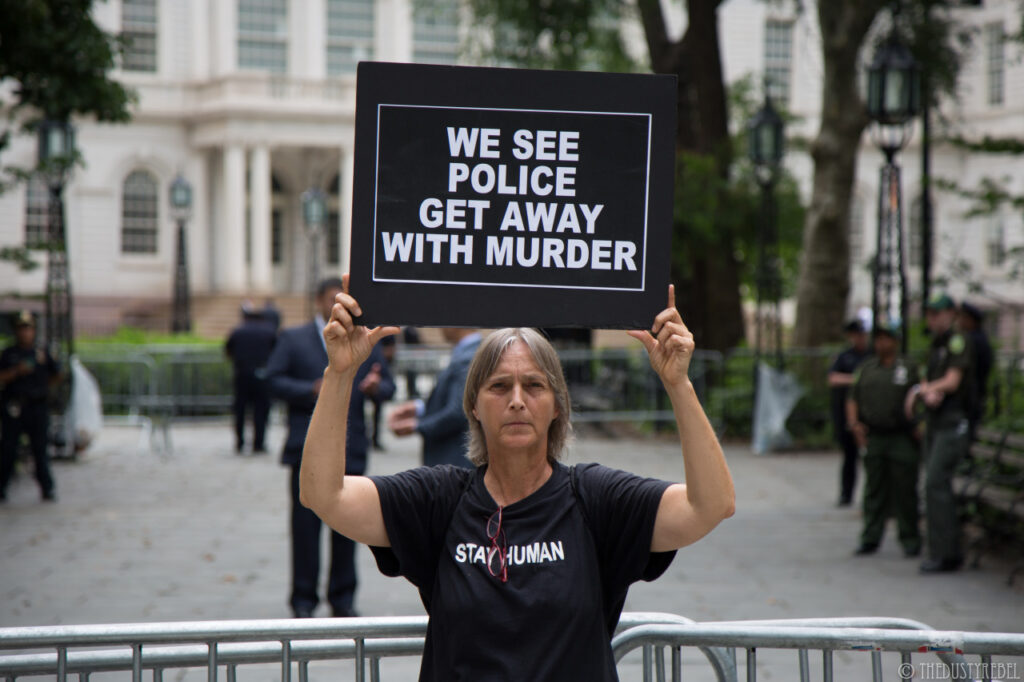
The problem with a “clearly established” precedent is that in court essentially any kind of difference between a previous case and the current case at hand can grant the incidents too dissimilar. In one example, a judge noted that because one event occurred in a Target store and the other on a roadside, there was no “clearly established” precedent. Thus the official was granted qualified immunity.
When a variance this minor disqualifies a case, police officers who have: shot a ten-year-old while aiming at a friendly dog, suffocated a confused hospital patient, or stolen $200,000, are shielded because no officer has been previously sued for committing identical abuses.
The dubious justifications for qualified immunity
The Supreme Court has offered several reasons why they deem this judicial doctrine necessary – each can be disputed with facts.
#1: Qualified immunity protects individual officers from the financial burdens of paying for lawyers and damage awards
However, a study of over 80 state and local law enforcement agencies found in almost all cases costs are paid by the municipality, insurance, or unions and seldom by the individual officers.
#2: Public officials should be protected from the distractions that go along with lawsuits
A study in the Yale Law Journal of over 1,000 lawsuits against law enforcement officers found that qualified immunity is “ill-suited to shield government officials from discovery and trial in most filed cases. Qualified immunity may increase the costs and delays associated with constitutional litigation” (Schwartz, 2017).
#3 If not for qualified immunity, law enforcement would be deterred from doing their jobs effectively
A plethora of evidence has shown that officers do not consider the possibility of being sued when performing their duties. Many studies have concluded that civil liability is key to deterring unlawful conduct.
The effect
Qualified immunity means that victims who have their rights violated cannot hold offending officers accountable for unlawful actions. As a result, officers who commit brutality and harassment – as well as the institutions that employ them – have very little incentive to improve their practices.
Not only does this undermine safety and justice for all individuals, but it also disproportionately impacts people of colour or vulnerable people who are most likely to be the target of police abuse.
Petition for legislative reform: https://www.change.org/p/us-supreme-court-qualified-immunity-legislative-reform
To keep up with the latest legal news, click on legal to get your daily dose.
Donate & Support