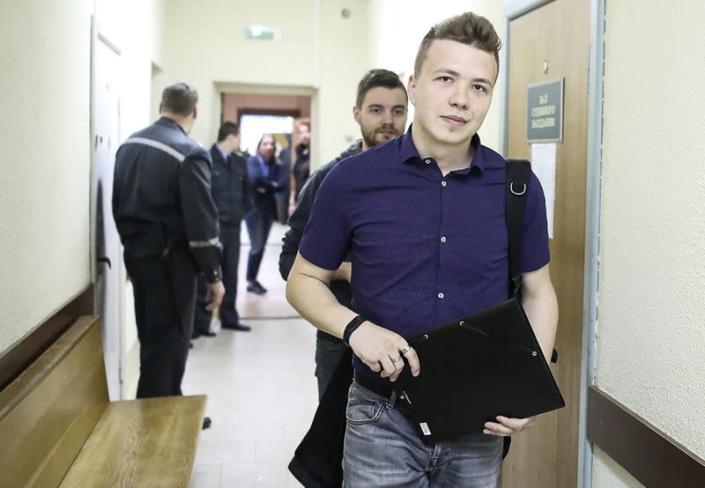
When Belarus forced a flight from Greece to Lithuania to land within its borders, it was unprecedented. When in Belarusian airspace, the plane was told to make an emergency landing in the capital, Minsk, and was escorted by a fighter jet. Only after the plane landed, Belarusian officials declared there had been a security threat on board, and for the safety of the plane they needed to check it. Instead, they pulled journalist Roman Protasevich and his girlfriend from their seats and arrested them.
The hijacking has sparked a wave of criticism and condemnation against Belarusian President Lukashenko that has been overdue, off the back of his ** unbelievable election victory in 2020, which was met with weeks of protest by the public in Belarus, and unlawful arrests and violence from state forces and police.
Why Roman Protasevich?
Alexander Lukashenko has enjoyed executive power in Belarus for the last twenty-seven years since his ascension to power in 1994. Since then, he has wielded authoritarian power with little real consequence. It is something that he seems to revel in. When Guido Westerwelle, Germany’s foreign minister who was openly homosexual, branded him as “Europe’s last dictator” in 2012, Lukashenko declared that it was “better to be a dictator than gay.”
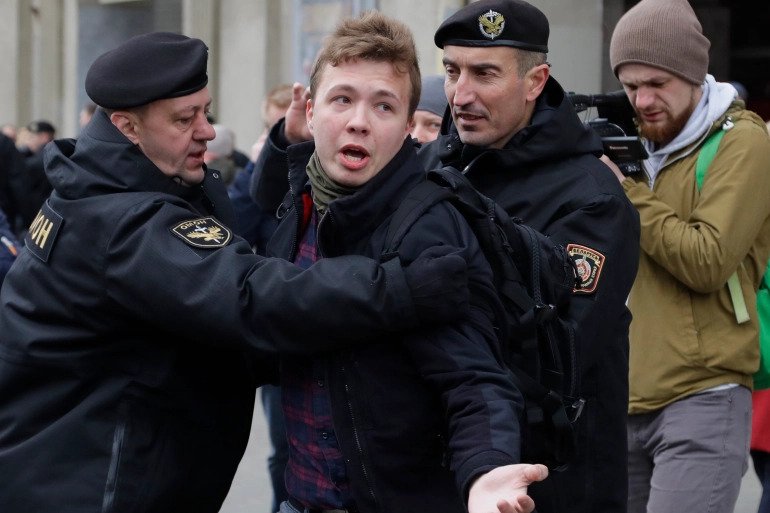
Lukashenko’s defence, however, is waning. 2020 saw the largest protests on the streets of Belarus since the Soviet Union. The people have been demanding change, and Lukashenko has been desperately resisting it. Before the election, he had his main opposition Sergei Tikhanovsky arrested, forcing his wife Svetlana Tikhanovsky to run in his place. There are allegations of ballot stuffing, and Svetlana suggesting that she won 60% of the vote. All this led to weeks of protests and movement on the streets, broadcast internationally by news agencies.
Roman Protasevich is a known anti-Lukashenko activist and journalist, operating on the messaging app Telegram with the “Next” channel, to broadcast information about, and organise the Belarus protests in 2020. He was removed from the Ryanair flight by Belarusian officials for allegedly being on their terrorism watchlist, along with his girlfriend Sofia Superga.
Since then, it has only gotten worse for the two of them. Sofia Sapega has been detained for two months and has not been allowed to have their family see her. Roman Protasevich, on the other hand, appeared on state television a few days later confessing to attempting to topple Lukashenko and apologising for organising riots against him. He looked drained and there were marks on his wrists that suggested bindings. Many human rights activists have suggested that he had been tortured, and the confession was made under duress.
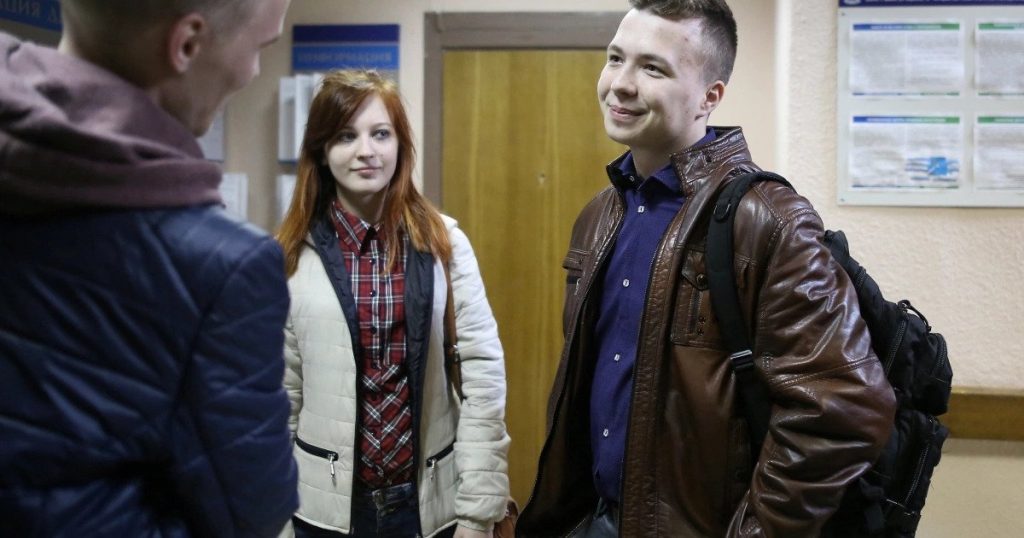
It is unclear what will happen to Protasevich next. For the crime of “mass unrest”, he could get fifteen years in prison. While in prison, he could be extradited to Ukraine, where he has been accused of being involved in the conflict in the Donbas region against Russian-backed fighters, who have opened a criminal case against him. Even in Belarus, he fears for his life – when he was being removed from the plane, he said that he’ll “get the death penalty here.”
Going Forward
After the 2020 Election, the alleged fraud and the riots, the EU declared sanctions against Belarus and said that the €53m earmarked for Belarus will be diverted to “civil society”, although it is not entirely clear what that means. After the Ryanair hijacking, though, there appears to be more action to come.
EU flights have been officially banned from going over Belarusian airspace after some companies already decided to avoid it anyway. More sanctions are expected from the EU and other international actors, with it being a talking point at the upcoming G7 summit.

Although reaction and outcry have been strong, it has not been very effective. Lukashenko has one main ally behind him, which is Putin’s Russia. Putin, incidentally, is also another authoritarian figure who allegedly rigs elections, manages to easily shake criticism, and has recently arrested a dissident oppositional journalist in Alexei Navalny, among other things attributed to Russia.
It looks like for the future, Lukashenko’s regime will be protected by Putin’s power, and may well be emboldened by him, and other human rights-violating regimes around him, like Poland’s anti-LGBT and anti-abortion movements, and Hungary’s slip into Viktor Orbán’s xenophobia and authoritarianism.
To keep up with the latest commercial news, click on commercial to get your daily dose.
Donate & Support