
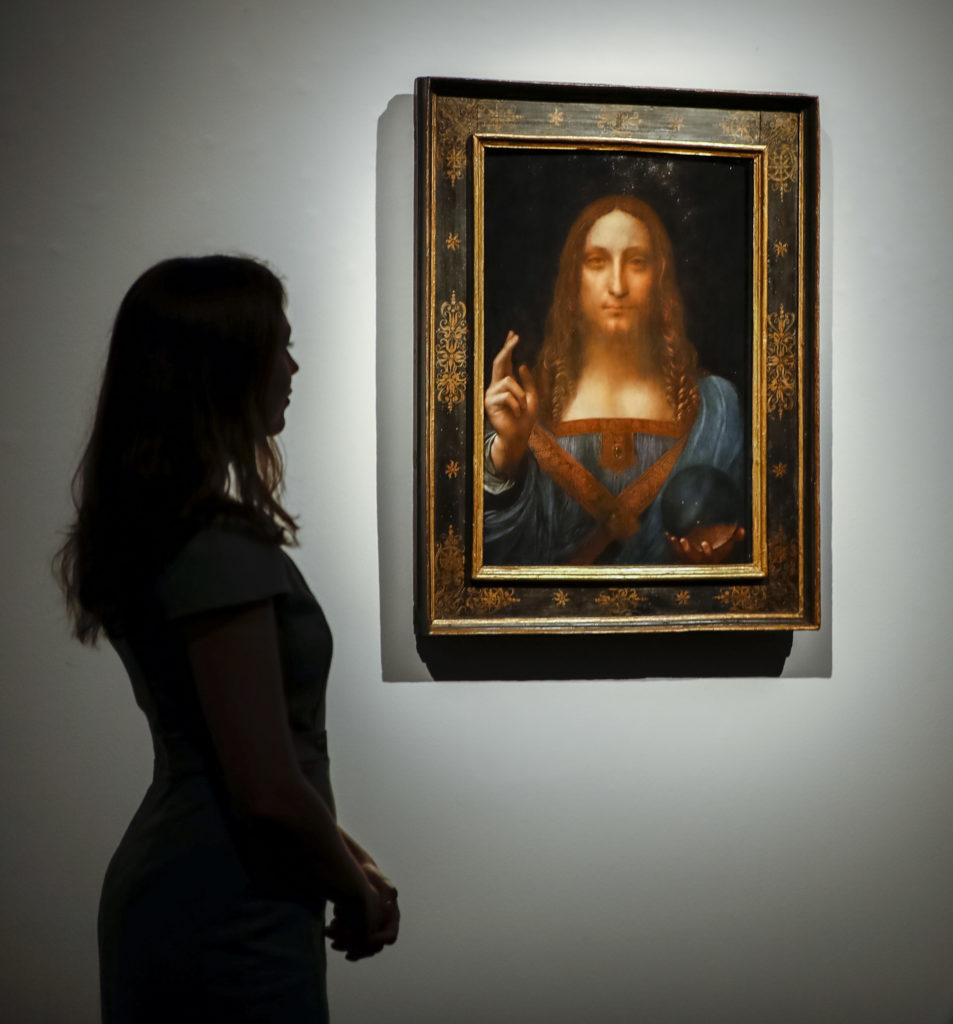
Salvator Mundi is the most expensive painting in the world. It was sold for $450m at Christie’s auction in 2017. Claimed to be the last painting of Leonardo da Vinci, Salvator Mundi rose in popularity after the claims in 2011. However, the most expensive painting in the world is suspected to be the most expensive fake in art history.
The Beginning
Art dealer, Robert Simon, and his colleague, Alexander Parrish, bought a painting by an unknown artist in 2005. They are said to have paid $1,175 for it. Later, it was purchased by a Russian oligarch. Finally, Dianne Modestini was asked to restore it. Her work on the piece eventually led to the discovery that it was Leonardo da Vinci’s Salvator Mundi in 2011. The National Gallery even displayed it in its 2011-12 Leonardo exhibition.
The discovery increased Salvador Mundi’s value and it sold at Christie’s for $450,312,500. The price of the piece staggered everyone. It edged out the owner of Picasso’s Les Femmes d’Alger and the purchaser of Willem de Kooning’s Interchange.
Sudden Popularity
Some question why the painting no one remembered was sold for the breathtaking price in 2017. This is attributed to Christie’s promotional campaign. They presented Salvator Mundi as The Last Leonardo and the male Mona Lisa.
All around the globe, the painting got outstanding television coverage which pushed forward the idea of the authenticity of Salvator Mundi. It was seen as a bid to entice Asian and Middle Eastern buyers who are the market’s biggest players. For that very reason, Salvator Mundi was not promoted as a Christian figure.
To some extent, it explains why the painting got sold for such an outrageous price. However, it does not explain why the authenticity issues arose right after the purchase.
Authenticity Issues
On one side, there were findings published by Dianne Modestini that supported Salvator Mundi’s authenticity. The National Gallery displayed Salvator Mundi in 2011-2012 and Christie’s categorized it as Leonardo da Vinci’s work. On the other side, there are the Louvre findings and the recent documentary which deny the 100% connection between Leonardo and Salvator Mundi.
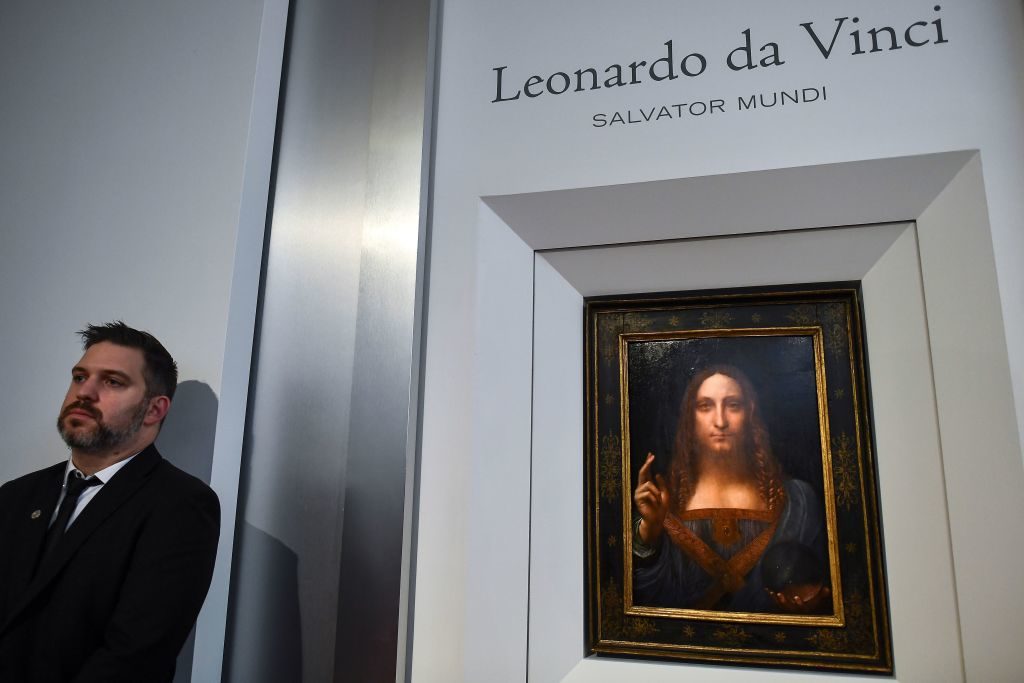
Following extensive scientific analysis, experts at the Louvre concluded that the painting was produced in Leonardo’s workshop but not by the Old Master himself. Art historians, Ben Lewis, Dr Carmen Bambach and Matthew Landrus, support these findings.
With contradictory views and the inability to trace the painting to Leonardo (as opposed to his studio), the attribution claims of Salvator Mundi remain unclear.
Diplomatic Issues
The whole situation caused minor diplomatic issues between France and Saudi Arabia. The Crown Prince of Saudi Arabia, Mohammed Bin Salman, was the one who bought Salvator Mundi. However, as attribution issues arose, he delayed the delivery of the piece to the Louvre for the Leonardo exhibition and he retained it on his yacht, Serene, instead.
The recent documentary on Salvator Mundi alleged that the owner pressured the Louvre to lie about the authenticity of the painting to spare him the public humiliation of having spent $450 million on a fake. When the Louvre refused to present it as 100% Leonardo, the owner refused to loan it for their Leonardo exhibition in 2019.
However, it is said that a book was produced by the Louvre in 2019 in case the French government bent on Saudi Arabia’s wishes. The secret booklet, Léonard de Vinci: Le Salvator Mundi, affirmed that Salvator Mundi was da Vinci’s creation. However, as the painting was not loaned, the booklet was never distributed. This was conveniently omitted in the documentary.
Conclusion
Salvator Mundi is surely a sensation in the art world. A staggering value of $450m and doubtful attribution claims only feed into its fame. With no connection to Leonardo da Vinci, the painting would lose its value.
The most interesting is the question of who could be held accountable for the consequences of misattribution. The issue is not black and white. However, one lesson is to be learnt: we should think twice before spending $450m on a piece of art.
To keep up with the latest commercial news, click on commercial to get your daily dose.
Donate & Support