Seaspiracy is a Netflix shocking documentary that highlights how human beings are destroying the oceans. Generally speaking, when talking about the pollution in the sea the first thing which comes to mind is plastic (bottle, straw etc).
However, seaspiracy shows that the biggest problem for our oceans is not plastic straws as they account for only 0.03% of the total plastic it is commercial fishing. Additionally, the documentary rejects the idea of sustainable fishing, hence, it criticises much marine conservation.
The greatest threat for our oceans
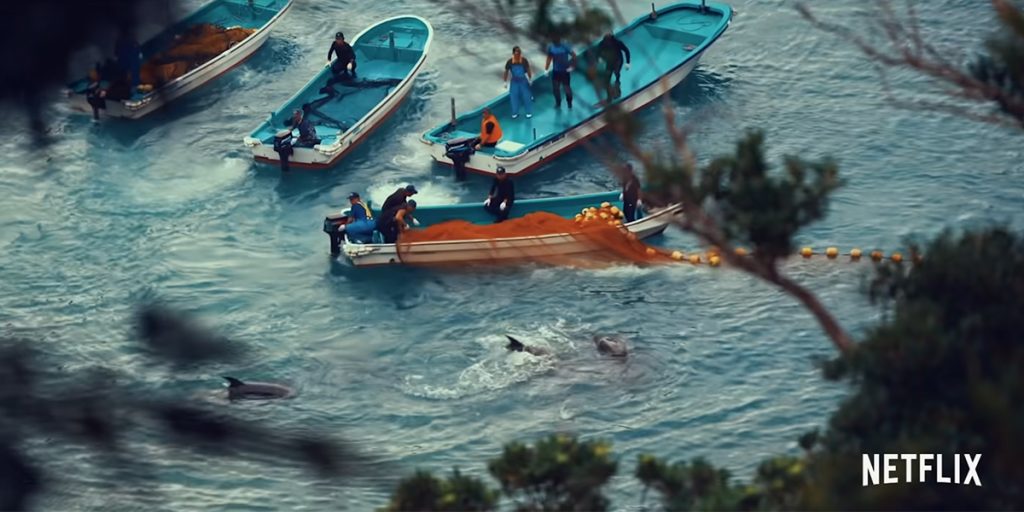
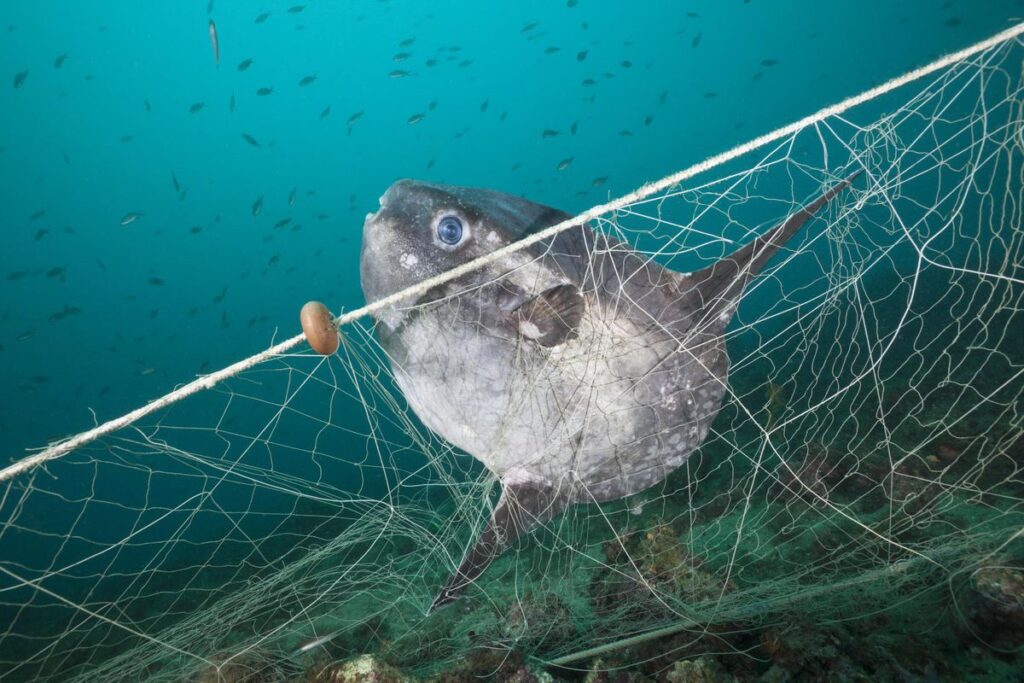
What people do not know is that 46% of the Great Pacific Garbage Patch in the Pacific oceans is fishing nets. It is of vital importance to understand that industrial fishing is the most destructive industry for the oceans. Fishing nets not only are very devastating for the environment but also kill more than 300,000 whales and dolphins every year as a consequence of by-catch (accidental catch).
More than 30,000 sharks are killed per hour and up to 5 million fish per minute. These numbers are simply shocking as people would have never imagined that so many fish are killed every minute. Another important fact shown in the documentary is that only 1,000 sea turtles per year die due to plastic, while in the US more than 250,00 are captured or killed by fishing nets.
Despite that, very few percentages of our oceans are protected. In the documentary, it is been said that the oceans will be empty by 2048 as fishing kills 2.7 trillion fish every year. Moreover, dolphins and whales are extremely in danger too.
They are deeply important for the survival of the oceans as, when those animals return to the surface to breathe, they release phytoplankton (microscopic marine organisms) which generates 85% of the oxygen we breathe. But the real question is: why kill them? Fishermen see dolphins as a competition, indeed, many fish are eaten by them.
As a result, getting rid of the dolphin would provide them with more fish to catch. Despite hunting whales being worldwide banned since 1986, Japan decided to start fishing them again as they claim it is part of their culture. Therefore, nowadays, they not only die due to plastic but also due to commercial fishing.
Slavery in the ocean
Commercial fishing is not only dangerous to fish and the environment it is truly risky for human beings too. Nowadays, fisher slavery is the newest manner of slavery. Fishermen live in inhumane conditions and up to 24,000 of them die every year by doing their job. In the documentary, a “shrimp slave” is interviewed and he declared that they were forced to work on illegal fishing boats for ages.
Sustainable Labels
What about “sustainable” fishing? Currently, when buying fish some products have on them a “certified sustainable” stamp. However, the Earth Island Institute’s (EII) “Dolphin Safe” label which is often found on tuna cans, cannot ensure that no dolphins are killed to catch tuna.

As established by one of their employees, when fishermen are in the ocean how do we know what they are doing? To have better control, the EII sometimes brings controllers onboard but they might be bribed or, even worse, threatened.
We have always been told how important it is to eat fish for its omega-3 fatty acids. However, as the ocean is full of plastic and it is deeply contaminated fish are loaded with neurotoxic heavy metal.
Validity of facts in Seaspiracy
Since the release of the documentary, there have been several claims on the validity of the facts portrayed in it. In response to the claim that sustainable fishing is impossible, the Marine Stewardship Council (MSC) affirmed that is not true. It has been said by the MSC that one of the amazing things about the sea is that fish can recover when well managed for a long term.
Additionally, research demonstrates that if the fish stocks are well organized they are more productive and therefore there will be more seafood. It is also claimed that the ocean will be empty by 2048, however, this projection was put forward in a Science paper in 2006, which turned out to be wrong.
To keep up with the latest commercial news, click on commercial to get your daily dose.
Donate & Support