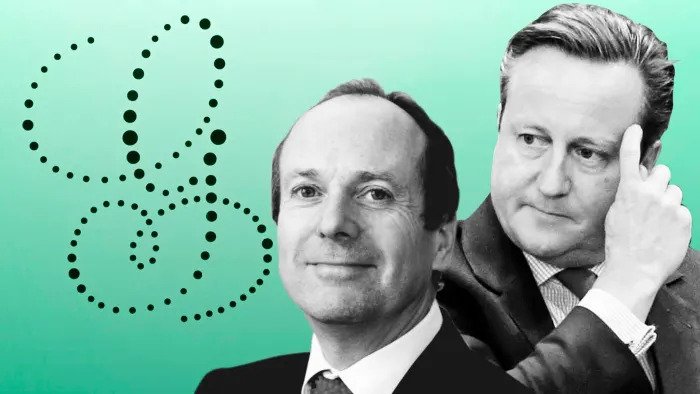
Despite the unfamiliar names of corporations one may never have heard of, led by businessmen of similarly obscure identity, the situation which has dominated British papers for the last week, is this: just two years after leaving public office, a former Prime Minister was able to lobby his former political colleagues to divert public funds for his financial gain.
The Greensill Scandal – sufficiently developed that it has its own Wikipedia page – has exposed the all-too-cosy relationship between Whitehall and the private sector, and a political culture in which former MPs (and more senior holders of the office) can influence the next generation of cabinet members on behalf of multinational conglomerates.
David Cameron’s activity on behalf of Lex Greensill consists of at least four things: the adoption of a Greensill app (Earnd) by the NHS after the former PM took Matt Hancock out for drinks, texts to Rishi Sunak to help Greensill gain access to a Bank of England loan scheme, the Covid Corporate Financing Facility (CCFF), virtually meeting with the German Ambassador and Deputy Finance Minister to introduce the same app to the German Civil Service; even an attempt to win over Saudi Arabia’s Crown Prince.
The scandal around the company, which collapsed in March, is but the latest example of in a string of corruption disputes that have plagued British politics over the last thirty years (see the 1994 “cash-for-questions” scandal; the 1997 Bernie Ecclestone affair; the 2007 “cash-for-honours” affair). But unlike some of these examples, which saw police involvement, what is notable about the Greensill scandal is that Cameron seems to (almost) have gotten away with it.

No one has put it better than the economic historian Max Hastings, who wrote in The Times at the end of March: ‘No matter how his story comes out, and even if Cameron escapes legal sanctions, his reputation is blasted, his absence of judgment laid bare.’ Whilst Cameron will never work in politics again, and it is questionable what role he will have in future private sector operations after this affair, in the strictest legal terms, Cameron has not broken any rules.
But Cameron knows full well the implications of his activity on behalf of the firm. In a 2010 speech on lobbying just before he became Prime Minister, Cameron outlined the process of modern political lobbying: ‘We all know how it works. The lunches, the hospitality, the quiet word in your ear, the ex-ministers and ex-advisers for hire, helping big business find the right way to get its way.’
Boris Johnson’s government have claimed innocence given that Cameron’s attempts to secure Greensill access to the CCFF were ultimately denied by the Treasury, but whether this can be truly corroborated at a time when the current PM sought private donations to fund the renovation of his private Downing Street flat, is a matter of individual judgment.
Cameron’s actions, at the very least, expose the gaps in regulations on lobbying in Westminster and violate, if not the law, then at least the spirit of the principle that a private sector should remain separate from the control and distribution of public funds.
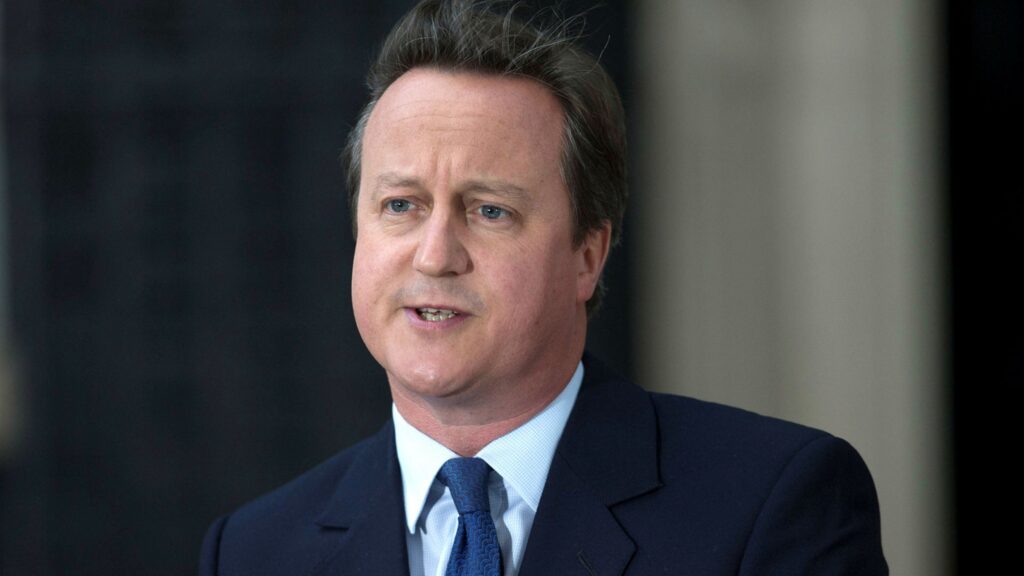
Johnson has called for an inquiry into the Greensill affair but has appointed Nigel Boardman – who sits on the board of the Arbuthnot Banking Group which employs former civil servants – to lead the report, raising questions as to how unbiased such an inquiry could be.
Indeed, George Eustice, the environment secretary, told Sophy Ridge on Sunday that the inquiry is not expected to make any recommendations, describing current regulations on lobbying as ‘quite robust’. An exasperated Sophy responded: ‘If it has no powers, is not going to make policy recommendations, what’s the point of it?’
The scandal has also called into question the role of Lex Greensill when Cameron was himself in office, who was given an office in Downing Street and allowed to work as an ambiguously titled “Senior Advisor” for his government. It has also exposed that another civil servant, Lord Heywood, was allowed to work for Greensill whilst still in Whitehall.
Amongst the COVID-19 pandemic, Boris Johnson’s conservative government has been repeatedly under fire over its lack of transparency with regards to the awarding of government contracts, with Matt Hancock giving his local pub landlord a £30m contract to produce vials for COVID tests despite his lack of previous experience, and most recently, it was revealed on Friday that Hancock failed to declare a conflict of interest in Topwood which has long-standing links with his family, at one time run by his sister.
This culture of secrecy at the heart of government, in which jobs, contracts, and public funds are awarded to friends, allies, and family, has led Labour to denounce the current government as ‘infected with widespread cronyism‘. Starmer criticized Johnson’s cabinet at PMQs on Wednesday for failing to look at the current lobbying rules, condemning ‘Tory sleaze’ and asking: ‘Does this prime minister accept there is a revolving door – indeed an open door – between his Conservative government and paid lobbyists?’
Johnson has been warned by the powerful chair of the Commons liaison committee, Sir Bernard Jenkin, that failure to act on the “sleaze crisis” will cause potential electoral damage with the “red wall” seats the Conservatives won from Labour in 2019. With more governmental figures being exposed as having links to the firm every day, it is unlikely we have heard the last of the affair.
To keep up with the latest commercial news, click on commercial to get your daily dose.
Donate & Support