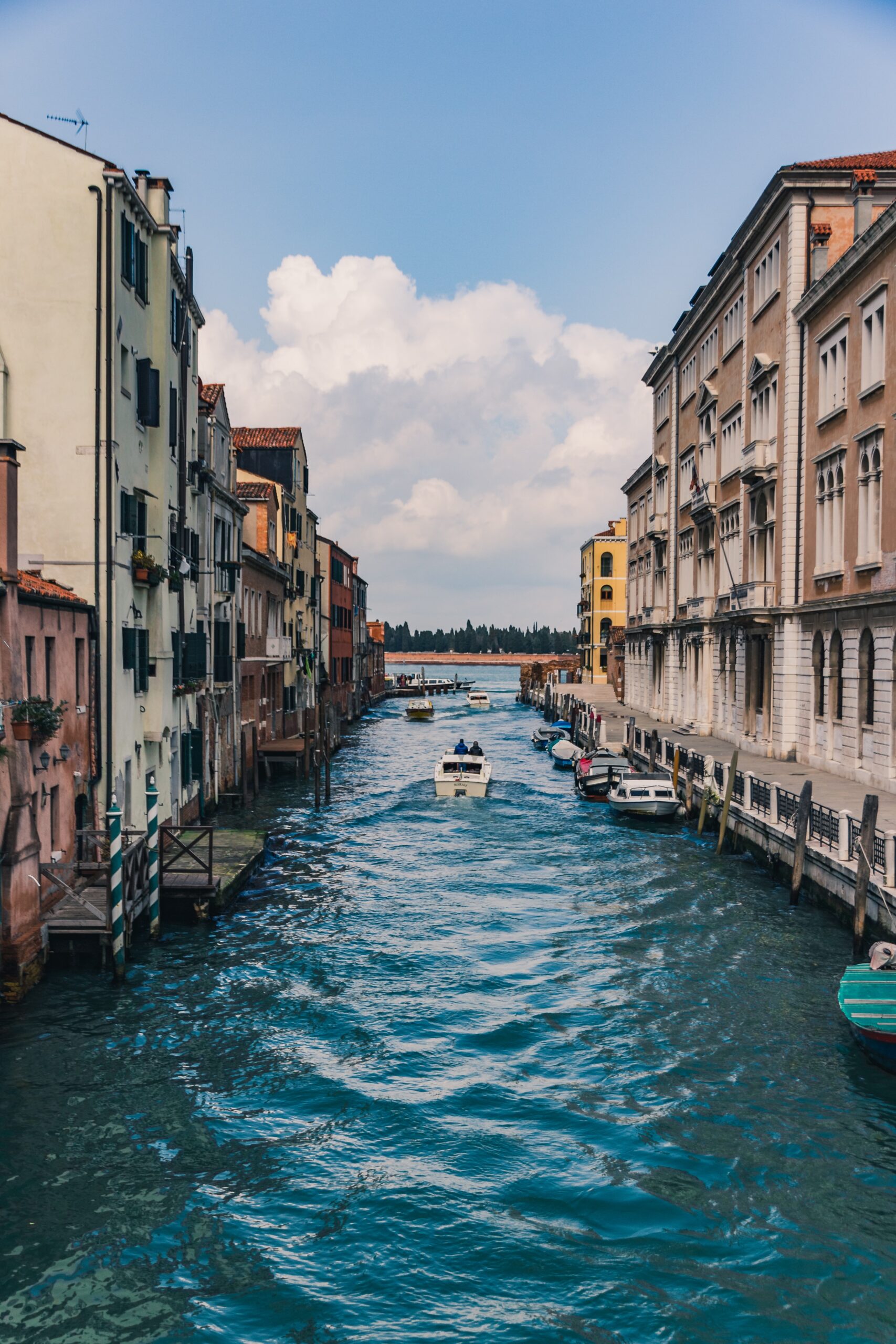
Suez and Panama canals created significant changes in global trade since their completion in 1869 and 1914 accordingly. The reduction of travel distances between regions of the world and consequent decrease in carbon emissions are the most apparent acquired advantages. The Panama Canal, which connects the Atlantic and Pacific oceans, considerably shorten the maritime distance between the American East and West coasts by 13,000 km.
Expansion
Being in tight rivalry within the container shipping industry and following the growth of the ships in size, the Panama Canal had to implement a $5.25 billion expansion project that was completed in 2016. Now the Canal can handle 13,000 TEU capacity vessels, two times more than its previous capacity. However, there is a growing number of container ships with a capacity of over 20,000 TEU. Thus, the authorities of the Panama Canal consider another expansion project which would allow the Canal to handle modern vessels.
The Canal serves more than 144 maritime routes, connecting over 160 countries and reaching some 1700 ports worldwide. According to International Trade Organization, The Panama Canal has 46% of the total market share of containers moving from Northeast Asia to the East Coast of the United States, which makes it an unreplaceable maritime route.
Panama’s Economy.
Panama, home of the Panama Canal, is considered to be one of the most connected countries in the world. Before the covid-19 pandemic, Panama has been one of the fastest-growing economies in the world with an average annual growth rate of 4.6 percent over the last five years, according to the World Bank. Panama was classified as a high-income nation with the GDP equal to $65.1 billion. Panama’s economy is based primarily on a well-developed services sector, accounting for about 64.97 percent of GDP in 2019, whereas the Panama Canal is the largest contributor.
Colón Free Trade Zone
Colón Free Trade Zone has served for more than 69 years as the major trading centre for Latin America and the Caribbean; it is the world second largest free trade zone behind only the Hong Kong’s. CFZ accounts for 8.5 percent of Panama’s GDP and consists of a port and transit systems designed for exports and re-exports, imports, manufacturing, warehouses, refining and processing goods, and other related activities. It includes over 3,000 companies and employs 18,000 people, being a vital trading centre of the region and the world.
Save The Planet
In a recent press release, the Canal’s representatives claimed that the Panama Canal contributed to a reduction of more than 13 million tons of carbon dioxide (CO2) equivalent emissions in 2020, in comparison to the most likely alternative route. The Panama Canal also announced the launch of a CO2 Emissions Dashboard, which will display monthly data on the saved emissions, when choosing to transit through the Panama Canal over the other alternative route.

The Canal seems to recognize the current environmental challenges, having launched The Green Connection Environmental program in 2016. For example, the expanded Panama Canal possesses 18 innovative water-savings basins that reuse 60% of the water used per lockage, saving 7 percent more water than initially. Moreover, the Canal awards customers who demonstrate excellent environmental management and encourages others to implement technologies and standards to help reduce greenhouse gas emissions.
Recent Surge In The Energy Market
As was predicted, the global demand for liquefied natural gas (LNG) is increasing thanks to the overall economic growth in Asia, COVID-19 restrictions, but also as a result of record low winter temperatures in Asia, which have caused an increase of LNG transits through the Panama Canal. The Canal in its turn corresponds to the demand of the segment, setting a new record for transits of the LNG vessels in January.
The Key of Success
The Panama Canal has been so far successful due to the constant adjustments of its processes to the global agenda (such as mentioned green initiatives), but also the continuous changes in the demands of the maritime trade. For instance, to provide greater flexibility in operations, the Panama Canal modified the Transit Reservation Booking System, offering available slots within 96 hours prior to transit through an auction. This has allowed conducting 25 more transits, of which 9 were LNG vessels.
The Panama Canal is a massive boost to world trade and economy. It has experienced numerous modifications and improvements. The canal Authorities predict that the volume of cargo will be growing by an average of 3% per year. The Canal serves as a transit hub not only for the region but as a transcontinental route, too, which implies that the Canal will only prosper in the foreseen future.
Donate & Support