
Are virtual law firms on the rise? Like all sectors, the legal sector was forced to transition into remote working due to the coronavirus pandemic. The question remains: will this be a permanent fixture of the legal sector and will virtual law firms become commonplace?
1. How did the legal sector cope with going remote?
The legal sector is historically slow to adopt modern practices and has typically favored tradition over, for example, digitalization. However, many have reported that working from home has been a success. According to a study by Legal Cheek, more than three-quarters (77%) of legal professionals believe that the lockdown has shown that they can work effectively from home.
2. What are some of the benefits of virtual law firms?
The first benefit of a move toward virtual legal services is a reduction in overhead costs. Law firms do not need dedicated physical spaces for their lawyers to work from and as such are no longer needing to pay for expensive real estate fees to be in the City.
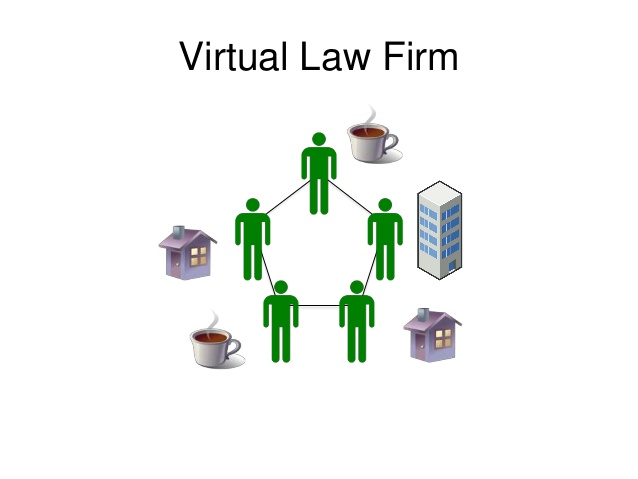
A second, perhaps unexpected, benefit of virtual working is increased proximity to clients. Without a doubt, some aspects of the legal profession are built upon strong client rapport which is achieved through face-to-face meetings. The coronavirus pandemic halted these kinds of client interactions and while there is no substitute for building trust in this manner, it would appear that law firms have been able to facilitate client engagement in other ways.
Telephone, video, or other online communication has ensured that meetings between legal professionals and their clients are valuable, deliberate, and productive. There is increased proximity because there has been relentless connectivity since going remote.
Thirdly, many legal professionals have reported an increase in productivity. According to a study by tech company Atlas Cloud, lawyers put in 20 extra workdays when working from home. This is because legal workers are saving an average of 85 minutes per day by not commuting to work.

Finally, the majority of legal professionals have reported that remote working has improved their work-life balance. Working remotely has had a positive impact on work-life balance and has facilitated having more free time for family or personal interests and hobbies.
3. Will virtual law firms be a permanent fixture?
With the end of lockdown insight, questions are arising as to what the future holds for law firms. According to Legal Cheek, over 60% of legal professionals want to continue working from home when the lockdown is lifted. While there is no doubt that adopting a flexible approach is likely to be the future of the legal sector, what about fully virtual law firms?
According to a study by accountants Hazelwoods, there has been a sharp rise in the number of lawyers working in ‘virtual law firms in the UK. Research has found that 1,270 lawyers now work in so-called virtual firms. The figure marks a 22% increase from last year’s figure of 1,040 lawyers working out of more than 20 firms. Hazlewoods partner Andy Harris said: “The virtual law firm model has very quickly gone from being an intriguing idea to being a fast-growing and very mainstream part of the legal profession.“

Technology is one of the primary reasons that virtual law firms are made possible in 2021. There is an increased reliance on legal technology across the sector. This includes bricks and mortar firms, flexible firms, and fully virtual firms. From employing AI for due diligence to the rise of the use of virtual contracts, fully remote law firms will be able to draw upon the digitalization trend and remain as competitive as their traditional brick-and-mortar counterparts.
Virtual law firms remain a relatively new and untested concept. While it is true that traditional law firms have needed to adopt remote measures, fully virtual law firms are yet to become commonplace. Much will need to be seen in how clients respond post-pandemic; whether there will be a rush to reconnect face-to-face with legal advisers or if the attitude will be to continue to embrace remote meetings, client attitudes will be telling of what the future of the legal sector will look like.
To keep up with the latest legal news, click on legal to get your daily dose.
Donate & Support