By Stefano Sciandra
Your commercial awareness dose
The UK has left the EU in January 2020, and having secured a trade deal massively backed by MPs, it will end the transition period on the 31st of December at 11 pm GMT. After four years of negotiations with the single-market block of 27 members and debates that have left the country’s political scene scarred, the real challenge starts now. Britain, now free, sovereign, and smaller must be able to find a new place in a world dominated by large entities, such as the US, China, and the EU.
Britain seems to have clear ideas on what role it wants to play from now on: global Britain. The country has managed to sign 63 trade deals in record time, that essentially ensure vital continuity for businesses and pave the way for more ambitious deals in the future. With the recent addition of a trade deal with Turkey worth £18 billion, the UK has secured an astonishing £885 billion of trade. Whilst usually advocating for less government, the Conservative party must provide hefty investments for a wide range of industries, if it really wants to take advantage of the huge opportunities provided by Brexit.
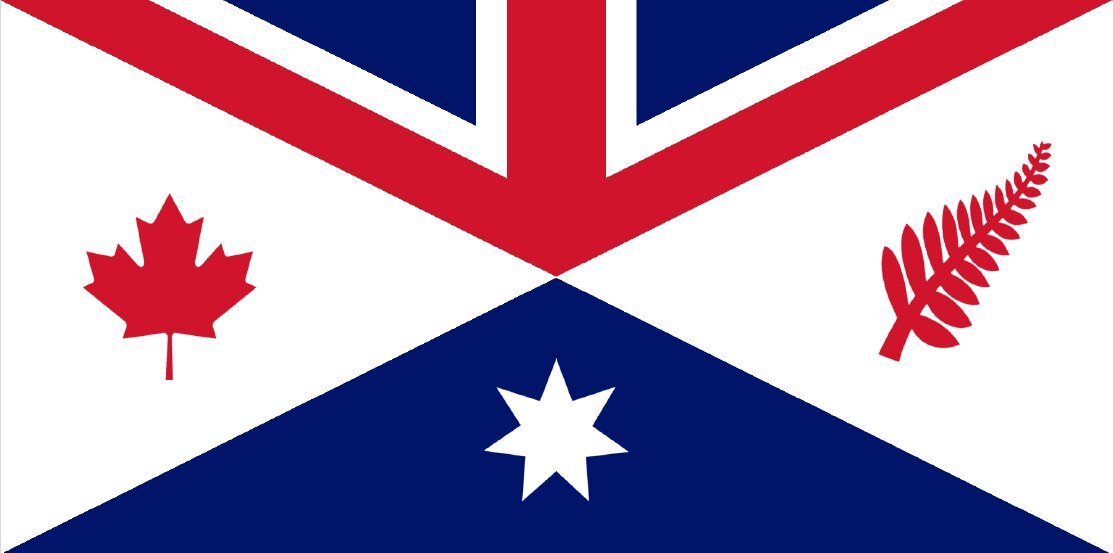
Britain is still negotiating Free Trade Agreement (FTA) with Australia and New Zealand and has signed a £20 billion Trade Continuity Agreement (TCA) with Canada, that will serve as a framework to build for a new tailor-made trade deal between the countries in 2021. Why am I mentioning these countries? Well, because there might be something more going on. For a few years, especially in 2020, some analysts and politicians have started using the term CANZUK, an acronym for the four countries, to describe a potential future common market area, that will essentially work like the deceased European Economic Community (ECC).
In the way it is described now, CANZUK will essentially be a supranational organisation that will facilitate free trade between four countries, without the grip of unelected technocrats, typical of the European Union. At present, it seems to be mostly supported by conservative right-wing parties, for instance, the Canadian Conservative Party leader Erin O’Toole has promised to make CANZUK a priority, whilst being described an “absurd fantasy” of Brexiteers by others. So what are the advantages of such organisations and what will be its role in the global arena?
First of all, it will be a union made of four very similar countries. Canada, Australia, the UK, and New Zealand, that share a common language and a common political system. Furthermore, their societies are quite similar, they are all part of the Commonwealth (a political association), their Head of State is the same (HM Queen Elizabeth II) and they all have the same legal system (common law). Sharing such a high degree of similarities could be helpful in regards to further economic integration, which one of the major issues that the EU is facing.
All of these countries, plus the US, form the Five Eyes intelligence alliance, one of the most comprehensive espionage alliances in the world. This, alongside the advantages of an economic union, could make CANZUK the second most powerful geopolitical behind the EU and the fourth-largest economy. Due to a shared history and common values, with support from the United States, CANZUK could act as a strong opponent against what is perceived as a huge threat for the West: China.
Australia has experienced a very little publicised trade war with China, Canada’s PM Justin Trudeau has recently rejected calls to release Meng Wanzhou (Huawei’s CFO), and the UK u-turned on Huawei’s role in building its 5G network. At present, only New Zealand seems to be in good terms with China, something that is proving hard due to the Kiwis’ proximity to Australia, in both geographical and economic terms. Whilst the aforementioned countries are near, CANZUK members as a whole are not, however, this should not be a burden as we are moving to digital economies and transport is getting easier and faster.
CANZUK has attracted both critics and consent, the first usually point out that it would be senseless to try to build a union with very distant countries and with the UK being a considerably bigger economy, something that could lead to disparities and unbalanced relationships. Those who support CANZUK, however, highlight that three of these countries are in the top-15 global economies and how this union could represent a way to reinvigorate the Anglo-Saxon model of capitalism. CANZUK will have the largest landmass in the world, granting access to a huge supply of resources and it will cover around 140 million people. This could be the beginning of a very important player in the global arena.
To keep up to date with the latest commercial news, click on commercial awareness to get your daily dose.
Donate & Support