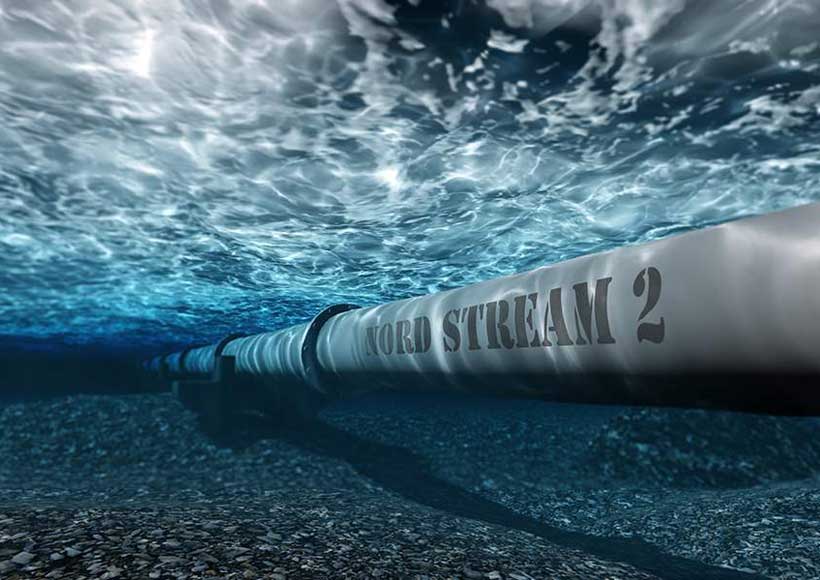
With over 200 people from 20 different countries at headquarters and over 600 contract partners, Nord Stream 2 is one of the largest infrastructure projects in the world. From List-Luga (Russia) to Greifswald (Germany), the gas pipeline spans more than 1,200 kilometres, making it one of the longest offshore gas pipelines in the world. As indicated by its name, this is not the first gas pipeline to have been built between Russia and Germany (yes, there is a Nord Stream “1”).
The operations for this second pipeline began in September 2018. Russia’s state-owned Gazprom – which owns 50% of Nord Stream’s shares – claims that “Nord Stream 2 is being built with the use of reliable technologies” and it is crucial given European consumers’ excess demand for imported gas. According to Gazprom, the goal is to bring environmentally safe energy to Europe, effectively embedding immense Russian gas reserves within the European energy market. It is not surprising, therefore, that the US is adamant to halt the venture. Indeed, Russia is not the only country that sells natural gas to Europe.
Nord Stream 2 – on top of an already-functioning Nord Stream – poses a threat to US gas exports, which are relatively more expensive than those of Russia. In other words, Nord Stream 2 gives the Russian energy industry a competitive edge which may price the US out of the European energy market, hence inciting the US to make threats of sanctions.
Nevertheless, following November’s elections and the subsequent change in Government, the Biden Administration seems to want to set aside its predecessor’s “America First” approach and maintain good relations with Germany, a crucial European ally, whilst searching for more diplomatic ways to end the project. Even so, support to halt construction was and still is bipartisan.
It should be noted that US economic interests are not the sole reason for Nord Stream 2’s controversy. Even before Russian opposition leader Alexei Navalny’s prosecution earlier this year, many in Europe were against the project, claiming that it would be at odds with EU climate goals and that it would only serve to bolster Russian President Vladimir Putin’s economic influence in Europe. Note that the Nord Stream pipelines have been constructed underwater, bypassing Polish and Ukrainian territory.
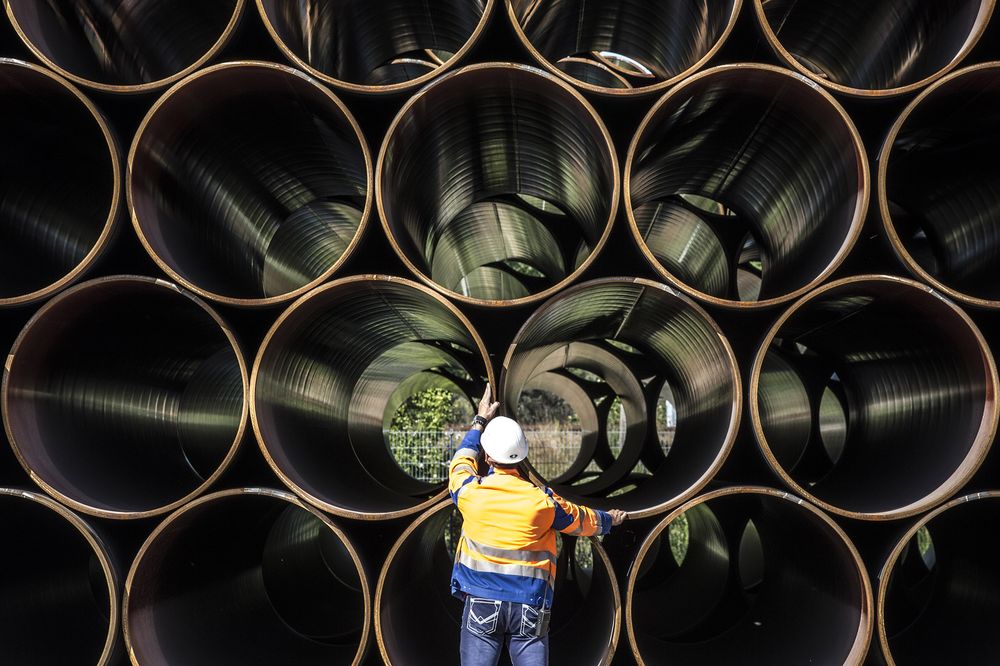
Further still, January 2021 marked what seemed to be a turning point for the European perspective on Nord Stream 2. Given Navalny’s arrest, the European Parliament made calls to stop the construction of the pipeline. Yet German Chancellor Angela Merkel made no reservations in continuing her support for Nord Stream 2. Chancellor Merkel did not call for a stop to the project. In this way, the upcoming German federal elections will be decisive in determining how Nord Stream 2 will end; a change in leadership might mean a change in the relationship between Russia and Germany and an end to the project.

Finally, Nord Stream 2 will have lasting impacts on the European energy system. According to the European Environment Agency, the EU has been increasingly reliant on imports of fossil fuels such as gas. In 2018, for example, gas was the second most imported energy product in the EU, just behind petroleum, and accounted for 24% of the EU’s energy imports.
Along with the aforementioned information about Nord Stream 2, this means that any efforts to use clean energy independently may be undermined. Although gas energy is much cleaner than using other fossil fuels, the production of natural gas is not emission-free. If Russia gains a monopoly on EU gas imports, and if the EU continues to increasingly rely on this resource, the future of the European energy system will be closely linked to the overall political and economic relations between Russia and the EU.
With German federal elections coming up in September, further US efforts to halt the venture, and ongoing political tension within Russia’s borders, the future for Nord Stream 2 will not be tranquil. Nevertheless, one thing is for sure: if the offshore pipeline will be completed, it is expected to double Russian natural gas exports to Germany, which will profoundly impact the European energy system.
To keep up with the latest commercial news, click on commercial to get your daily dose.
Donate & Support