By Rebecca Shields
Your commercial awareness dose
An industry that accounts for just 0.1% of the UK economy is currently the most pressing topic in the ongoing Brexit negotiations. The UK fishing industry is valued at over £784m, in which commercial fishing directly employs around 12,000 people in the UK. Out of a national workforce of over 30 million, this is a significantly small sector. And yet, no other subject in the negotiations between the UK and EU has been so politically fraught.
Conflict over water territories is nothing new. Throughout the 1970s, the UK and Iceland engaged in a battle for water territories. Known as the “Cod Wars” they raged for most of the 1970s ending on June 1st, 1976 after lengthy NATO-mediated meetings. The deal resulted in mass redundancies for British trawlermen and led to the UK government distributing a £25m compensation package in 2000.
Whilst the Cod Wars are not often spoken about, the fishing community remembers them and have lived with the aftereffects. The memory is clearly strong for cabinet ministers as it is reported that 4 additional 80-metre patrol ships will be deployed on January 1st to monitor French trawler boats.
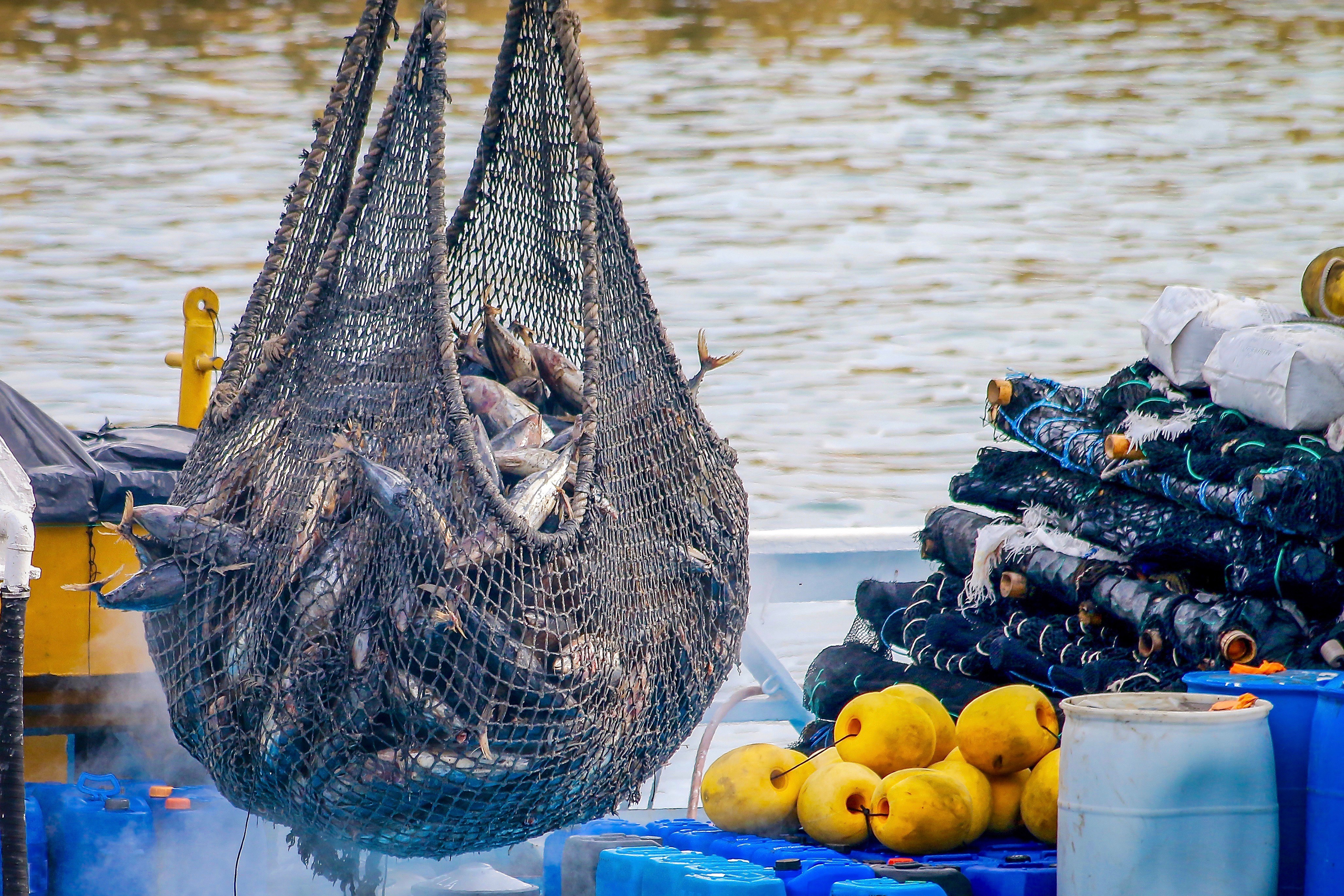
As the UK is set to become an independent coastal state outside of the EU, with control over an exclusive economic zone of 200 nautical miles in the North Atlantic, the tension between the UK and France is mounting. On Friday, France’s President Emmanuel Macron made headlines, vowing not to “give up [his] share” of fishing stocks. France uses British waters for most of their fishing. 84% of the shared quota for cod fishing in the English Channel goes to France, compared to Britain’s own share of 9%.
When it comes to fishing quotas there are disparities across the board. European countries fish 14 times more haddock and cod, 16 times more mackerel, 45 times more whiting and 173 times more herring out of UK water territories than Britain does. This is in part due to the UK fishing industry heavily relying on exporting their fish. Nearly three-quarters of all fish caught by British fishermen in UK water territories are sold within the EU. There is little demand for the UK to fish in EU territories. In 2015 British vessels caught £114m worth of fish in EU waters. EU vessels caught £484m worth of fish.
Until the end of this year, the UK fishing industry must follow the EU’s Common Fisheries Policy. This means EU countries can fish in each other’s waters, apart from the first twelve nautical miles by the coast. However, they are limited to how much they can catch. Each December the EU meet to discuss individual national quotas for the following year.
These are based on data from as far back as the 1970s. It is the use of this outdated data which has led the UK government to ask for a larger share. The UK government wants to continue holding annual talks about water territories with current data and hope to obtain more than half of the catch quota share (totalling £300m of fish) currently caught by the EU in British waters.
The EU is under massive amounts of pressure to maintain the status quo for their fishing communities. They want the UK to provide considerable access to British waters. They would like to create a new quota system which removes the need for annual renegotiations. To ensure their points are considered they have explicitly stated the UK will not be able to access the EU single market unless a fishing deal is made.
Regardless, whatever deal is struck it will not come into effect for several years. There are still several topics within the fishing conversation that need to be agreed upon. These include protecting fish populations and the effects the agreements will have on large trawlers and small fishing boats. All these decisions will not only have to be agreed by the UK and European commission but also all the EU countries.
To keep up to date with the latest commercial news, click on commercial awareness to get your daily dose.
Donate & Support