What does this practice area consist of?
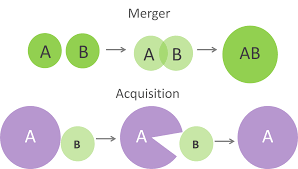
Mergers and acquisitions (M&A) involve one company acquiring another, or two companies fusing, to form a large entity. This can be done for a business to grow, to take out the competition, or to achieve larger economies of scale. Companies facing the threat of administration may also wish to merge, to avoid further financial trouble. There are two types of M&A deals: private and public. Private M&A involves deals owned fully by private individuals, whereas public M&A concerns companies listed on a stock exchange.
M&A work is incredibly popular with many commercial firms. A seat in M&A could be the ideal jumping point into the corporate world.

What are the tasks of lawyers on these transactions?
- Provide advice on transactions that affect a client.
- Advise on the transactions of assets, providing the financing has been arranged.
- Negotiate and draft documents on the transaction, though this work will typically be reserved for more senior lawyers.
- Juniors can expect to conduct due diligence on the information passed by the seller to the buyer. Crucial information includes a company’s financial health, assets, debts, or environmental liabilities.
- Gather all parties involved to sign documents- this is required to close out a transaction. These decisions and signings must be recorded in written resolutions.
- Finalise registrations once a deal has been closed.
What are the realities of the job?
- Hours are unpredictable, and very much dependent on macroeconomic performance and confidence. If confidence is high, expect deals to be flowing. The first half of 2021 saw record highs for M&A activity, with many juniors reporting incredibly long hours due to this.
- The economic cycle is not the only thing that affects hours- the type of client will too. If acting on behalf of an investment bank, expectations will run parallel to those of your banking peers. Equally, if working for a smaller enterprise, the demands may be lower- though still exceedingly high. Stamina is a skill that must be learnt quickly.
- Trainees should expect monotonous tasks until they have proven their ability. This means data room management and billing will be common entry tasks. Perform these to a high standard, and new, more interesting challenges will arise.
- Make the FT your homepage- you will need to become absorbed in the corporate world and understand how political and economic decisions can affect microeconomic transactions.
- Transactions will be complex- the ability to recognise when to call in an advisory department (competition, tax, TMT, etc) will be crucial, as will the ability to recognise the functions of these advisory departments.
- Though the above sounds gruelling, exit opportunities are abundant for those in need of a change in scenery.
- Strong organisation skills are necessary, given the heaps of paperwork presented in a transaction. Commercial knowledge and an understanding of a client’s objectives are an absolute must.

Ten firms with a noted presence in this area:
- Ashurst
- Clifford Chance
- Freshfields Bruckhaus Deringer
- Herbert Smith Freehills
- Linklaters
- Macfarlanes
- Simpson Thacher
- Skadden, Arps, Slate, Meagher & Flom
- Slaughter and May
- Travers Smith
To keep up with the latest legal news, click on legal to get your daily dose.
Donate & Support