By Saffiyah Khalique
Your commercial awareness dose.
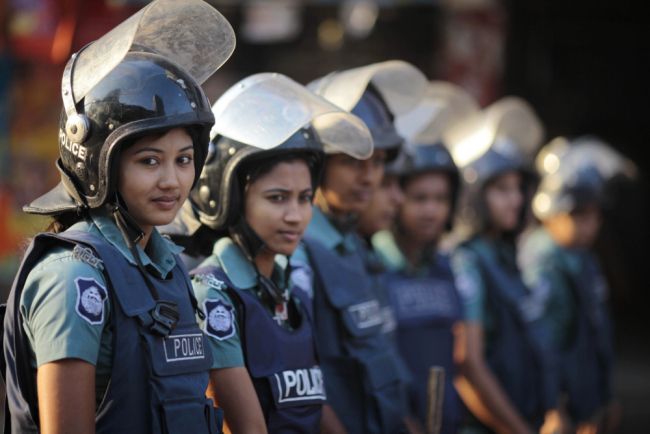
Police in Bangladesh has announced that there will be an all-woman task force to fight against the growing cases of gender-based violence in the country. This team will specifically tackle online abuse and harassment women have been facing in the country.
There is hope that by creating an all-woman task force it will encourage more women to come forward and talk about the online abuse they have been facing, such as revenge porn, hacking and blackmail threats.
Benazir Ahmed, inspector general of police, said that: “many (women) don’t want to approach these areas, that’s why we have created an all-woman team,” believing that women would feel comfortable talking to other women about the gender-based abuse they face online.
The police say that women are the victims of nearly 6,100 cases filed under laws to prevent digital abuse. Maleka Banu, a women’s rights activist in Bangladesh, said: “it’s easier to target women online rather than in the real world. All you need is a phone.”
This task force has come alongside recent changes in the country’s laws that granted the death penalty for rapists after wave of protests hit the country in response to an online video that showed a group of men sexually assaulting a woman.
A UN report on Violence against Women and Girls in Bangladesh revealed that majority of the gender-based abuse women face is from partners or family members. Ain o Salish Kendra, a human rights group in the country, reported that 235 women were murdered by their husband or family in the first nine months of 2020.
The report explored the legal barriers women face in trying to report the abuse they experience finding that cases often go on for years beyond the maximum case disposal period which ranges from 60 to 180 days.
The report found that there was a lack of trust within the police, with many women stating that they felt like they would not be taken seriously because violence against women and girls is so socially normalised. The report cites corruption, lack of witness protection, bias and negligence, as reasons why little has been done and why there is such a distrust of police.
This mistrust stretches into the legal proceedings with survivors being pressured by their abusers to retracting statements, and so have members of the police and legal professionals. A 2016 Justice Audit survey of legal practitioners found that over half of public prosecutors, magistrates and judges all said they feared for their personal safety.
With the news from the report, an all women’s task force and the anonymity they will provide, there is hope that more women will come forward to report cases of violence and abuse.
To keep up to date with the latest commercial news, click on commercial awareness to get your daily dose.
Donate & Support