By Rebecca Shields
Your commercial awareness dose.
Having just presented his controversial Spending Review to the House of Commons. Rishi Sunak is firmly in the spotlight. To understand his decision making, here is everything you need to know about Rishi Sunak.
Sunak’s first involvement in politics occurred whilst he was studying at Oxford University when he volunteered at the Conservative Campaign Headquarters. Degree completed, he moved to California to study for his MBA at Stanford University. Whilst in the USA, he worked as an analyst for the investment bank Goldman Sachs. He moved on to work for two hedge fund management firms from the late 2000s to the early 2010s.
In 2014 he moved into politics when he was selected as the Conservative candidate for the Richmond (Yorks) seat, a conservative stronghold, taking over the nomination in place of former Conservative leader William Hague. Sunak was elected as the MP for Richmond in the 2015 general election with a majority. This win along with his role as head of the Black and Minority Ethnic (BME) Unit of Policy Exchange (a centre-right think tank group) in 2015 and his support for leaving the European Union in the 2016 referendum led to Sunak gaining notice in the press and amongst the public. He was then re-elected in the 2017 general election and increased his majority by 4.3%.
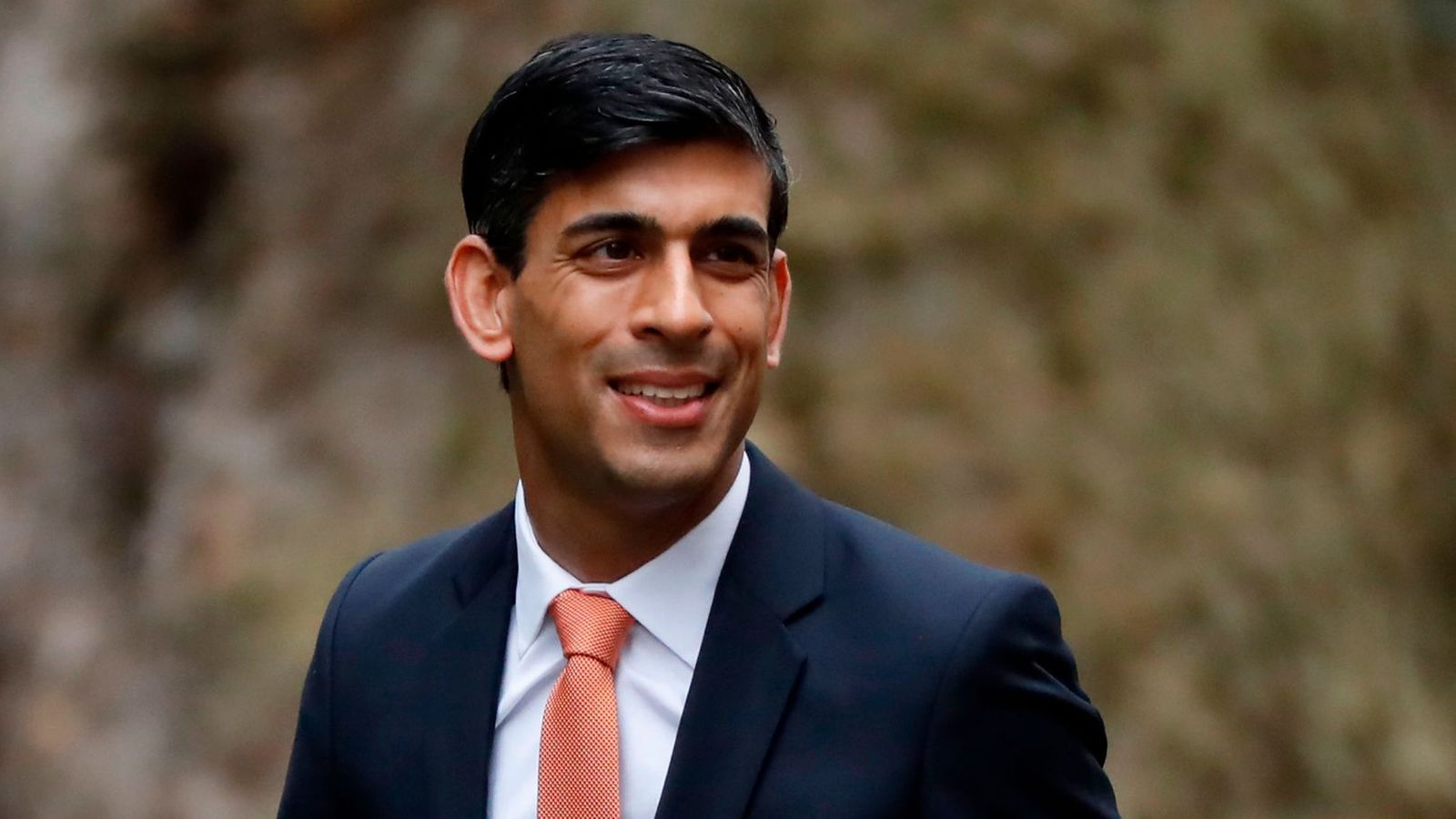
Building on this success Sunak became Parliamentary Under-Secretary for Local Government in January 2018. In 2019 he publicly supported Boris Johnson in the Conservative Party leadership election. Shortly after Boris Johnson won the leadership campaign, Sunak was appointed Chief Secretary to the Treasury and made a member of Queen Elizabeth II’s Privy Council. In the 2019 General Election Sunak was re-elected again and gained a further 6.7% of votes. This was in part due to Sunak representing the Conservative Party in both the BBC and ITV televised election debates.
In the weeks following the General Election results, rumours of unrest between Prime Minister Johnson and then Chancellor of the Exchequer Sajid Javid began to take over newsfeeds. The rumours suggested that Sunak was being prepped to take over the role of Chancellor as he was a known Johnson loyalist and had acquired a favourable reputation amongst the Conservative Party for his involvement in the televised election debates. In early February 2020 it was reported that these rumours were not true however on February 12th Javid had resigned and by the next day, Sunak had been promoted to Chancellor of the Exchequer.
Sunak’s time as Chancellor has been defined by the Coronavirus pandemic. On March 11th he gave his first budget, announcing an additional £30bn of spending of which £12bn would be allocated to lessen the economic effects of the pandemic. By March 17th he announced £330bn would be used for loan guarantees for businesses affected by the pandemic. On March 20th Sunak informed the public that the government would pay up to 80% of all furloughed employees, up to £2,500 a month, through the Job Retention Scheme.
The JRS was extended to last until October 2020. The scheme covered 7.5 million people, a quarter of the UK workforce, costing £14bn per month. This was followed by a cut to VAT in the hospitality sector, job retention bonuses for employers and a stamp duty holiday as part of a further £30bn spending plan. Despite a strategy of spending and borrowing Sunak remains a popular government official. In September 2020, a poll run by Ipsos MORI concluded that Sunak scored the highest satisfaction score of any British Chancellor since the 1970s. However, this could change following his announcements on Wednesday.
His promised reversal of anti-Northern spending and proposal to build a British infrastructure bank in the North of England has been well received. Other decisions have been met with mixed reactions. The controversial decision to lower the UK’s oversees aids from 0.7% to 0.5% has led to the resignation of Foreign Office Minister Baroness Sugg and statements of disapproval from global aid organisations. Along with the public sector freeze pay and the huge amounts of borrowing that will heavily affect future generations tax rates, Sunak’s public popularity is set to dramatically change.
To keep up to date with the latest commercial news, click on commercial awareness to get your daily dose.
Donate & Support