President Joe Biden recently proposed a $6-trillion spending in his first budget for the upcoming fiscal year. According to him, his first budget would have the capacity to ameliorate the economy through government-oriented actions.
By seeking billions of additional dollars for new infrastructure, aid to education, help for middle-class families, new environmental programs and a host of other domestic initiatives for the fiscal year 2022, Biden promises to ramp up economic growth and make the United States more competitive globally, boost the incomes of Americans and combat climate change.
Shalanda Young, who is Biden’s acting budget director, said the initiatives, if enacted, would be transformational, telling reporters that this budget will grow the economy, create jobs and do so responsibly by requiring the wealthiest Americans and big corporations to pay their fair share.
The president’s budget includes a $14-billion increase to tackle the climate crisis, $10.7 billion more to combat the opioid epidemic, an additional $20 billion for schools in high-poverty areas, and an $8.7-billion increase for the Centers for Disease Control and Prevention to boost its ability to detect and respond to global health crises like the coronavirus pandemic.
Biden is not, requesting funding for expanding healthcare coverage beyond the tax credits and enhanced subsidies that were part of the temporary $1.9-trillion pandemic relief law he signed in March. Instead, he calls on Congress to pass legislation this year to expand in-home care, to lower the cost of prescription drugs, and to reduce the age of Medicare eligibility to 60. Biden is the first president in more than two decades not to include the Hyde Amendment, which prohibits federal funding for abortions, in his budget.
Under Biden’s budget proposal, the federal deficit for the next fiscal year would hit $1.8 trillion, considerably more than the nonpartisan Congressional Budget Office projected in February based on current spending and taxes. That deficit would be less than the $2.3-trillion shortfall expected for the current fiscal year, or the $3.1-trillion deficit for fiscal 2020 — periods when the economic downturn amid the pandemic, along with the tax cuts President Trump signed into law in 2017, contributed to much-reduced government revenues.
Of the $6 trillion in spending Biden is proposing for next year, more than half is for Social Security, Medicare, Medicaid and other mandatory federal obligations that are set in law. Much of the rest maintain funding for the existing military and domestic programs.
Yet Biden’s proposed additions are significant. The spending for infrastructure and social programs, together with tax breaks for all but the wealthiest Americans, would cost roughly $4.5 trillion spread out over 10 years.
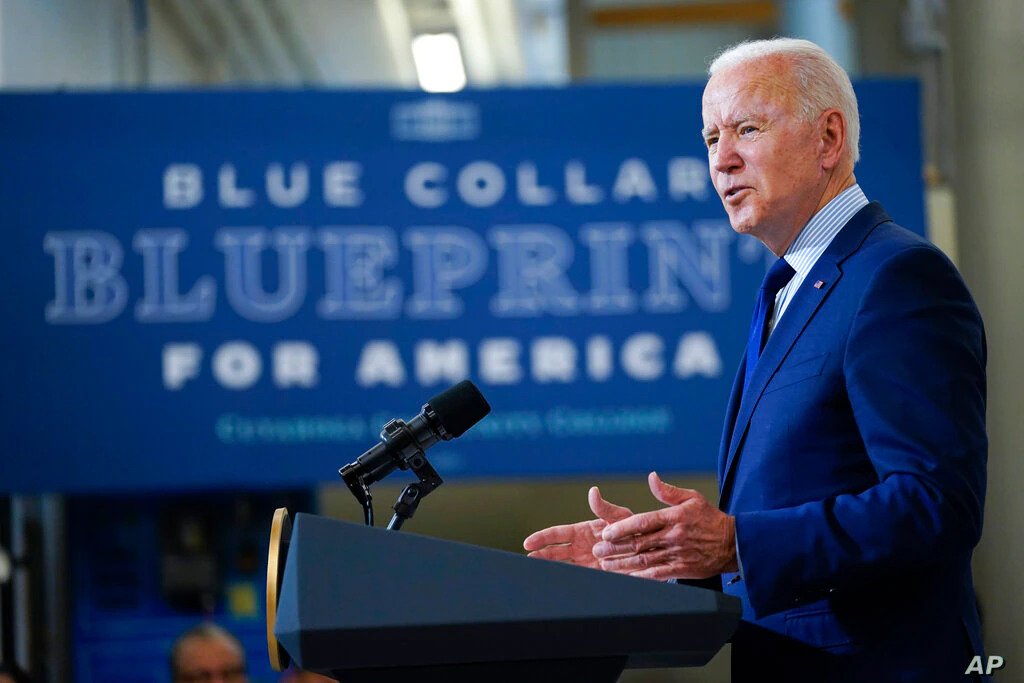
Biden, speaking at Cleveland Community College on Thursday in advance of sending his budget request to Congress, said, “This is our moment to rebuild an economy from the bottom up and the middle out.”
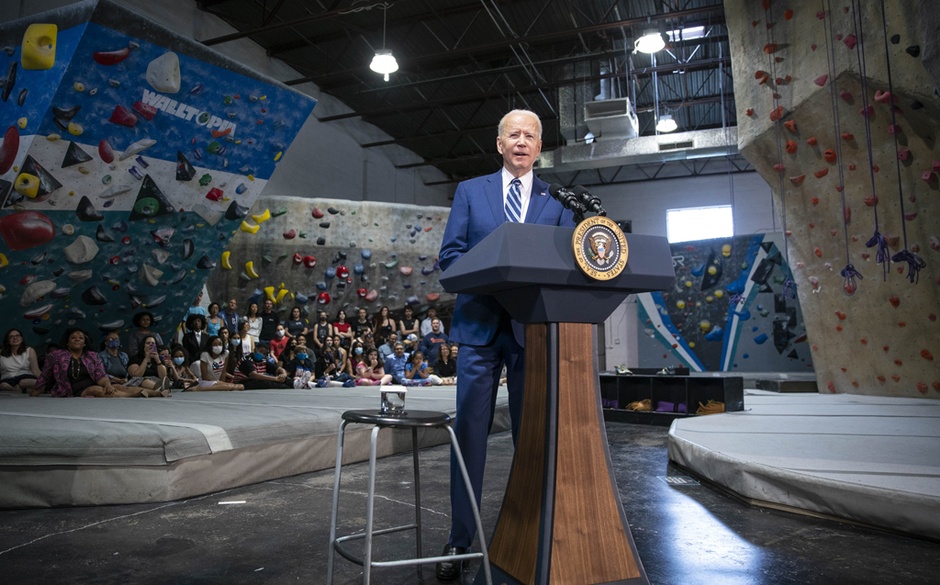
He argued that investments in infrastructure, workers and families will make America’s economy fairer and help the country keep pace with global rivals, China in particular. And he continued to push for his proposals to raise taxes on corporations and the richest individuals to pay for the investments and tax breaks for low- and middle-income households, mocking Republicans for opposing those tax increase plans even as they attacked his spending proposals as budget-busters.
In this decade, the U.S. would be facing an unprecedented level of debt. One common measure of fiscal sustainability is debt as a share of the nation’s gross domestic output or economic output. That ratio was about 80% before the pandemic but hit 100% at the end of last year and would rise to 117% by 2031 under the Biden budget — 10 percentage points higher than what the CBO had projected in February in its baseline forecast.
Economists say that level of debt to GDP would still be manageable as long as the United States, the world’s largest economy, is continuing to grow, the dollar is the world’s reserve currency and interest rates remain very low.

The Biden administration’s budget projections are based on its forecast of economic growth of 5.2% this year, 3.2% next year and less than 2% over the long term. Those are consistent with, if slightly more conservative than, forecasts made by the Federal Reserve and many private-sector economists.
Biden’s budget also assumes continued low inflation and interest rates. But some economists, including Obama-era Treasury Secretary Lawrence H. Summers, have warned about the risks of rising prices given massive federal spending and excess savings from the pandemic.
To keep up with the latest commercial news, click on commercial to get your daily dose.
Donate & Support