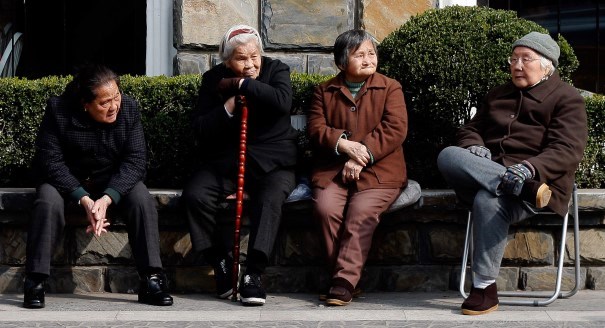
China is the country with the largest population on earth, but it is also one of the countries with the fastest ageing population. In 2050, it is expected that the number of Chinese over retirement age will account for 39% of its total population.
Many factors have been attributed to this rapid ageing, notably the decline in the birth rate due to the one-child policy of the late 1970s, as well as steeply rising life expectancy due to economic development. The average life expectancy in China has increased in recent years. The current life expectancy for China in 2021 is 77.13 years, a 0.22% increase from 2020.
The decline in birth rate:
The one-child policy implemented in 1979 had its aim to curb the high fertility rate. It achieved its aim in slowing the population but it also created new problems for the government.
In 2013, the government attempted to rectify the worrisome demographic trend by easing the one-child policy under certain circumstances. Then, in 2016, it raised the limit to two children for all families. There was hope that this would encourage a baby-boom, but it failed. Like in many other countries, it is becoming apparent that many educated women are postponing childbirth in favor of their careers.
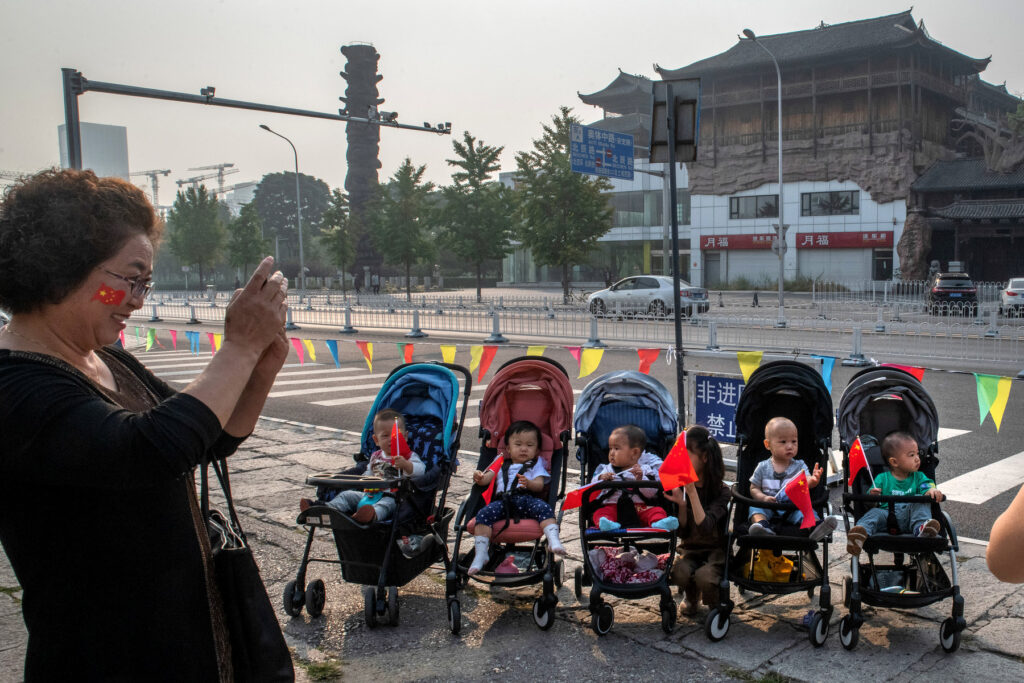
Furthermore, young couples are struggling with the rising costs of housing and education and are electing to remain childless. As a result, China is now taking on new measures to combat its rapidly ageing population. It has introduced a “five-year plan” effective from 2021-2025 which will offer significant financial and policy support to encourage fertility.
The legacy of the one-child policy also resulted in a higher number of boys than girls. This is because many traditional rural families favored boys over girls. As a result, female infanticide and abortion of female fetuses became commonplace.
The effect of this is that there are far fewer women to bear children than there were previously. The number of women between the ages of 20 and 39 is expected to drop by more than 39 million over the next decade, from 202 million down to 163 million.
What does this mean for the Chinese economy?
An ageing population can have disastrous implications for economic growth. There are many reasons for this.
China’s economy has developed rapidly in recent years and has become the world’s second-largest economy. This is due in large part to the abundant labor force in China. An ageing population will necessarily mean that there are fewer workers in the labor force which China relies on for productivity.
On top of this, the quality of the labor force will also be impacted. An older-age labor force is likely to result in labor that is of lesser quality and less efficient than that of a young labor force which is not conducive to economic growth.
The second implication that an ageing population has on China is a greater dependency on geriatric care, meaning further economic strain. As of 2020, Shanghai had 5.2 million residents over 60, which accounts for 35% of the registered population. Access to elderly care far outweighed the supply in recent years. In 2012, there were fewer than three nursing home beds for every 100 elderly residents in Shanghai.

On top of this, there is a shortage of in-home caretakers. A decade ago, it was reported that Shanghai needed an extra 550,000 domestic workers to meet its elder care needs. While the salary for caretakers has tripled in recent years, many families are opting for affordable low-skilled domestic workers who do not have any formal training.
Although this is set to change as more money will be invested into geriatric care units in hospitals and providing better training to healthcare professionals who treat the elderly. There are clear benefits to greater access to healthcare on a social domestic level, but this will further hinder economic growth.
How will it affect the rest of the world?
An ageing population in China leads to a decline in Chinese economic growth. As the second-largest economy in the world, there has been much speculation about how it will impact the global economy. China is the largest exporter of goods in the world, with 9.6% of the global share.
One country which is certain to suffer from China’s slowdown in the US. They are each other’s biggest trade partners and in 2019, not only did the US export $106 billion in goods to China, but it also imported $452.2 billion of Chinese goods.

As for Europe, China is the EU’s largest source of imports and the second-biggest import market. China and Europe trade on average over €1 billion a day.
China is of huge importance in the global economy and it is relied upon for exports ranging from commodities to machinery. The impact of a Chinese economic slowdown is likely to have far-reaching consequences.
To keep up with the latest commercial news, click on commercial to get your daily dose.
Donate & Support