By Saima Gul
Your commercial awareness dose
The $54 billion Lebanese economy, known for its matchless 9% annual growth between 2007 and 2010, is regarded as upper-middle income economy. The country is also the third-highest indebted country worldwide when it come to the ratio of debt-to-GDP. The port of Beirut is the main port of Lebanon and one of the busiest and important ports on the Eastern Mediterranean.
On 4 August 2020, a large amount of ammonium nitrate stored at port of Beirut exploded. The explosion killed nearly 200 people, injured 6500 citizens and damaged thousands of buildings. The disaster was followed by a large fire at the port that led to a mushroom cloud in the sky. Experts estimate that it will take years to build the port again and being able for operate in pre-explosion levels. Satellite images show complete devastation in the port area.
According to Professor Andy Tyas, an expert on blast protection engineering, “whatever the precise charge size, this is unquestionably one of the largest non-nuclear explosions in the history, far bigger than any conventional weapon”. Lebanon has been struggling with economic hardships and problems. The destruction of Beirut port has devastated the Lebanon’s already crumbling economy. The port was vital centre of commerce for the country and for Middle East.
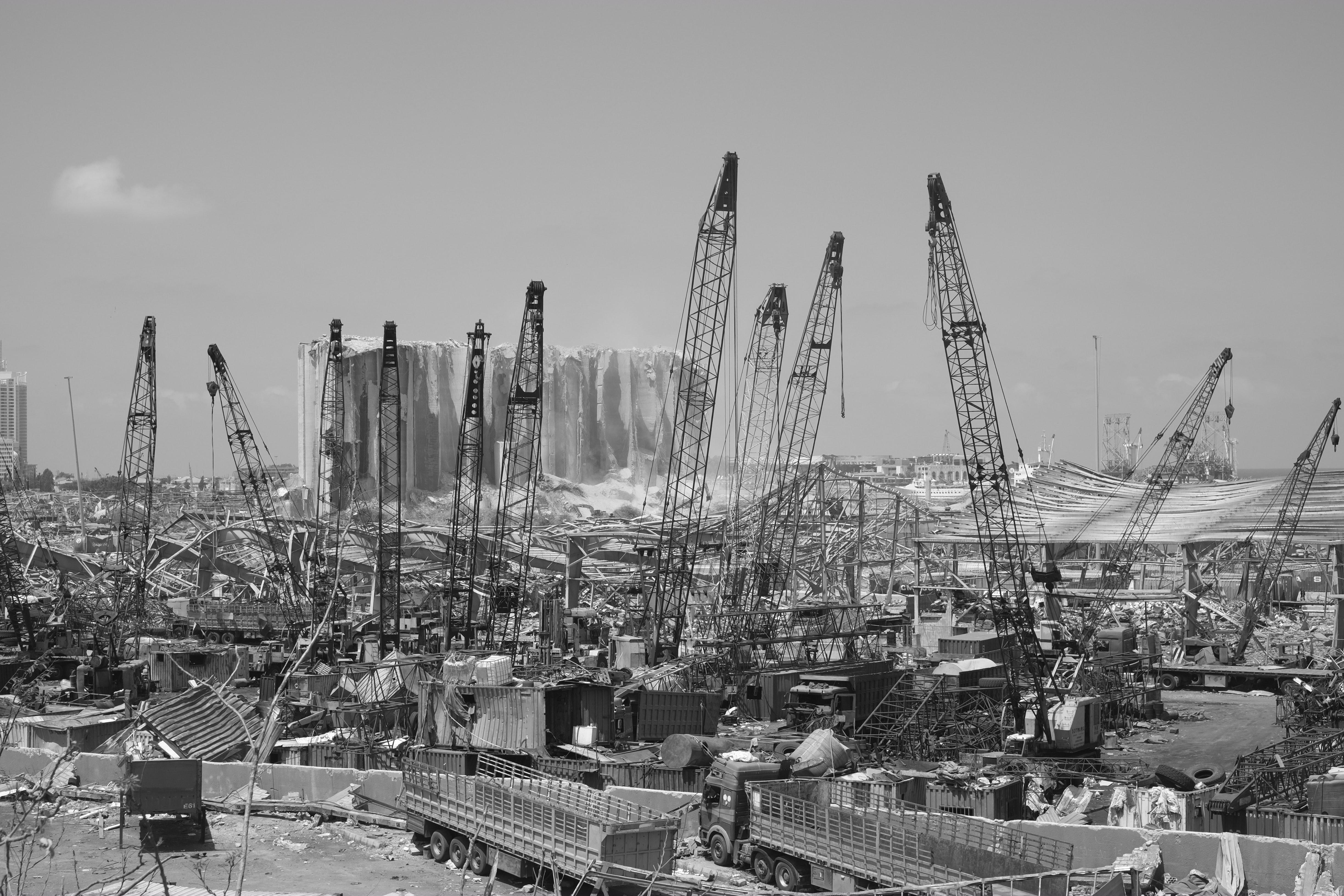
The economic consequences of the explosion make the Lebanese economy, which is already in straits, even more vulnerable. The damage to house infrastructure has caused up-to a $1.83 billion loss, while the healthcare industry suffered $75 million. The education and business sectors will require $60 million and $865 million to overcome the destruction respectively. Forecasts for 2021 confirm the contraction of GDP by 2.4% and public debt to rise to 160% of the overall Lebanese GDP.
With more than 45% of its population now living below the poverty line and 33% unemployment rate, the inflation has increased in Lebanon. According to recent reports, half of the population struggles with food insecurity. Lebanon imports 80% of what it consumes – the port was one of the main gate for imported food. This sparked up the prices of imported food including wheat. “It was the beating heart of the country as it provided around 80% of imported goods, which kept the economy moving” – said Sami Halabi – Director of policy and Co-Founder at Triangle.
Governor of Beirut reported that nearly 300,000 people are homeless. Alongside economic implications, the explosion has also deepened the trust gap between citizens and the government. Due to increasing anger among people, the Prime Minister Hassan Diab resigned on August 10. The president declared two-week state of emergency ceding broad powers to the military.
The timing of explosion couldn’t be worse as the country is already facing financial crisis. The political conditions of Lebanon are also unstable due to the economy suffering a lot as a result of the pandemic According to Tamara Alrifai, spokesperson for the UN relief and works Agency for Palestine Refugees, “ It’s an economic crisis, financial crisis, and now this horrible explosion. So, there are many layers to what is happening in Lebanon that is constantly testing the ability of Lebanese and the refugees who live in Lebanon to be resilient.”
Donate & Support