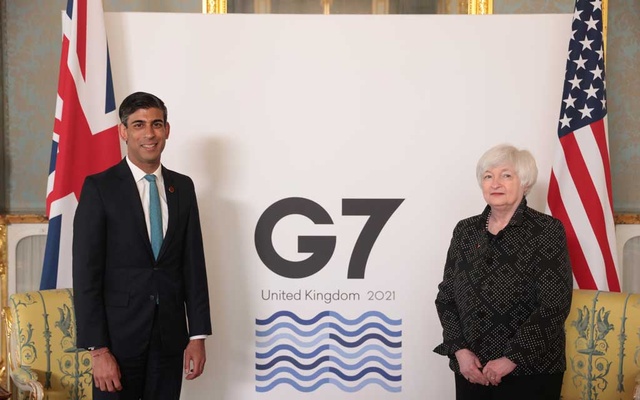
The G7 countries have agreed on the frameworks for a new international tax to curb loopholes used by multinational companies to avoid taxes. These loopholes are notoriously used by some large global tech firms, and allow them to avoid paying tax where they operate and instead register it where there might be a lower tax level, such as the Republic of Ireland or the Cayman Islands.
The G7, made up of the UK, the US, France, Germany, Italy, Canada and Japan, are set to meet this week in Cornwall, in Great Britain, to discuss a plethora of key issues.
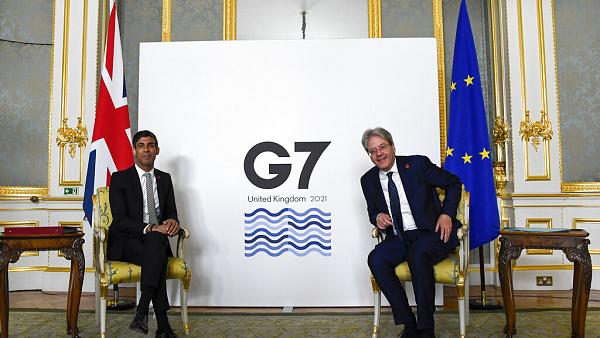
But before then, economics officials of the respective countries have gathered in London to have preliminary talks, which is where this recent story has come from. There was a video of the UK Chancellor of the Exchequer Rishi Sunak meeting and greeting his counterparts on Tuesday the 8th of June before the news was announced.
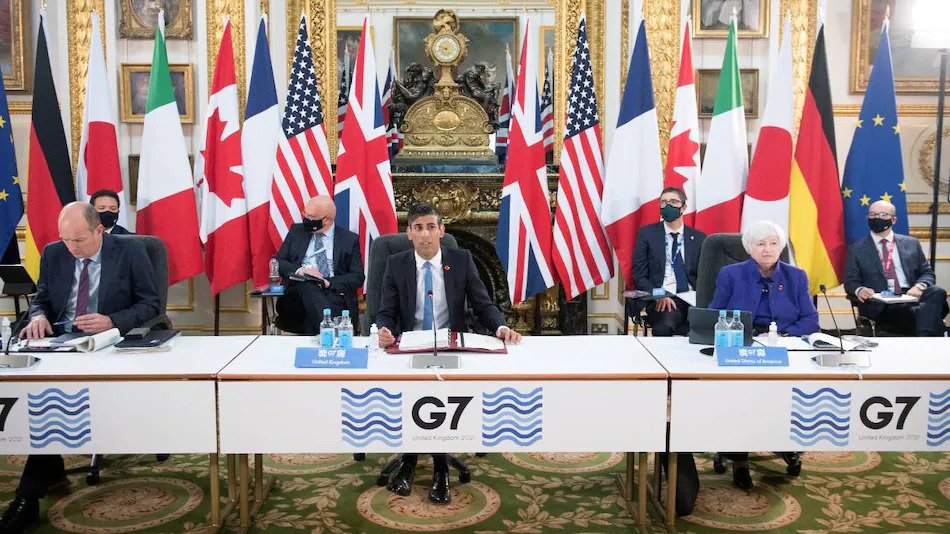
The proposed plans would reportedly enshrine a global minimum 15% corporate tax rate, aiming to eliminate tax havens and force companies to pay their fair share. This change has come due to the power of international tech giants which use low tax areas, where the rise in profits has massively outgrown the development of legislation and regulation designed to keep these companies in check. The new tax would reportedly generate an extra $50bn-$80bn in tax revenue worldwide.
While these plans have been agreed in principle by the G7 (and by the EU), it still has a way to go. The next hurdle will be to have the G20 adopt the measures when they meet in July in Venice. The likes of China, Russia and Brazil might be tough opposition to the proposal, as more than just economics might be at stake for states.
Other benefactors from low-tax business, like the Republic of Ireland, might also push back at the agreement. If there are significant countries that do not adopt the new plan, then it leaves things in the same position that they are already in – attractive low-tax zones to exploit among higher-tax areas to do business in.
Furthermore, the G7 has not agreed on (or at least shared) the details of any plans. It is not clear if the tax will apply to all companies, or only ones large enough to pass a threshold. Or, where all of the tax would be paid, and the nuance of who would collect and benefit from tax revenues the most. If the plans are unfairly skewed towards the G7 countries, the G20 or all other 139 countries of the OECD might have genuine opposition to the plans.

There are suggestions that a 15% tax would be too low, too. The head of Oxfam, Gabriela Butcher, believes that this would only mirror what is already going on in current tax havens, and it would not make any sizable difference to how multinational businesses operate currently.
Any transformative change may need a higher threshold than 15%, which could be considered by some as the bare minimum figure. However, state officials will know that the higher the proposed tax goes, the harder it will be to build a consensus around it.
To keep up with the latest commercial news, click on commercial to get your daily dose.
Donate & Support