
“We compete to win the 21st century, and the starting gun has gone off. As other countries continue to invest in their research and development, we cannot risk falling behind.” – President Joe Biden
On Tuesday, the 8th of June, the United States of America witnessed an event some may term ‘historic’. In a 68-32 vote margin, the US Senate passed into law, a bill that is set to enable the USA to go head-to-head with China in the technology space.
Round 1: About the Bill
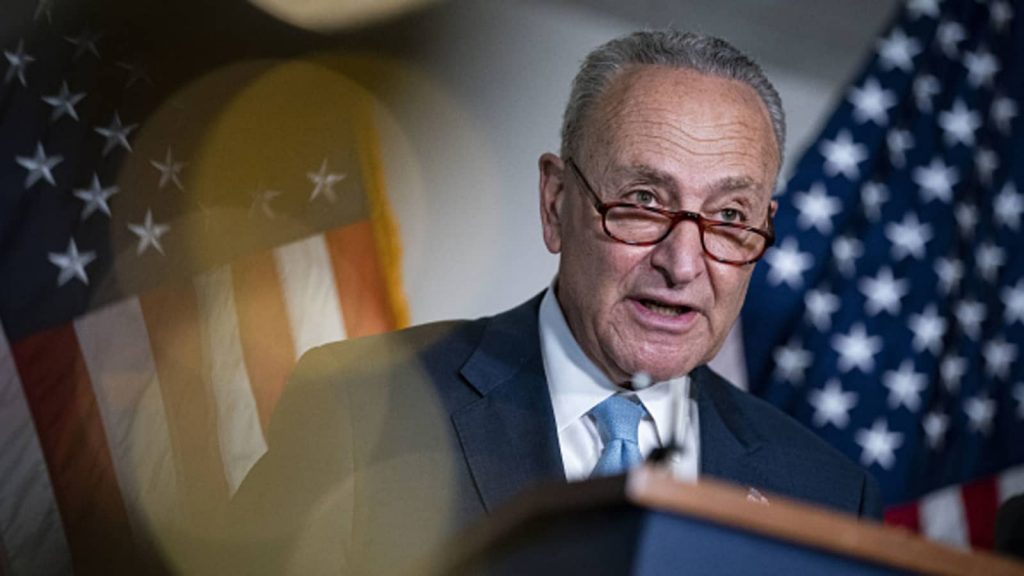
“It’s the largest investment in scientific research and technological innovation in generations. It sets the United States on a path to lead the world in the industries of the future.” – Chuck Schumer, Senate Majority Leader.
The U.S. Innovation and Competition Act is aimed at ensuring that the US remains one of the world’s biggest technological giants. The bill is said to invest about $250 billion into scientific and technological advancement within the next five years.
According to Schumer, United States is said to be lagging behind China in the area of technological innovation. 1% of the country’s GDP is committed to technological advancement and research and this has resulted in the lack of competitiveness.
Asides from investing in high-end technology, the Bill imputes a certain level of constraints on the China-based app, Tiktok. While the app is not being banned, government officials are not allowed to download the app on government-owned electronic devices.
Furthermore, federal officials are not allowed to buy drones that are manufactured by Chinese companies including DJI, the largest drone manufacturers in the world. The bill also requires State Department and Intelligence Community to provide a report on the influence of China in international organisations such as the IMF, World Bank, WTO and UN.
Round 2: It’s implications:
“This legislation addresses key elements that were included in my American Jobs Plan, and I am encouraged by this bipartisan effort to advance those elements separately through this bill” – President Joe Biden.
The bill is not just set to give the United States a competitive edge over China, but to create many jobs for American citizens, thereby boosting the country’s economy.
The bill is also set to strengthen America’s national security by checkmating the rise of China as a global power. The United States, through this bill, will be investing in research and technology manufacturing.
Although the U.S, through the ICA, is making certain restrictions, it is working even harder to ensure the growth of its technological sector. The 1,445-page legislation has different parts which make provision for various aspects in the technological sector.
· Research funding: One part of the bill establishes a Directorate for Technology and Innovation at the National Science Foundation. To achieve this, $81 billion will be contributed to the foundation’s budget between 2022-2026.
Another part of the bill, known as the Endless Frontier Act, provides for investment in AI, robotics and quantum technology. The investment is set to be worth about $120 billion. Both parts aim at improving research across universities in the country which, will unlock several innovation opportunities.
· Microchip production: The COVID-19 pandemic revealed a major problem in the tech industry and that is the heavy reliance on the Asian community in the production of microchips. The heavy reliance on Asian microchip producers has affected the tech industry, as the producers are having a hard time meeting up with the demand which has spiked during the pandemic.
This has, in turn, led to a shortage of microchips around the world. According to a Semiconductor Industrial Association report, 75% of the chips used worldwide is produced in Asia, and the US seeks to change this. The Bill will also cause the US to invest $52 billion in semiconductor chips manufacturing companies. This will not only improve the economy but curb the global shortage of computer chips.
· Creation of tech hubs: With a $10 billion investment, 18 tech hubs will be created across the country and all will receive seed funding to help. The tech hub creation program will be managed by the Commerce Department.
This move will not only help boost the economy but will spur the growth of new industries in the country. The creation of these tech hubs is set to encourage internal competition that will in turn strengthen America’s ability to compete globally.
Round 3: China’s response
“This bill seeks to exaggerate and spread the so-called ‘China threat’ to maintain global American hegemony, using human rights and religion as excuses to interfere in China’s domestic politics and to deprive China of its legitimate development rights” – China’s National People’s Congress.
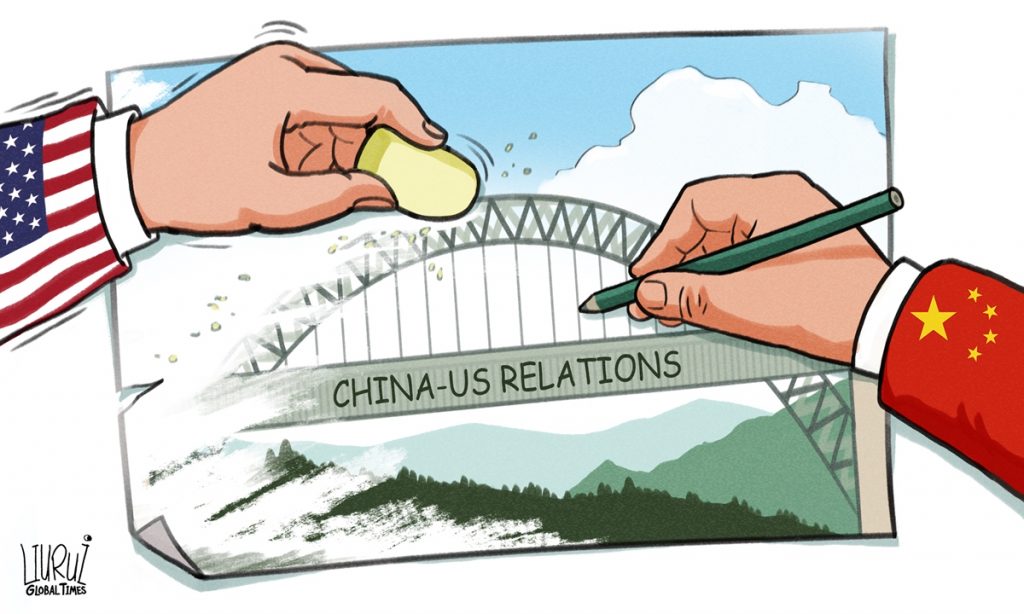
While this may be a positive step for the United States, the response of China is, however, negative. On Wednesday, the 9th of June, China, in a statement issued by the Foreign Affairs Committee of the National People’s Congress (China’s legislature), expressed its “strong dissatisfaction and resolute opposition” to the U.S. Innovation and competition Act.
The spokesman of the Chinese Foreign Affairs Committee, Wang Web, stated that the bill was “full of Cold War and zero-sum thinking and runs counter to the public aspiration in both countries to strengthen exchanges and cooperation”.

The Final Round?
As Biden said, the nation that wins the global tech race will indeed win the 21st century. While the implications of this bill will have a positive impact economically, it will affect the international relations between both countries.
The bill cannot guarantee victory or defeat for the United States, as it must pass through the US House of Representatives before being signed into law by President Joe Biden. However it goes, there is a lot to look forward to in the coming years.
To keep up with the latest commercial news, click on commercial to get your daily dose.
Donate & Support