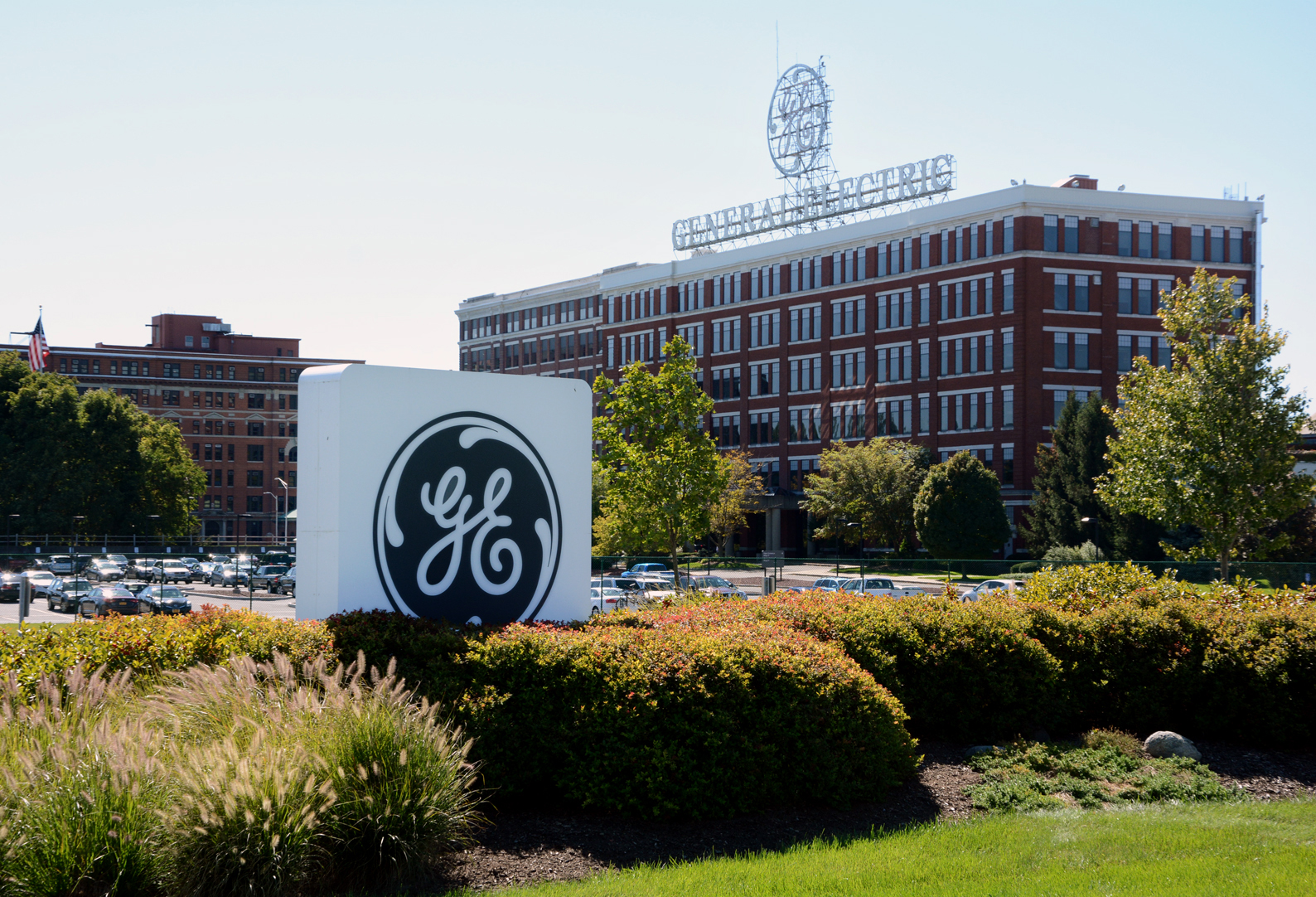
American multinational industrial conglomerate General Electric Company (GE) has seen a sharp decline in its stock price following two announcements: its proposal to undertake a reverse stock split and a deal with AerCap holdings.
The AerCap deal
AerCap is the world’s largest aircraft leasing company and GE has confirmed that it intends to combine its aircraft leasing subsidiary, GE Capital Aviation Services (GECAS) with AerCap.
GE would acquire $24 billion in cash and 111.5 million ordinary shares as part of the deal, which would create up to $30 billion in value for GE’s shareholders. This represents a 46% ownership stake in the combined company. This is one of the biggest deals in GE’s ongoing restructuring effort.
Moreover, this liquidity would enable GE to bring its total debt reduction to more than $70 billion. This deal also aids GE’s strategic plan to reduce risk in GECAS; Larry Culp, the CEO of GE said this, “marks GE’s transformation to a more focused, simpler, and stronger industrial company.”

The Stock Split: What is it, and why did GE do it?
A stock split is when a company divides the existing shares of its stock into multiple new shares to boost the stock’s liquidity. This effectively increases the number of shares outstanding by a specific multiple, without changing the total dollar value of the shares. A stock split is analogous to exchanging ten £10 banknotes for one £100 banknote. In other words, a stock split does not add any value. Naturally, it is not a tactic frequently employed by major blue-chip organizations like GE and is associated with the smallest firms that are trying to remain listed in public markets.
GE’s board recommended a 1-for-8 reverse split, meaning, for each set of 8 shares an investor owns, the investor would get 1 share with the same dollar value. This is a “reverse” split as the company is trading a fixed number of existing shares for a smaller number of new shares. The decision has not been finalized and is due for shareholder approval.

GE’s motives, per its board, was to reduce its number of shares outstanding to a number “more typical of companies with comparable market capitalization.” This is valid as GE’s outstanding shares are starkly contrasted against comparable organizations. GE has a market capitalization of $122.75 billion with 8.77 billion shares outstanding. Lowes, for example, has a market capitalization of 121.34 billion but has 734 million shares outstanding.
Market Consequences
GE stock saw a sharp drop of 4.8%, its second-biggest decline in price since September 2020. This is likely because of its stock splitting announcement, rather than the AerCap deal. Whilst stock splits have advantages, such as attracting institutional investors who are typically drawn to stocks with higher prices, it possesses more damaging disadvantages.
The stock market, to a certain degree, operates on perception. A reverse stock split, rather than addressing fundamental business issues, merely superficially inflates stock prices. An unintended consequence is signaling that the management sees little prospect for organic recovery through financial results, thus leading to diminishing investor confidence.

Also, GE’s credit rating is likely going to decline, with Standard & Poors, as well as Moody’s considering negative changes to their current ratings of B++ and BAA1.
To keep up with the latest commercial news, click on commercial to get your daily dose.
Donate & Support