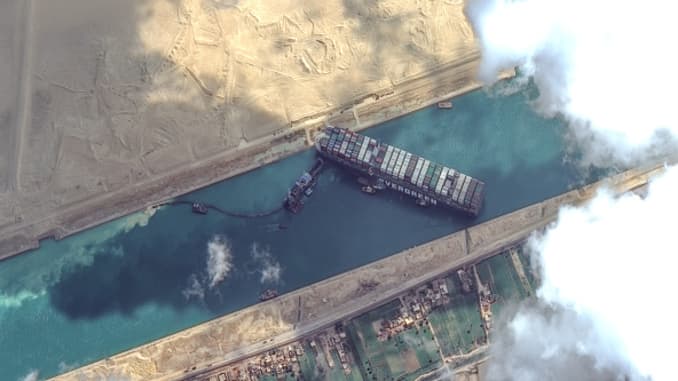
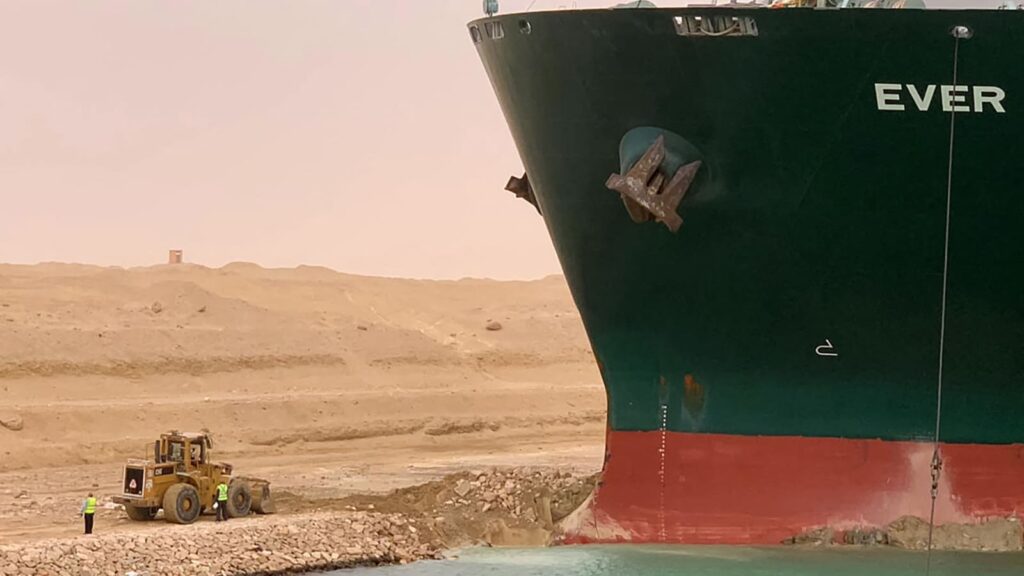
Earlier this week, one of the world’s largest container ships, named “Ever Given,” ran aground and caused the Suez Canal to be blocked. The Suez Canal, which connects the Mediterranean Sea to the Red Sea through the Isthmus of Suez, is central to global trade as it is a route used for up to 10% of global seaborne trade.
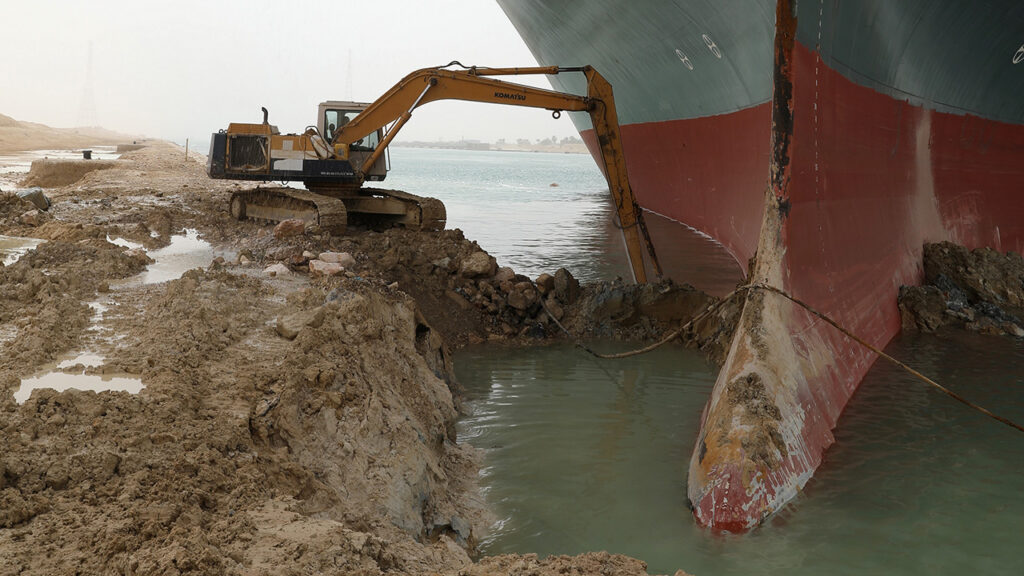
Initially, Egyptian officials were optimistic about the handling of this crisis, with some speculating that the matter would be resolved in days. However, as the length of the vessel Ever Given, originating in Taiwan, has been said to be roughly the height of the Empire State Building at nearly 200 feet wide and 1,300 feet long, its removal is an incredibly difficult task. As a result, Smit Salvage, a group involved in the crisis management efforts, has stated that it may take “weeks” for the Suez Canal to continue routine operations.
The one glimmer of hope for companies utilizing the sea route was the upgrade in 2015 to the Suez Canal, when a newer channel was built alongside the one originally opened in 1869. However, this optimism was short-lived as the new channel was significantly smaller, precluding bigger vessels from utilizing it.
Market reactions
Cargo shipping was already under strain following the pandemic, largely due to the difficulties in refreshing crews or servicing vessels, and this crisis has exacerbated these difficulties; cargo companies are now forced to undertake expensive alternatives, such as air freight or moving across the southern tip of Africa.
Initially, due to the novel nature of this crisis, markets reacted poorly, which led to the price of Brent crude rising almost 6 percent to $64 a barrel as of Wednesday the 24th of March. This was largely due to the imminent supply shortage of the commodity, as up to 13 million barrels of Brent crude shipments were blocked on the same afternoon of the crisis. By Thursday, the commodity nearly experienced a correction as the cost of Brent crude fell to $61 a barrel.
The knock-on effects of this crisis are more alarming than the initial market reaction. Firstly, a bottleneck effect may materialize in European ports, as delayed vessels may arrive at ports at the same time as vessels scheduled to arrive from different locations, thus causing a detrimental domino effect. Moreover, severe disruption to global supply chains may occur as goods transported around Africa may delay deliveries by up to 10 days. This logistical disruption has further negative connotations, such as inflation-linked rises in the price of goods.
What to look out for
It is likely the days following the resolution of this crisis will be littered with insurance claims. Although UK P&I, the insurance group covering Ever Given, has refused to comment on potential claims, insurance experts predict a wave of claims is forthcoming.

This event is also likely to trigger a global discussion of prevention of circumstances such as this one, as the size of cargo vessels have expanded significantly over the years, whilst the width of their relatively narrower routes have remained largely unchanged, barring the aforementioned expansion to the Suez Canal. There may be efforts to mitigate against blockages such as this one in key shipping “chokepoints“
To keep up with the latest commercial news, click on commercial to get your daily dose.
Donate & Support