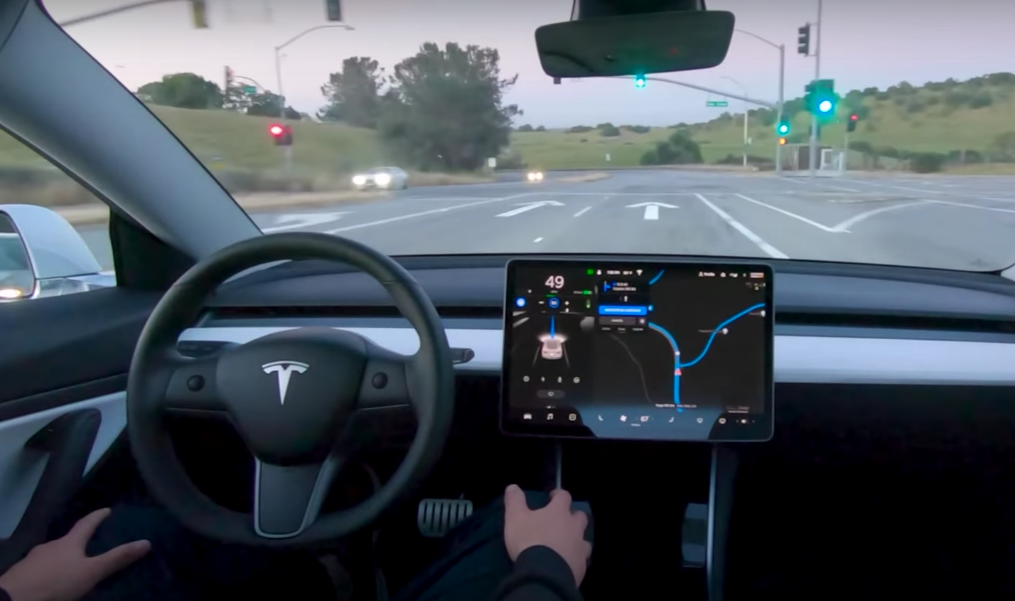
Almost a year ago, Elon Musk made a bold claim. He said to investors and analysts that comparing Tesla’s AI to other competitors would be akin to comparing Google to other search engines. Then, according to its 2019 Annual Report, which reported the year ending 31st of December 2019, Tesla believes that an “a key factor in [its] success will be [its] Autopilot and FSD technologies.” How exactly is Tesla implementing AI and what implications might this have?
The AI:
Tesla implements AI in two ways, both of which are based on unsupervised machine learning.
Firstly, it aims to use AI-integrated chips. These chips will enable cars to navigate through traffic and motorways. The cars have two chips for better performance and these chips will work to make separate assessments of the traffic and danger around the car. If both chips have made the same assessment, then the car is guided accordingly. If there is a discrepancy between them, then the chips will revaluate until a safe and suitable decision is taken. The chips that are used by Tesla are, crucially, manufactured by Tesla. In the past, Tesla had opted to use chips designed by NVIDIA, but the company unveiled plans to use their own in April 2019.
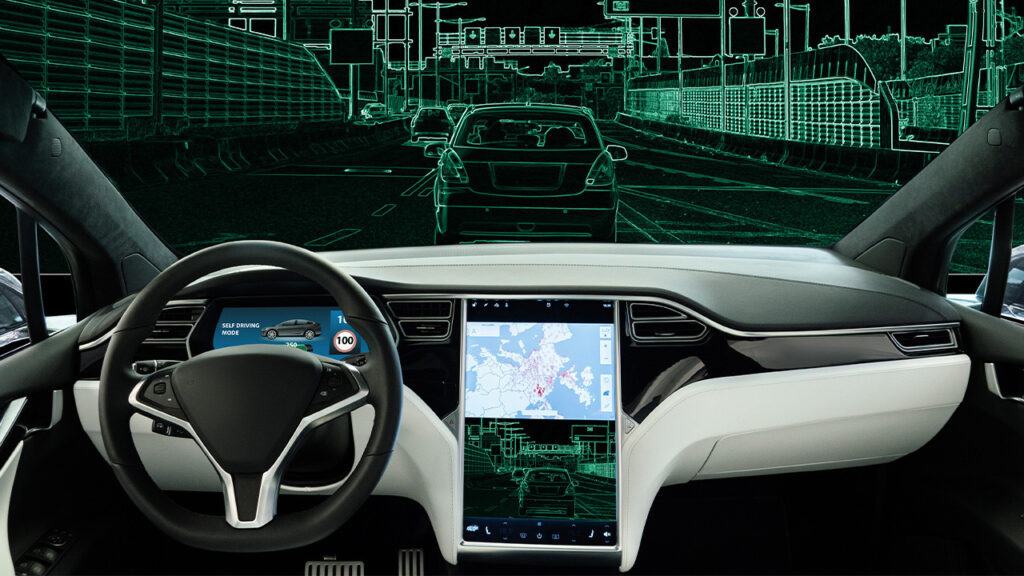
Tesla has also developed two further AI systems: Autopilot and Full Self Driving (FSD). Cars can be fitted with these for an additional cost. These technologies are considered to be driver aid systems. But how do they work and what is the difference?
Autopilot is described by the company as a suite of driver assistance features. Despite the name, it is not capable of driving a Tesla in its own right, nor is it legally allowed to. It implements artificial intelligence to serve a range of purposes such as Automatic Emergency Braking, Traffic-Aware Cruise Control, and Autosteer within clearly marked lanes. The last two feature allows Autopilot to drive without much need for human input. However, the company is adamant that Autopilot is only to be used with a driver who is in full control of the vehicle.
Full Self-Driving is a little more advanced than its Autopilot counterpart. FSD includes features like Auto Lane Change, Autopark, and Summon (moves the vehicle in and out of a tight space using the mobile app). According to Tesla’s website, Autosteer on city streets will also be coming soon. Like Autopilot, Tesla stipulates that FSD should only be used with a fully attentive driver who has both hands on the wheel at all times.
What challenges does Tesla face?
There are two primary challenges faced by the company.
The first challenge that the company is faced with is the chip shortage. We are amid a global chip shortage which will no doubt have an enormous impact on Tesla’s ability to produce their automobiles in the coming year. This challenge will impact Tesla in the short-term.
A second challenge for the company is legal restrictions. The law surrounding this area is dynamic and continuously evolving which could prove problematic for Tesla. As it stands there are no federal U.S. regulations about the safety of self-driving vehicles, however, certain U.S. states have legal restrictions on self-driving vehicles, and many other states are considering them. In Europe, certain vehicle safety regulations apply to self-driving braking and steering systems, and certain treaties also restrict the legality of certain higher levels of self-driving vehicles.
In the UK, however, it would appear that there is going to be more leeway. The Law Commission is seeking to adapt and regulate the law surrounding self-driving vehicles. They have outlined potential benefits to their use and have already published two consultation papers. It would appear that cars will be legally allowed to drive themselves in the UK later this year. This bodes well for the car giant as it continues to develop its technology which would allow for no input at all from drivers.
Implications for the automotive industry:
Interestingly, according to Tesla’s annual report, they have pledged not to initiate legal proceedings against any party that infringes on their patents through activity relating to electric vehicles or related equipment as long as the party is acting in good faith. The reason they gave behind this decision is to “encourage the advancement of a common, rapidly-evolving platform for electric vehicles, thereby benefiting themselves, other companies making electric vehicles, and the world.”
This is a reiteration of a 2014 statement made by Elon Musk. In his statement, the CEO said that laying “intellectual property landmines behind [them] to inhibit others, would be contrary to [their] common goal”. The goal, of course, is the advancement of electric vehicle technology. Tesla is seeking to change the face of the automotive industry and is inviting others to join them in an electrified future.
Donate & Support