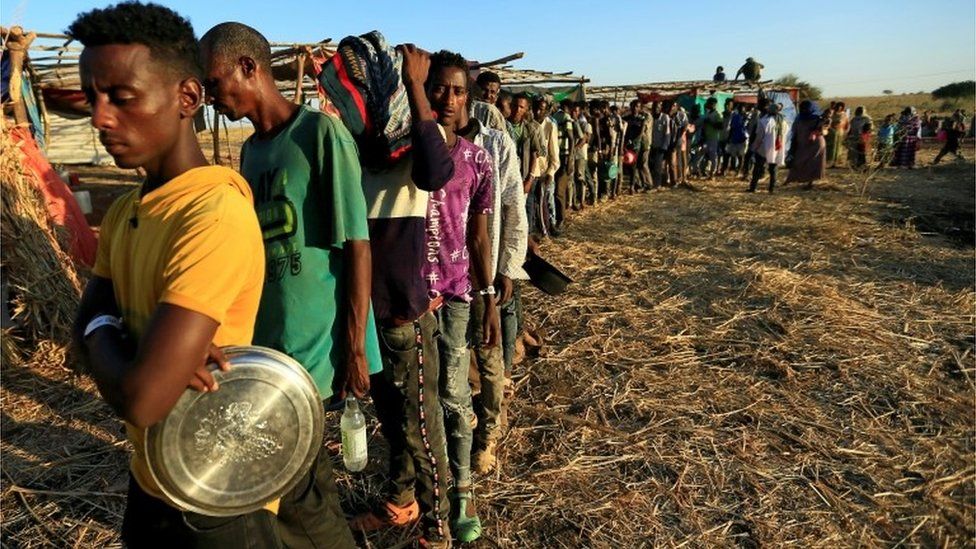
The Tigray War that has started at the beginning of November 2020 has alarmed the world by its brutal antihuman practices resulting in a humanitarian crisis. The Tigray region’s authority that used to dominate Ethiopia’s government clashed with Ethiopian Prime Minister Abiy Ahmed’s government based on long-rising tensions.
It is fought between the Tigray People’s Liberation Front (TPLF) which exercises control over the Tigray Regional Government, and the Ethiopian National Defense Forces (ENDF) aided by the Ethiopian Federal Police, regional state police with also the involvement of the Eritrean Defense Forces (EDF). War crimes have been committed by both sides during the conflict.
Humanitarian crisis
The impact of the crisis isn’t fully known due to communication blackouts in large parts of the region and the lack of access to some areas, especially rural ones. Wafaa Said, the deputy humanitarian coordinator for Ethiopia, says that the UN’s humanitarian partners continue to receive corroborated reports of targeted civilian killings, gender-based violence, forced displacement, restricted movements of civilians, and extensive looting of civilian property.
As the conflict is still ongoing, no one can be sure about numerical data, but Ethiopia’s government says that at least 52,000 people had been killed; women are objects to rape; women, men, and children are crossing the border at the rate of 4,000 per day since 10 November according to the UN statement; and the proportion of children affected by malnutrition “greatly exceeds the emergency threshold of 15%”, according to Wafaa Said.
He also emphasizes that 82% of the 229 health centers in Tigray are not functioning, or do not support any communication. As BBC provides, nearly 70% of health facilities in Ethiopia’s northern region have been vandalized and equipment looted.
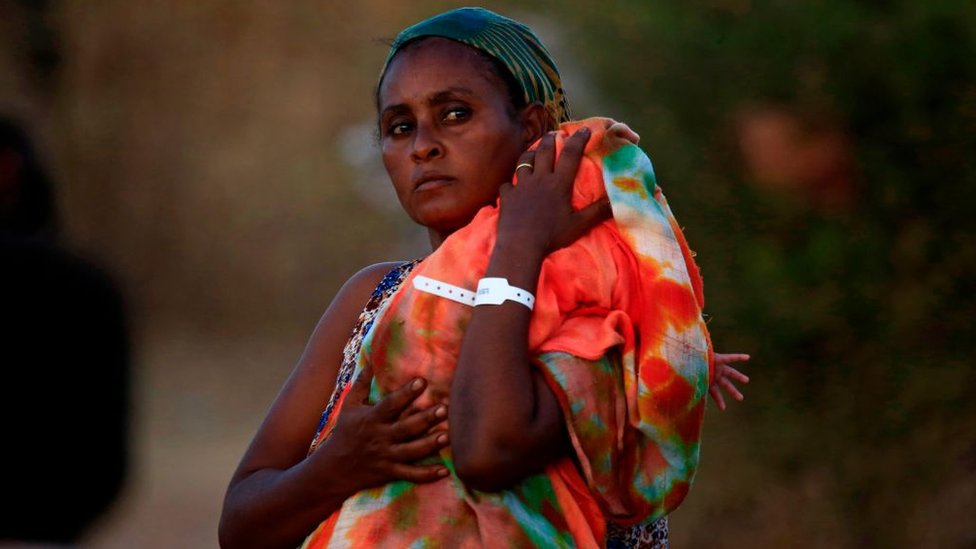
Humanitarian response
Among other entities, the ICRC provides humanitarian help in response to the humanitarian emergency: it protects detainees, restores family links, provides physical rehabilitation, and works closely with the Ethiopian Red Cross.
On the 30th of March International Federation of Red Cross And Red Crescent Societies made an appeal which reflects the funding requirement of 27 million Swiss Francs, comprising support and funding to be channeled to the Ethiopian Red Cross Society, Djibouti Red Crescent Society, and Sudanese Red Crescent Society (SRCS) to deliver humanitarian assistance to and support the early recovery of some 660,000 people in Ethiopia, Sudan, and in Djibouti, affected by disasters of the Tigray crisis.
Peace process
Since the explosion of the conflict, several proposals for peace negotiations and mediation were made from the international community as well as from the main groups involved in the war. The negotiations between East African heads of government conducted on 20 December 2020 in Djibouti resulted in a statement of support for the Ethiopian constitutional order and humanitarian access to the Tigray Region.
On 19 February 2021, the TPLF expressed its wish for peace negotiations and declared specific preconditions. Soon after, three Tigran parties published similar demands, among which the withdrawal of the EDF, the demand for Transitional Government to be replaced by the elected administration, the request for an international investigative body to analyze the war crimes, and the demand for mediation by an independent international body.
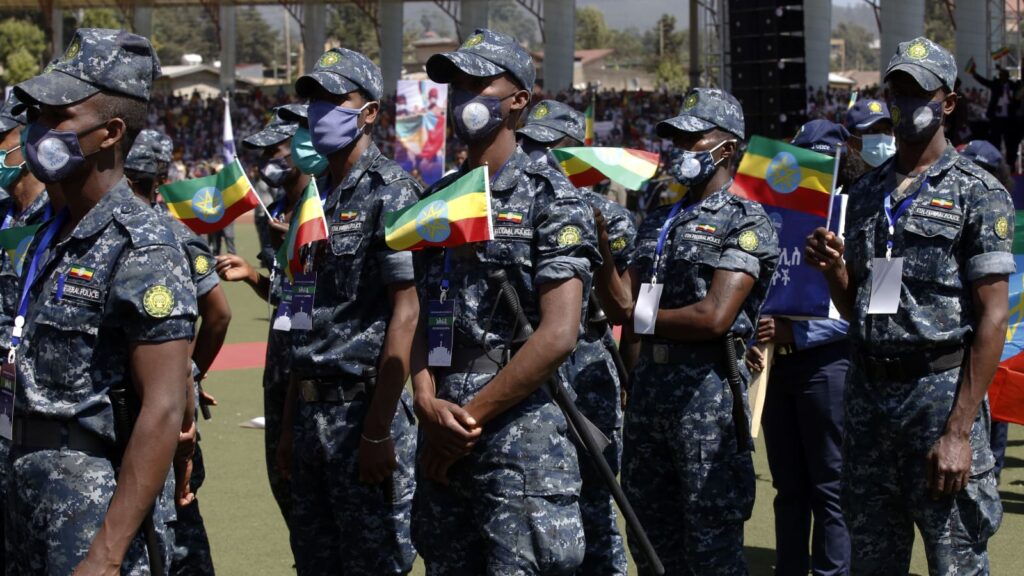
On 8 March 2021, Ethiopian president Sahle-Work Zewde visited Kenya for discussions with Kenyan President Uhuru Kenyatta. It might be a result of the occurred pressure from the US Secretary of State Antony Blinken calling on the African Union to exert pressure over the worsening crisis in Ethiopia’s Tigray.
International response
The fact that since the conflict broke out the access to journalists was very limited, and communications are largely cut off, even with health facilities, makes highly complicated the humanitarian response to the crisis. The international response is still limited, however, the Office of the High Commissioner for Human Rights (OHCHR) announced last Thursday that the UN will investigate grave breaches of the Geneva Conventions and international humanitarian law, such as the starvation of civilians and collective punishment.
It is important to note that it is first and foremost the responsibility of the government of Ethiopia to ensure its citizens are shielded from violence and provided life-saving assistance. However, Abiy’s administration has not delivered on its promises to facilitate aid delivery. For example, in December 2020 the UN and Ethiopia’s Ministry of Peace agreed to establish aid access via a humanitarian corridor, but the access failed to improve.

Relief Web, the largest humanitarian information portal in the world, provides specific recommendations to be accomplished by the international community to end the disaster. Among others are to ensure immediate humanitarian access, to call on Eritrea to remove its troops from Tigray, to facilitate the independent investigation of reported cases of atrocities and human rights abuse, and to appoint a Special Envoy to oversee diplomatic efforts on the Tigray crisis.
As the situation is worsening exponentially, the international community must not be reluctant based on the previous failures, such as in Somalia and Yugoslavia. Respect for Human rights is a common responsibility and must be ensured from the outside when it is so crucially needed.
To keep up with the latest commercial news, click on commercial to get your daily dose.
Donate & Support