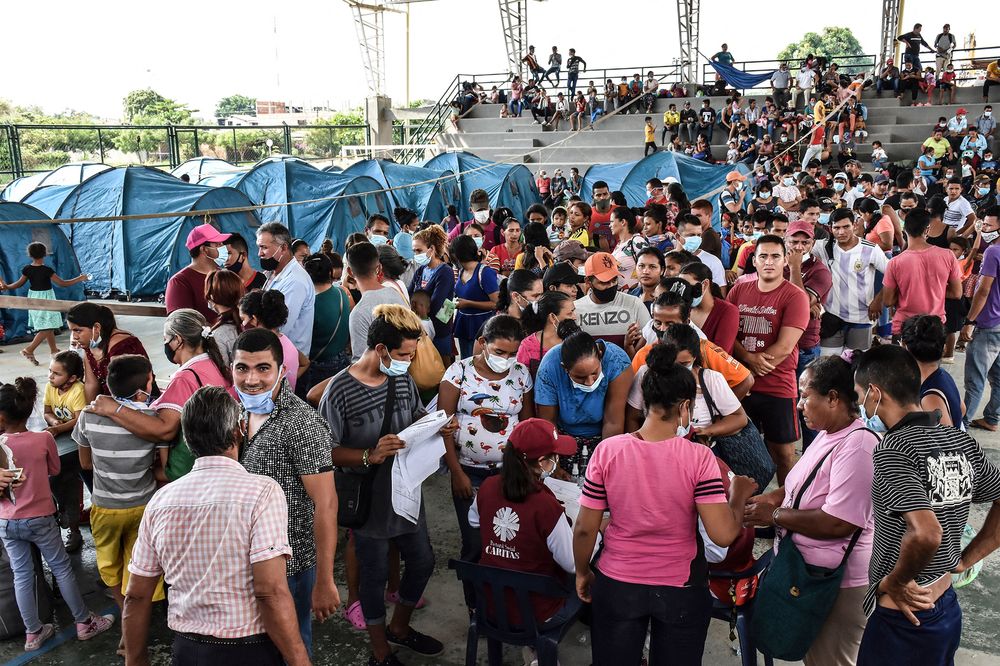
More than 6,000 Venezuelans have fled to neighbouring Colombia following an offensive by the Venezuelan military (FANB) on “irregular Colombian armed groups”. A military campaign – reportedly the largest in decades – was launched last month (March 21) in La Victoria, a town located in the west of the country near the Venezuelan-Colombia border, to combat criminal groups involved in drug trafficking.
Thousands of civilians have crossed the Arauca river into the Colombian municipality of Aranquita to avoid being caught in the crossfire.
Overview
As a geopolitical and humanitarian crisis, the situation is complex, to say the least – in part due to unsubstantiated claims and limited news coverage.
In recent years, Venezuela has repeatedly been accused by Colombian officials of harbouring and enabling dissidents belonging to the Revolutionary Armed Forces of Colombia (FARC) – a former leftist guerrilla group – within their borders. FARC signed a historic peace deal with the Colombian government in 2016, officially marking an end to a 50-year-long civil war. However, thousands of members have refused to lay down their weapons and remain active participants in the distribution and production of cocaine.
Venezuela’s crackdown on “irregular Colombian armed groups” – notably a faction of FARC dissidents known as the Tenth Front – potentially represents a marked change in policy from Nicolas Maduro’s government, leading security experts to suspect dissidents and drug traffickers may have broken “unwritten rules” within Venezuelan territory.
Violent clashes between the two parties have led to casualties and losses on both fronts. It has been reported that nine FARC fighters have been killed so far and 31 arrested, following the destruction of nine of their camps. On the opposite side, the FANB has seen at least six soldiers killed and a further nine injured.
Collateral damage – a humanitarian crisis
This conflict has started to attract international attention due to alarming allegations of human rights abuse and extrajudicial killings performed by the Venezuelan military.
As cited by Reuters, refugees fleeing the area have accused the military of ransacking homes and killing civilians in La Victoria after residents were accused of being accomplices. Some civilian accounts suggest soldiers were complicit in rounding up villagers, demanding identification, and pointing weapons at them.
Human Rights Watch researchers strongly suspect that at least 4 civilians were executed during the offensive. Juan Francisco García, a lawyer working on behalf of Venezuelan human rights group Fundaredes, described the situation in La Victoria as “a civilian population trapped between warring groups … [the violence] has escalated every day”.
Rights groups on both sides of the borders have called on the United Nations to assign a special envoy to address the humanitarian crisis taking place in Apure state.
According to Venezuela’s attorney general, Tarek William Saab, two prosecutors have been appointed to investigate these allegations of human rights abuses.
Analysis
Relations between Venezuela – a self-described anti-imperialist nation – and US-backed Colombia have been rocky for a while. While the likelihood that this conflict could escalate into a full-blown war between the two countries remains low, the situation is volatile.
In early 2019, Colombia along with other US allies supported opposition leader Juan Guaidó in his unsuccessful attempt to oust President Nicolás Maduro. Maduro cut off all diplomatic ties with Colombia as a result of this move.
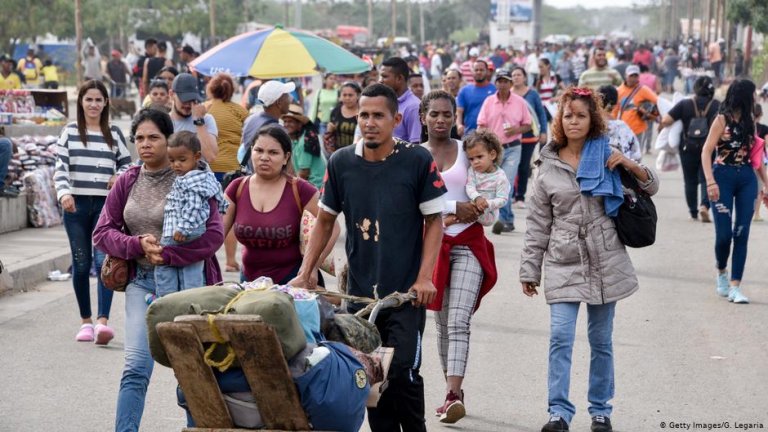
Due to worsening economic and social problems – including hyperinflation, food shortages and power cuts – over two million Venezuelans have now escaped to Colombia since Maduro took over power in 2013, further fuelling tensions.

A question mark remains over who is to blame for starting the violence. Officials on both sides of the border have come out with conflicting statements.
Colombia’s defence minister, Diego Molano, has said the violence was due to a dispute between the FANB and illegal armed groups over drug trafficking routes.
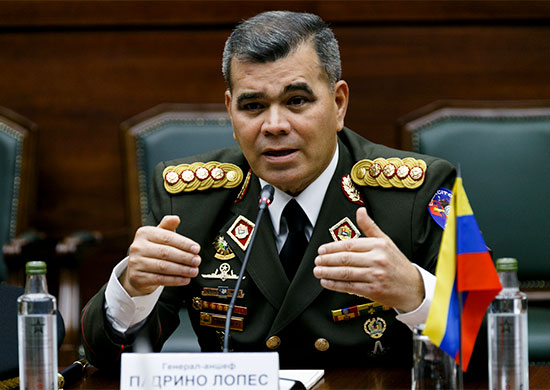
Venezuelan officials, including defence minister Vladimir Padrino, have portrayed the violence as a foreign offensive coming out of Colombia.
Padrino tweeted: “Colombian irregular groups attack us with explosives and rifles. They continue to instil terror in the population and believe that by harassing military bases they will intimidate us (…) Driven by drug trafficking, they intend to do what they do in Colombia.”
Donate & Support