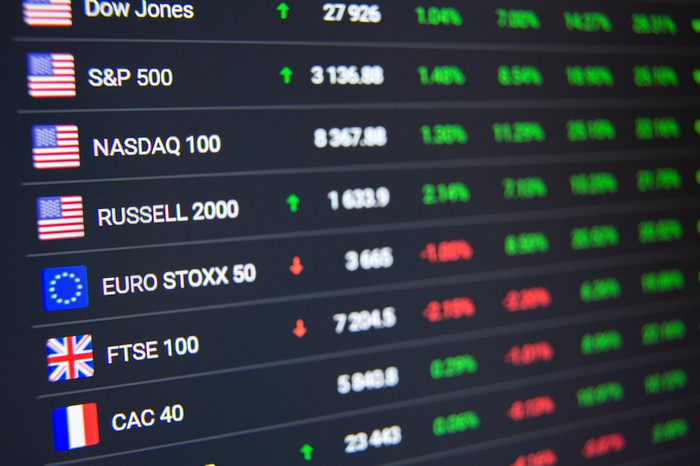
We are all used to seeing the Dow, the S&P, or the Nasdaq in the headlines, particularly recently with new records being broken regularly. While there is overlap between these three indices, there are significant differences in composition and performance. The Nasdaq 100 has outperformed the S&P 500 in eleven of the last thirteen years with a spectacular difference since the start of the pandemic. We need to step back, examine the indices and understand why. This might give us some insights into what to expect in the future.
The Dow Jones Industrial Average of 30 stocks is the oldest of the three indices having evolved from an original list put together in 1896 by Charles Dow of the twelve most substantial companies in the US. Not one of those companies is on the index today. The original industrial stalwarts of the 1890s, such as railway companies, coal companies, or even gaslighting, have long been replaced by the consumer-focused companies, like Nike and McDonalds, and the technology and pharmaceutical companies, like Intel and Merck, that make up the Dow today.
The Nasdaq 100 comprises the 100 largest non-financial companies on Nasdaq, which are primarily Technology and Consumer Services. Millennial investors were quick to understand how technology is becoming the essential fabric of everyday life and invested heavily in companies that linked technology to consumers.
Jim Cramer of CNBC first coined the term FANG in 2013 to cover Facebook, Apple, Netflix, and Google, companies which he described as being “absolutely dominant” in their markets. FANGs have become FAANGs to bring in Amazon and have stayed that way even though Google has become Alphabet. Microsoft, another Nasdaq company, should probably be on that list, but the acronym FAANGM is too unwieldy. Donald Trump even proposed a Make America Great Again index that would include Microsoft, Apple, Google, and Amazon. The idea seems laughable in hindsight, but the principle is correct. These are the companies that drove the stock markets to pre-pandemic highs.
When Covid-19 hit and daily life became an endless cycle of lockdowns and curfews, the FAANG stocks showed their resilience and recovered value quickly when it became apparent that these were the “stay at home stocks”. Facebook, Apple, Amazon, and Google were ideally positioned to take a larger share of consumer spending when life for most people consisted of downloading television series, films, and music, using social media to stay connected, or shopping online. The FAANG stocks led the stock market recovery and outperformed the more traditional industrials like Boeing and Caterpillar.
It’s not just about FAANG stocks. One of the most incredible stock market successes was Tesla. 2020 was the year that Elon Musk confounded his critics and delivered strong operating performance and opportunities to drive growth through expansion into SUVs and the China market. The stock soared a remarkable 695% over 2020 and opened strongly in 2021. Ironically, one of the reasons analysts give for the share price gain was Tesla’s inclusion into the S&P 500 in 2020, but Tesla only represents 1.49% of the S&P 500 compared with 4.20% of the Nasdaq 100. Tesla share price movements will impact the Nasdaq 100 almost three times as much as the S&P 500.

The amount of index weighting is essentially the story. FAANGM stocks represent 48% of the Nasdaq 100 and only 22% of the S&P 500. Throw in Tesla and pharmaceutical and health care stocks, which are also overrepresented in the Nasdaq 100, and it is easy to understand why the Nasdaq 100 outperformed the S&P 500 by more than 30 percentage points, gaining 48.9% in 2020 compared to 18.4% for the S&P 500.
Looking ahead, the picture is less clear. Since the start of the year, analysts have seen investors taking some of their gains from technology stocks and investing in more defensive dividend-yielding stocks in anticipation of a correction.

Tesla’s purchase of $1.5 billion of Bitcoin was not well received by investors, causing a 20% decline in share price over a week. Prospects of increased regulation of social media from Europe are giving Facebook investors cause for concern, as does the prospect of coordinated taxation of global profits on Amazon and Apple’s enormous revenues. Any negative impact from these factors will affect the Nasdaq 100 disproportionately and 2021 could be one of those rare years where the Dow and the S&P outperform the Nasdaq.
To keep up with the latest commercial news, click on commercial to get your daily dose.
Donate & Support