The Landing
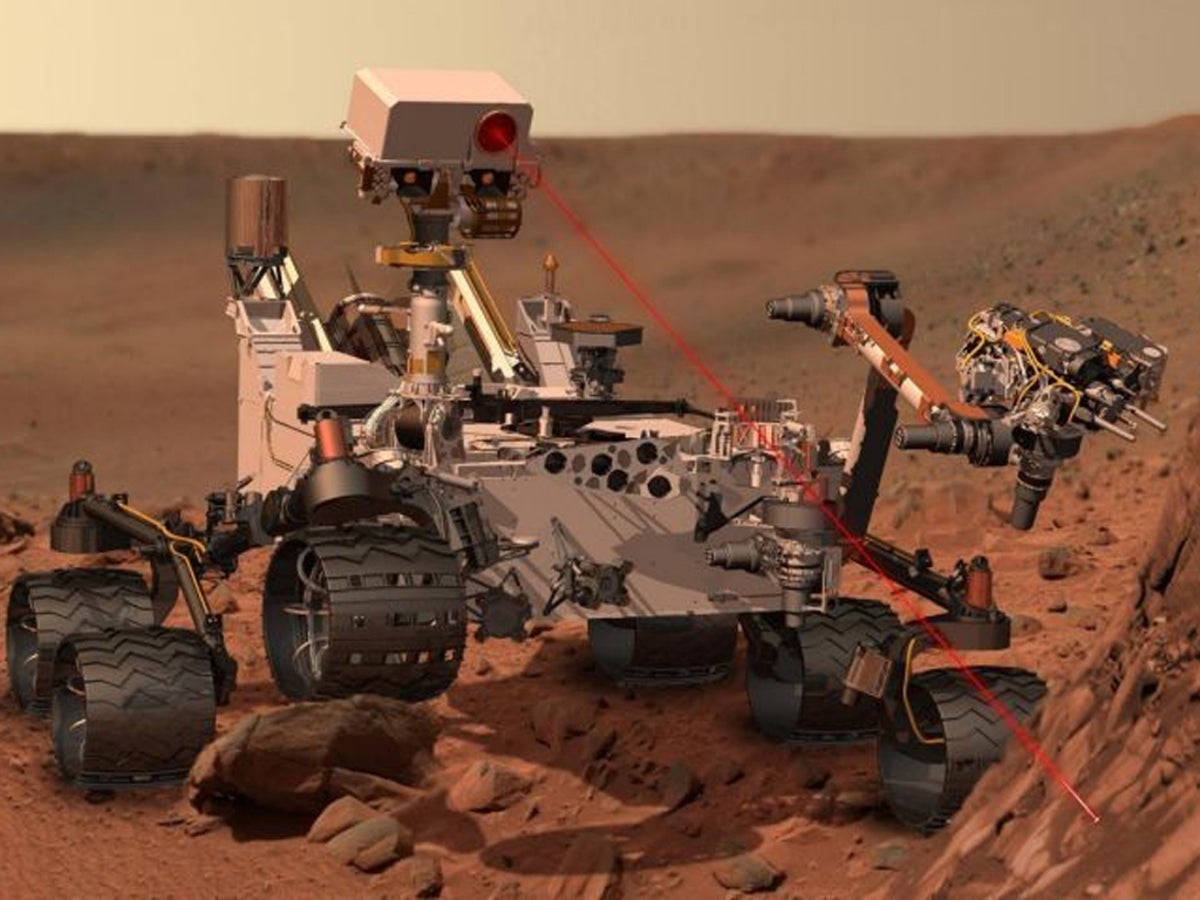
At 20:55 GMT on 18 February 2021, NASA’s Perseverance Rover landed on the Red Planet, 7 months after taking off from Earth. Perseverance is the main component of NASA’s $2.7 billion Mars mission, it is about the size of a car and landed right inside the infamous Jezero Crater, a 49km wide depression north of Mars’ equator. The touchdown confirmation was narrated by Swati Mohan, the Mars 2020 Guidance & Controls Operations Lead at NASA’s Jet Propulsion Laboratory (JPL). She manages the team that controls Perseverance’s “eyes and ears” and narrated the rover’s entire descent onto Mars.
The Mission
Perseverance is set to scope out the Red Planet but is also set to search for any signs of life. If everything goes as planned, among other plans, the rover will bring several dozen samples of Mars to Earth upon its return in about a decade. In technical terms, once Perseverance is up and running it will be looking for anything that may indicate the existence of microbial life on the planet.
NASA’s acting Administrator Steve Jurczyk states that this mission is going to be amazing and “contribute so much to science and technology”. Specifically, Perseverance’s exploration of the ancient Mars environment will allow NASA to “decipher the geologic processes and history, including its past habitability”, indicating whether present or future habitability is possible on the planet.

The Predecessor
Perseverance is not the first robot to land on the Red Planet. In August 2012, the Mars Science Laboratory (MSL) was successful in landing the Curiosity Rover on Mars, Curiosity is still going strong today. It will be interesting to see whether the two rovers cross paths over the next few years. Due to Curiosity’s success, the Perseverance creators used its predecessor as a model in its creation.
Both rovers were built by engineers and scientists at NASA’s Jet Propulsion Laboratory in California. Approximately 85% of Perseverance’s mass is based on the body and hardware that was proven successful on Curiosity’s flight. In doing this, NASA was able to save time and money and significantly reduce the risks involved.
The Body
So what does Perseverance look like? Our Red Planet voyager is approximately 3 meters long excluding its robotic arm, 2.7 meters wide and 2.2 meters tall (10 feet long, 8 feet wide, and 7 feet tall) and weighs 1,025 kilograms (2,260 pounds). In a similar fashion to Curiosity, Perseverance is rectangular shaped and has six (6) wheels, a robotic arm, cameras and scientific equipment, and a drill.
The difference between the two robots is that while Perseverance is set to look for signs of life, Curiosity was sent on a mission to assess the habitability of Mars (is the Red Planet fit to sustain life as Earth does?). Thus Curiosity is equipped with different gear to help on its mission. Perseverance is equipped with gear built on Curiosity’s model and will be able to gather science data in a manner that was never possible, we are witnessing history being made.
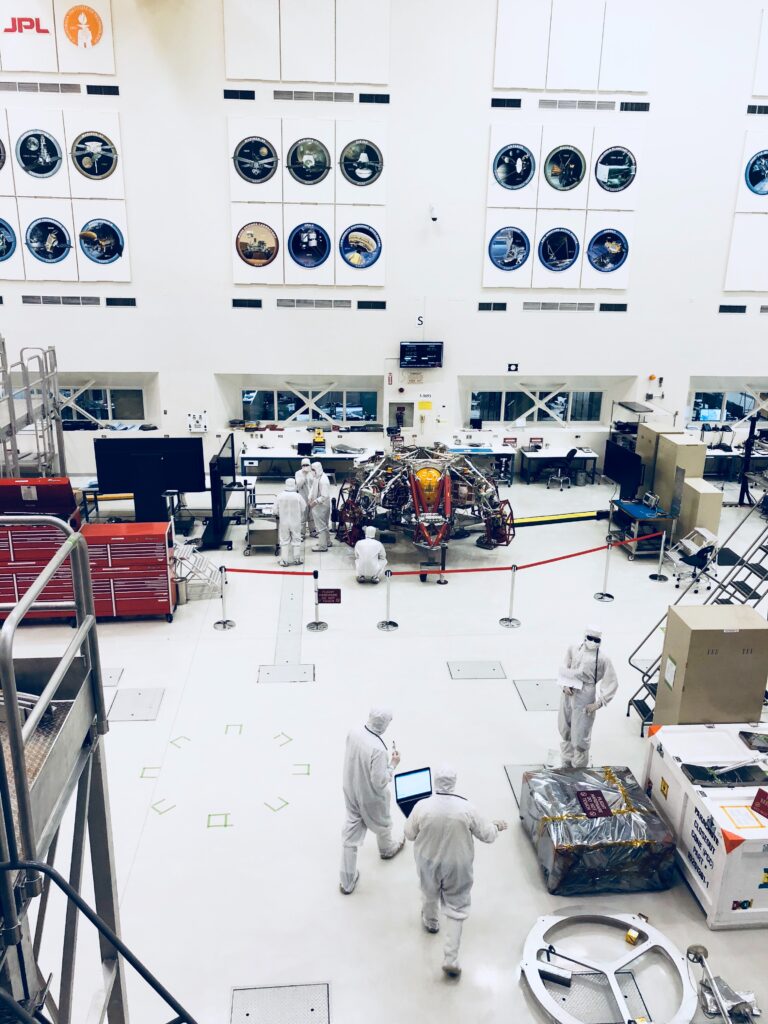
Perseverance’s entry, descent, and landing (EDL) strategy is the same as that employed on Curiosity. Both rovers entered Mars’ atmosphere at extremely high speeds and deployed supersonic parachutes when they had slowed down enough to do so. Finally, the rovers were gently lowered onto the red surface by a rocket-powered “sky crane” and cables.
Of course, Perseverance was given some EDL updates that were not on its predecessor. For instance, the NASA lab that is managing the mission, the Jet Propulsion Laboratory, developed a new landing technology called terrain-relative navigation. This allowed the rover upon descent to use a computer to compare the land-scape with terrain maps that were already uploaded on the software, this allowed Perseverance to guide itself to a landing site that was safe and also allowing it to make corrections as it landed. This new software also enables the rover to visit sites on the planet that were deemed too risky for Curiosity to venture into.
Perseverance also has a range trigger which uses location and velocity information to control when the perfect moment is to open the supersonic parachute. This was an important addition as it reduces the chances of a failed landing by more than half. Perseverance’s EDL lead Al Chen stated that the more targeted landing allowed by the ranger trigger has shaved miles and potentially as much as a year off of the rover’s journey.
The Impact
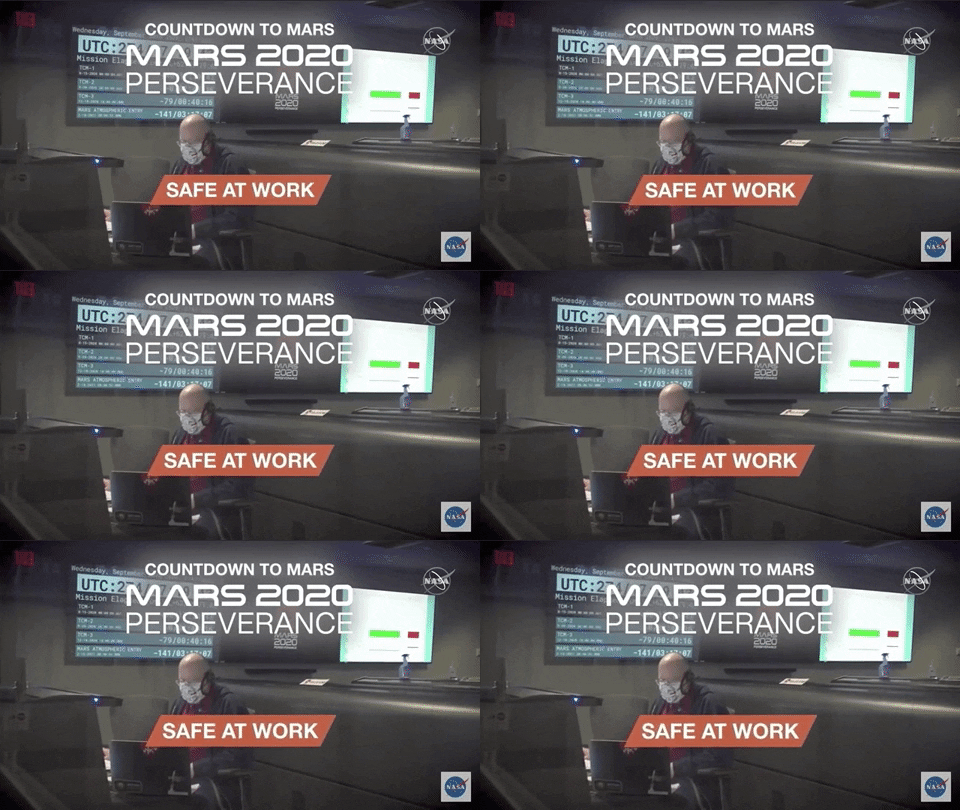
This landing is history in the making, it is important to keep up to date with the rover’s journey and hope that a decade on from now, we can see the fruit of this labor. To give us a better sense of what Mars is like, NASA is consistently releasing video footage and photography taken by the cameras on “Percy” (Perseverance’s endearing nickname used affectionately at mission control).
The video of the landing has stunned viewers, some stating they feel like they could land on Mars with the information they learned. Find the videos, hear the sounds, space travel, and space exploration is a growing industry and will continue to be relevant for years to come.
To keep up with the latest commercial news, click on commercial to get your daily dose.
Donate & Support