Disruptive business models provide insight into the flaws of the status quo within a commercial sector whilst improving consumer experiences. A fascinating disruption has developed in the Middle East, in the United Arab Emirates (UAE): Cafu.
The Business Model
Cafu, a portmanteau of the words “car” and “fuel”, is an on-demand fuel delivery service that is operated entirely digitally. Users utilize the intuitive app on their Android or Apple devices to order fuel for their cars, benefitting from a contactless and effortless experience. Following order on the app, Cafu sends out a custom fueling truck to the user’s location and delivers petrol or diesel to their vehicles. This is complemented by Cafu’s 24/7 operation and no delivery fees. This would enable users to benefit from the exact prices they would pay at petrol stations, with none of the hassle involved.
From a commercial point of view, Cafu has been able to achieve this end due to its portable business operations. Having fuel delivery means the company does not need to account for expensive overhead costs such as commercial renting of petrol fuelling sites. Moreover, Cafu’s consumer-base is effectively unlimited as they provide country-wide services whilst traditional petrol stations are limited to the regular subset of car-owners passing by their particular site.
Cafu’s business is also legitimized by its high procedural standard, evidenced by its adhering to the fuel regulations set out by the local authority Emirates Authority for Standardisation and Metrology, employing only certified fuel truck drivers, and sustainability objectives. In a world with ever-increasing standards of environmental sustainability, it is vital for businesses in the energy sector, especially the oil and gas sector, to ensure they are meeting global ESG (Environmental, Social and Governance) standards.
Cafu is satisfactory from this perspective as it facilitates an incremental reduction in overall carbon emission by negating the need for car-owners to expend petrol on trips to the petrol station. This is supported by Cafu’s “Ghaf Tree Project,” an environmental initiative aimed at mitigating consequences of climate change by “re-greening” barren ecosystems through the planting of upwards of a million Ghaf trees, a species native to the UAE.
Moreover, Cafu has a diversified revenue stream as it is a cemented player in the B2B (Business to Business) Fleet Refuelling industry. The firm has contracts with major rental services in the region, such as pay-as-you-go carshare provider Ekar, for the automated refueling of the latter’s fleet of vehicles. The utilization of artificial intelligence enables Cafu to receive notifications when an Ekar vehicle has reached 25% of its fuel capacity, after which an on-demand fuel delivery is made by Cafu to the vehicle. Cafu also incorporates modern technological business practices by using internet of things technology, RFID readers, and AI cameras in their fleet of custom fuel trucks.
The company is eager to expand itself beyond the UAE, and the Middle East generally, as it has expansion plans in regions such as Africa, the Americas, and Asia.
Much needed disruption
With the introduction of Cafu, car-owners no longer need to queue up at petrol stations, or even visit one altogether. The ambitious enterprise was launched to disrupt the downstream oil business, as well as the car ownership sector altogether by making petrol stations a thing of the past.
Cafu aims to devalue the petrol station business model by expanding its product offering such that services to users are on-par with offerings at petrol stations. Thus far, Cafu has introduced engine oil changes in collaboration with Mobil, 10-point vehicle checks, on-demand battery charge, and battery replacement services, as well as a mobile car cleaning service, all offered at competitive price points.

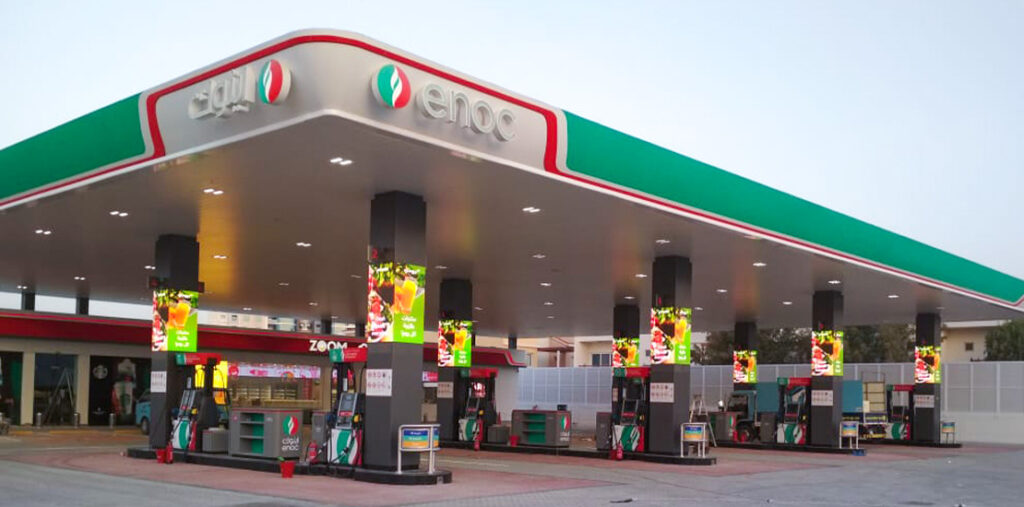
However, as is with any disruptive businesses, it is very much an uphill battle for Cafu. The firm has faced heavy scrutiny from regulatory authorities, with the majority of the concerns being public safety-related as Cafu transports significant quantities of highly flammable substances through public spaces. Moreover, the firm faces significant competition, with well-funded behemoths in the region such as the National Oil Company launching a rival app, ENOC Link.
To keep up with the latest commercial news, click on commercial to get your daily dose.
Donate & Support