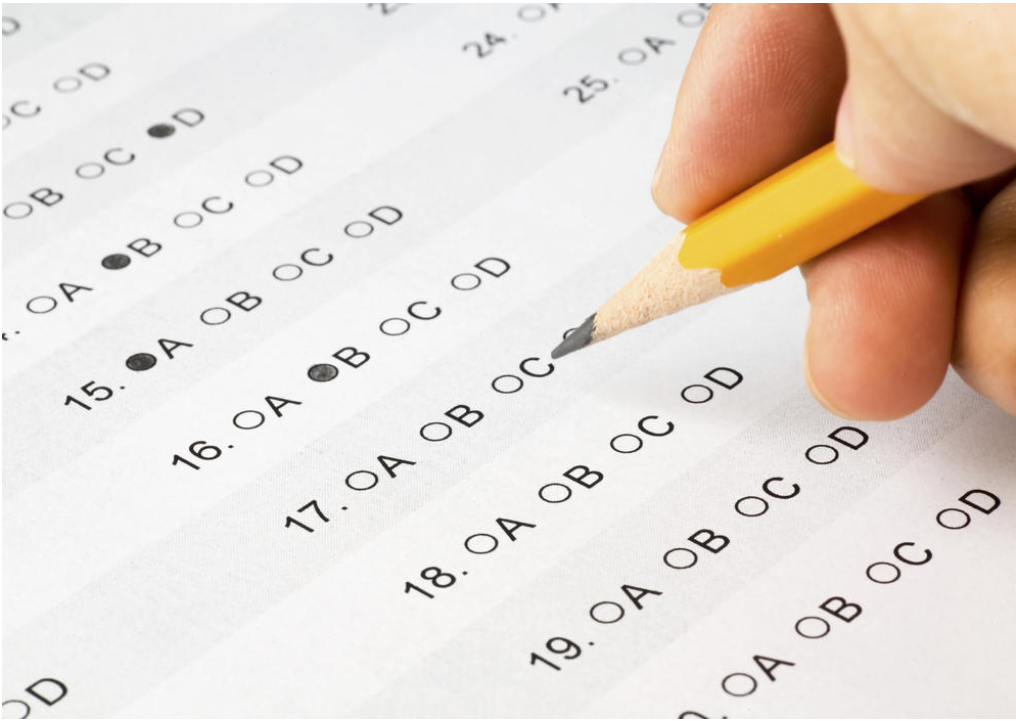
A psychometric test refers to the activity and examination that is done to assess an applicant’s performance. These tests are comprehensive, analysing a variety of areas: skills, knowledge, abilities, personality traits, attitudes etc. Several desirable graduate schemes and programmes by major companies or graduate employers use psychometric tests during the recruitment process to assist in the selection of candidates.
They are usually used as a filtering tool at different stages of the application process. For instance, employers can send you links to psychometric tests to take online after submitting your application online or at a later stage during an assessment centre alongside an interview. It is essential to know that you could be tested again at another stage to validate the outcomes of previous tests.
Psychometric tests are a level playing field since they do not concentrate on experience and qualifications compared to other stages of the recruitment process. Graduate employers value psychometric tests since they are a better approach to assessing various applicants’ strengths and potential irrespective of their background. There are various types and formats of psychometric tests that different employers use to assess ability, aptitude and personality.
Ability tests are one example of psychometric tests that measure general or specific skills, capability and expertise. Ability tests include numerical reasoning tests, verbal reasoning tests, diagrammatic reasoning tests, logical reasoning tests, deductive reasoning tests and inductive reasoning tests.
To prepare for ability tests, it is essential to practice GSCE maths questions for numerical tests, think about meanings for the verbal tests as well as practising spotting patterns for the inductive and deductive tests. Graduate employers can also include tests to evaluate applicants’ problem-solving skills and the capability to correctly detect errors or mistakes i.e., standard spelling and grammar assessments.
On the other hand, aptitude tests assess applicants’ ability to learn and acquire new skills that are required to successfully fulfil the position they applied for. Graduate schemes revolving around subjects such as finance could discover that numerical and verbal reasoning tests are centred on the sort of information you would be exposed to in your day-to-day job. For a graduate job in Information Technology, students could be invited to complete a programming aptitude test which can be formatted in a diagrammatic, abstract or inductive reasoning test.
Often, ability and aptitude tests are performed under timed conditions. Though some are not time-constrained. Some are intended to be challenging to finish in the given time therefore students may not always be expected to finish them. Always make sure to thoroughly verify this with the information provided regarding the tests. Generally, the tests involve multiple-choice questions and true or false answers. Responses to multiple-choice questions could be extremely close to the correct answer to test whether applicants’ are paying attention and reading the questions correctly.
Some tests apply the adaptive questioning style where the difficulty of the questions increases dependent on what applicants got the prior question correct. It is advised to not rush and work as precisely as possible since some graduate employers use negative marking where you lose marks for incorrect responses. Some tests can be done on paper but are normally done online which more likely to be the case for the entire application process since the Covid-19 rules and regulations.
The results assess your ability levels compared to a typical expectation for a certain demographic group e.g., the public, previous successful applicants or academic level. This group is selected by the graduate employer or test provider. You may be able to find out what test provide an employer uses which can assist you in finding similar practice online.
Critical thinking tests, situational judgement tests and job simulation tests evaluate the applicants’ innate answers to provided circumstances. These are normal situations that successful applicants would possibly encounter. Situational judgement tests and critical thinking tests are likely to be structured in a multiple-choice style whilst job simulation tests are likely to be formatted in a video. Some graduate employers put fun and appealing game tests on their websites to allow graduates to see if they would be a great match for the company.
Psychometric tests can be an alarming sign if an applicant is not properly fit to work for a specific company than previously imagined. The test results can also assist the recruiting team to determine which department the applicant is best suited. Applicants should ensure that they understand the scenarios well and avoid guessing. Since these tests measure suitability rather than ability, applicants that are not successful at this stage have essentially avoided a job or employer that would not be suitable.
Personality tests assess applicants’ usual behaviour when presented with various situations along with their ideal approach to doing things. They assess whether you would be a good fit for the position and company culture since employers consider individuals with specific characteristics for certain jobs. For instance, a sales graduate role may look for an extremely forward, sociable and persuasive individual. Applicants’ responses may be matched with a sample of successful or previous graduate recruiters or managers. Since personality questionnaires assess consistency, applicants must not guess what they believe the employer would like to see.
Like any other type of test, practice makes perfect! Students can enhance their performance by understanding what to expect as well as preparation and practising. With preparation and practice, students can tackle psychometric tests with confidence. Taking psychometric practise tests to familiarise yourself with the style of basic tests can lead to a significant change to improve your performance and self-confidence by improving speed and accuracy. Be sure to utilize any support on offer including careers service, workshops and mentors in case you are struggling with practice test results.
Free online practice tests accessed on Pearson TalentLens, AssessmentDay, Peoplemaps, Saville Assessment etc. Applicants can also practice tests and questionnaires from Mark Parkinson the author of How to Master Psychometric Tests.
Applicants should inform recruiters before of any disabilities before the actual test so that reasonable adjustments can be arranged if possible. It is advised to complete the tests somewhere with a suitable device and reliable internet connection in a quiet environment with a limited interruption for the length of the test.
Ensure you have everything you need before starting the test e.g., a calculator is permitted, pen and paper nearby. Some psychometric tests provide practice examples before the actual test, so make sure to use these to give you a feel of the real test. The test usually shows a countdown timer on the page so ensure to keep an eye on the time for timed questions and use any remaining time to check your responses. Carefully read any given instructions and feel free to contact recruiters if you have any questions or technological difficulties.
To keep up to date with the latest commercial news, click on commercial awareness to get your daily dose.
Donate & Support