By Stefano Sciandra
Your commercial awareness dose.
The COVID-19 crisis has forced governments across the world to borrow and spend at unprecedented rates. With the 2020 global growth predicted to be at around -3 per cent and -4.9 per cent and consequent loss of tax revenues, the colossal debt accumulated will have repercussions for years to come. As a result of the pandemic, governments of both MEDCs and LEDCs are strategically implementing methods to tackle the problem of rising debt. However, given that rising debt was already a growing issue before the pandemic, is it now too late?
Public debt also called national, sovereign, or government debt is the accumulation of a country’s deficits, measured in a specific point in time. It can be internal if the government owes money to lenders within that country and external if the government owes money to foreign lenders. Governments raise debt by either borrowing from their central bank, a process called “quantitative easing” or by issuing “government bonds”, that once sold in the market can be traded exactly as investors trade shares. Government bonds are bought by solo investors, by pension and hedge funds, and also by foreign countries.
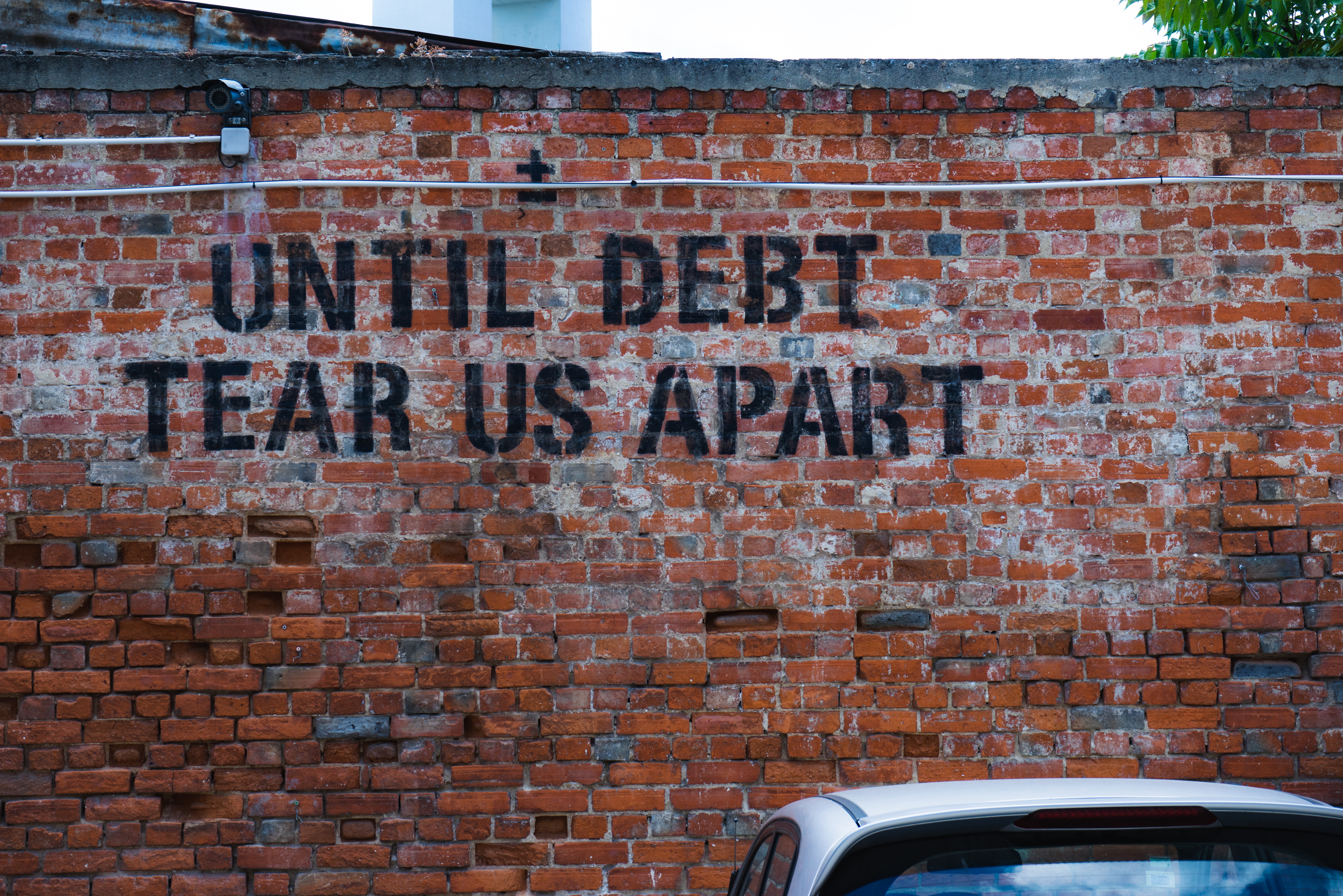
Government bonds are usually very safe assets and the more the country issuing them is economically stable, the more these bonds are desirable. However, low creditworthy countries, instead of issuing bonds, borrow money from supernational entities, such as the World Bank. Some low creditworthy countries experience “fiscal deficits”, they have to ask for short-term loans to repay for long-term debts; this is called a “self-fulfilling crisis” and there’s a huge ongoing debate on whether we should redeem parts of the debt of such countries. Though, countries are expected to repay their debt after a certain amount of time, with interest.
No matter the huge increase in countries’ debts caused by the 2007-2008 financial crisis and consequent disastrous austerity measures, interest rates on loans have dropped and the economy has started growing. Countries then have kept on asking for loans seemingly endlessly. This new approach to borrowing was also highlighted in a 2019 speech by Olivier Blanchard, former chief economist at the IMF, who affirmed that with lower interests, at a time of economic growth, countries, with the right management, could grow their way out of debt with no fiscal costs.
Less than a year after Mr Blanchard’s speech, coronavirus appeared in Wuhan, China. The resulting pandemics put huge pressure on governments across the globe, which have since implemented lockdowns virtually everywhere. To save and support businesses and jobs, governments have had to borrow a lot of money and as a consequence. The public-to-GDP ratio of developed countries, rose to 120% on average, a level seen only after WWII. One could ask whether Mr Blanchard’s observations are still valid today, that is to say if governments should keep on borrowing to cope with the disruption caused by COVID-19.
Surprisingly, the answer is yes. Interest rates are still very low and countries should take out loans with such low rates and then invest the money to inject liquidity into their markets and create economic growth. Eventually, this will reassure investors and ultimately drive recovery. This approach is far better than the implementation of austerity measures, which will mostly impact poorer areas and have huge negative social consequences. With impactful recovery policies, investors will be confident enough to buy a given country’s debt. In such healthy economic conditions, governments will be able to collect taxes and pay off their debts.
However, in regards to emerging markets, lower interest rates can actually raise inflation and consequently devaluate their currencies. Such a scenario would make paying off debt more difficult and if debt levels are perceived as unsustainable, investors and central banks alike will hardly buy government bonds. Emerging markets are indeed in a very difficult situation at the moment, due to dependence on developed countries in terms of imports, exports, and investments. In fact, their recovery will depend on how successful developed countries will be able to favour their own economic growth first.
To keep up to date with the latest commercial news, click on commercial awareness to get your daily dose.
Donate & Support