The smart contract is a term that portrays programs that mechanically executes parts of an agreement and are saved in a blockchain platform. The main use is to immediately certain the contract’s outcome to avoid time loss or intermediary’s involvement.
Moreover, smart contracts can automate a workflow, provoking the next move when reached the necessary conditions. They are potentially one of the most useful tools associated with blockchain technology.
How smart contracts work
They follow statements that are written into code on a blockchain. A network of computer analysis actions when predetermined conditions have been reached and verified. It is important to understand what these “actions” include. They can include registering a vehicle, sending notifications, or issuing a ticket. They define rules like normal contracts and automatically enforce them through the code.
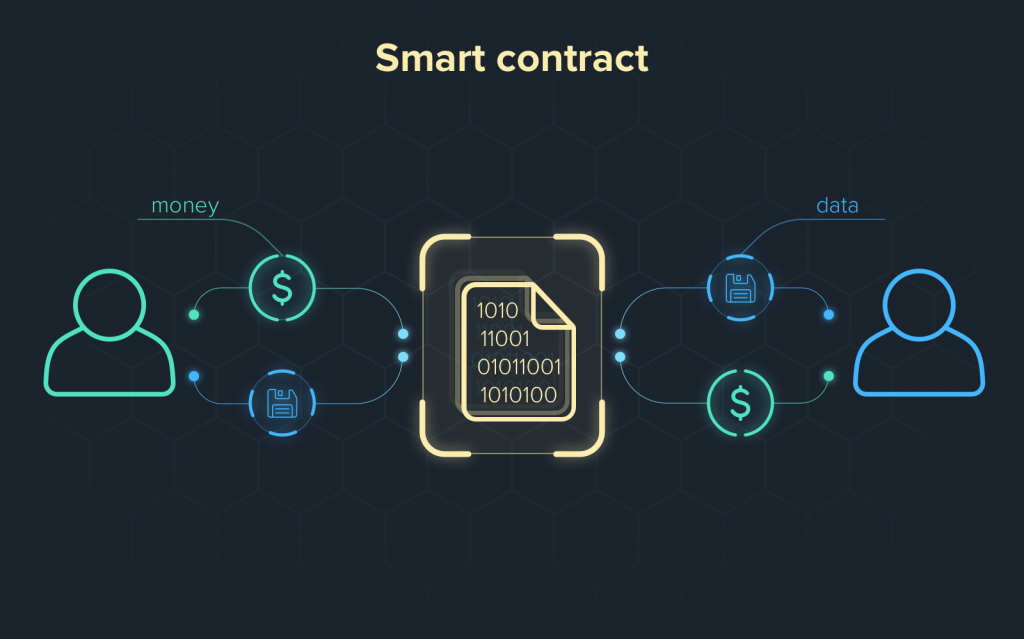
After having analysed what needs to be analysed, the blockchain is updated, hence, the transaction cannot be modified and only parties who have obtained permission can have access to the results. These contracts are not controlled by a user they run as programmed. However, user accounts can interact with the contracts by submitting transactions that perform a function defined on the contract.
In a smart contract, it is possible to create as many conditions as the clients want by agreeing on the “if/when..then..” rules that manage those transactions and evaluate all possible exceptions.
Smart contracts are also at the core of the transference of cryptocurrency and the digital representation of a physical asset or utility. They can control the transference of other cryptocurrencies like bitcoin. When the payment is confirmed bitcoin goes from the seller to the buyer.

Benefits of smart contracts
It is now worth mentioning that there are some very important benefits of smart contracts. Firstly, their speed. Once a condition is met the contract is immediately completed. Additionally, they are extremely efficient and accurate. The fact that there is no paperwork to process helps avoid making mistakes.
Thirdly, as there is no third party involved there is no risk of altering information, indeed, these contracts can be deemed as transparent and trustworthy. Another benefit is their security. The transaction records are encrypted, thus, it is very unlikely that they can be hacked. Last but not least, smart contracts transactions do not need to be handled by intermediaries.

Smart contracts’ history
The word “smart contract” was first used by Nick Szabo, a computer scientist and cryptographer, 20 years ago. This latter defined smart contracts as “smarter” than paper contracts as they can automatically execute contracts. According to Szabo, a perfect example to explain smart contracts can be a vending machine.
Once the purchaser inserts the money into the machine, the machine automatically honours the terms of the unwritten contract and delivers what the client paid for.
In conclusion, as aforementioned, they are extremely useful and can be deemed smarter than paper-based contracts. They have several advantages which the client can deeply benefit from.
To keep up with the latest commercial news, click on commercial to get your daily dose.
Donate & Support