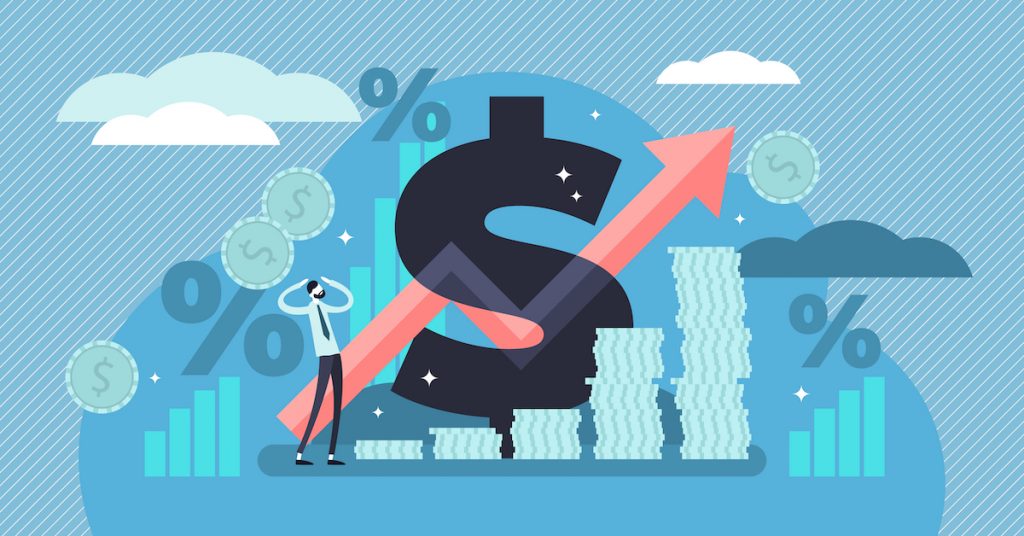
Inflation is formally defined as “a sustained increase in the general price level in the economy”; the cost of living, price of goods, and cost of services increase – in some cases significantly – due to inflation. In the same breath, inflation also leads to a drop in the value of money – “your money won’t buy as much today as you could yesterday”. An increase in the price of goods means that the same amount of money once used to buy said goods will cost the same amount for a smaller amount of goods.
Different types of inflation are concerned with different aspects of consumerism; cost-push inflation is concerned with the rise in the cost of goods being a consequence of the rise in production i.e., the rise of oil prices. For instance, if copper rises, companies that primarily use copper to make their products may choose to increase the prices of their goods. Next in order is hyperinflation. Hyperinflation generally occurs when inflation is greater than 1000%. Hyperinflation aids in a quicker decline in the value of money and consequently, there is a smaller number of people using it as a means of exchange.
Lastly is demand-pull inflation. This is when the rise in the price of goods is caused by an influx of demand and due to a shortage of goods, business owners, in turn, escalate their prices. In this case, the business would pass on the cost of raw materials to the consumer. As a result, prices for consumers are substantially higher without business owners having to make any changes to the cost of production. Consumer confidence tends to be higher when the unemployment rate is low and there is an increase in wages, leading to more spending. The expansion of the economy has an undeviating influence on consumer spending which is what leads to an influx of demand and services.
Lastly is hyperinflation. Hyperinflation generally occurs when inflation is greater than 1000%. Hyperinflation aids in a quicker decline in the value of money and consequently, there is a smaller number of people using it as a means of exchange.
Several different factors can induce inflation. Firstly, wages can be a large contribution to inflation as they can affect the cost of production and usually the biggest expenses for businesses. When the economy is functioning well, unemployment, in turn, is generally low, however, there may be shortages in labor and or workers. Consequently, companies and business owners increase the wages to appeal to potential candidates which then causes an increase in the cost of production. In the case that the company increases prices due to a rise in wages, this is when cost-plus inflation is likely to occur.
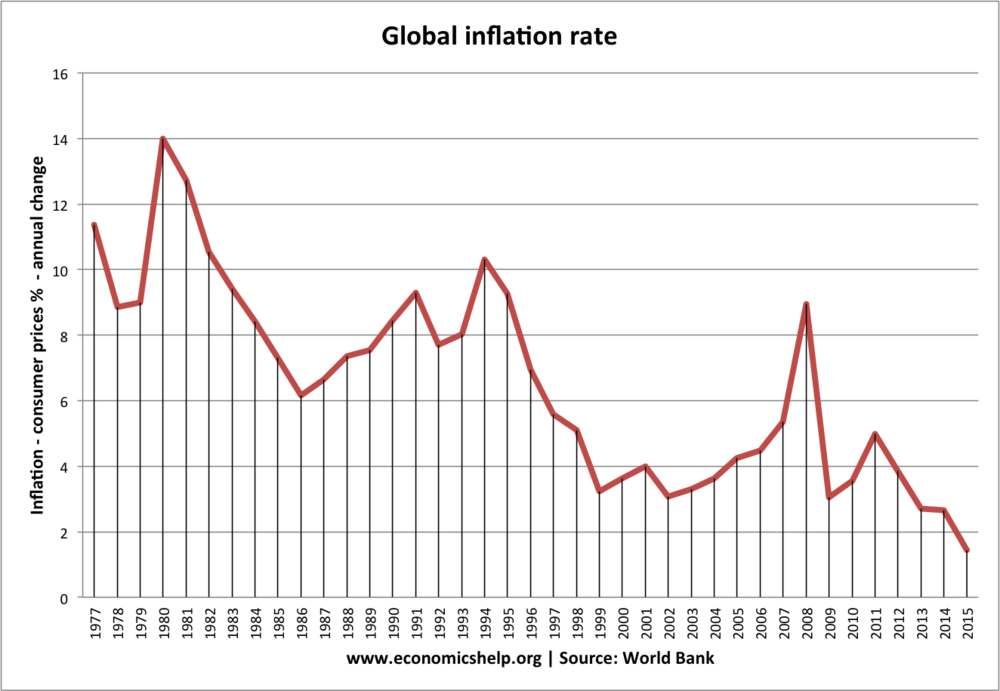
Inflation can be measured in a few differing metrics. One of the most popular is the consumer price index (CPI) which measures prices of goods and services in the economy which is inclusive of food, cars, education, and recreation. The second measure of inflation is the producer price index (PPI) which accounts for the price changes that impact domestic producers such as fuel, farm products, chemical products, and metals. If the price increase for the aforementioned and causes the PPI to spike and get passed onto consumers, it will reflect in CPI.
Contrary to popular belief, inflation can be beneficial. The beneficiaries are not inclusive of the consumer but inclusive of investors. For instance, those who have invested in energy companies may see a surge in their stock prices if escorted by an increase in energy prices. In the same breath, business owners can also reap the rewards from inflation by charging more for their products as a result of an increase in demand. Inflation can ultimately place business owners in a somewhat better position than prior as they – in some cases – have more monopoly over pricing and profit margins.
In the same instance, business owners can also deliberately withhold their products from the market to aid in seeking a more favorable price, however, business owners must also consider how much this will affect the cost of production. Conclusively, inflation affects the entirety of aspects of our lives, and how businesses respond to inflation also affects the future of said business and consumerism.
To keep up with the latest commercial news, click on commercial to get your daily dose.
Donate & Support